MP CM Office Backs 5F Vision Mega Project for Farmers, Youth
Synopsis
The Chief Minister's Office of Madhya Pradesh on 22 June 2026 announced a 5F Vision-based mega project designed to connect farmers, entrepreneurs, and youth through an integrated development chain, aligning the state with PM Modi's farm-to-export textile framework.
Key Takeaways
The Chief Minister's Office of Madhya Pradesh posted on 22 June 2026 about a mega project anchored in the 5F Vision framework.
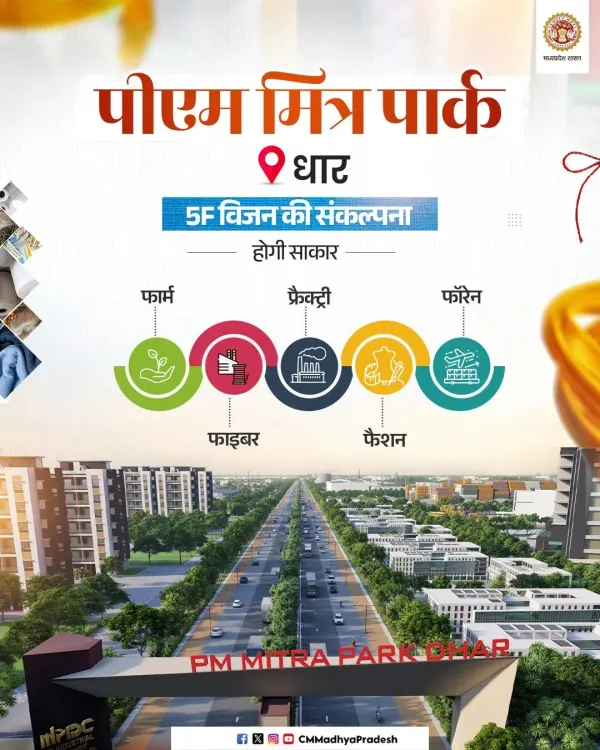
The 5F Vision maps a value chain from Farm to Fibre, Fibre to Factory, Factory to Fashion, and Fashion to Foreign markets.
The project is intended to benefit farmers, entrepreneurs, and youth through an integrated development ecosystem.
PM Narendra Modi first outlined the 5F Vision around 2022 to link agriculture with manufacturing and exports.
Madhya Pradesh has been aligning state-level projects with this national framework since the early 2020s.
Specific project details — name, location, cost, and timeline — are yet to be officially disclosed.
The Chief Minister's Office of Madhya Pradesh on Monday, 22 June 2026 amplified a post underlining that a major upcoming project rooted in the 5F Vision framework will create an integrated development chain linking farmers, entrepreneurs, and youth across the state.
Context
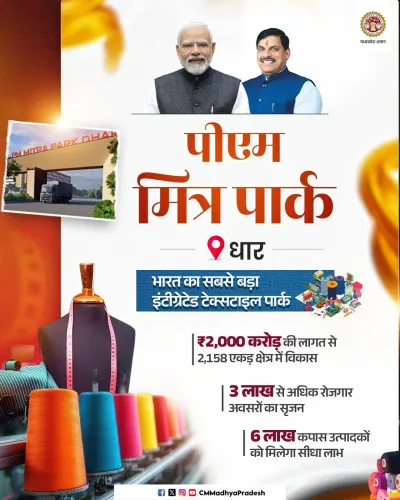
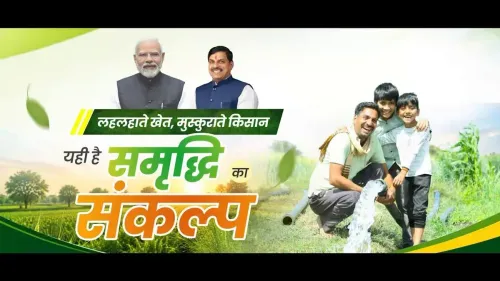
The post, shared from the official @CMMadhyaPradesh account, states in Hindi: '5F विजन पर आधारित यह मेगा परियोजना किसानों, उद्यमियों और युवाओं को विकास की एक सशक्त श्रृंखला से जोड़ेगी' — meaning, 'This mega project, based on the 5F Vision, will connect farmers, entrepreneurs, and youth through a powerful chain of development.' The announcement signals that Madhya Pradesh is preparing to anchor a large-scale project within the nationally promoted textile and agro-processing value-chain architecture.
Policy Backdrop
Prime Minister Narendra Modi publicly articulated the 5F Vision around 2022, mapping a textile value chain from Farm to Fibre, Fibre to Factory, Factory to Fashion, and Fashion to Foreign markets. The framework was designed to close the gap between raw agricultural output — particularly cotton — and finished export-ready goods, thereby raising farmer incomes while scaling up manufacturing employment.
Madhya Pradesh, one of India's significant agricultural producers, has aligned several state-level initiatives with this national framework since the early 2020s. Integrated agro-processing corridors and textile clusters have been a recurring theme in state budget announcements and industrial policy documents, positioning the state as a hub for value-added processing.
Stakeholders and Impact
The three groups explicitly named in the post — farmers, entrepreneurs, and youth — represent the full spectrum of the 5F chain's intended beneficiaries. Cotton and other fibre-crop farmers stand to gain from higher farm-gate realisations if produce moves into processing rather than being sold raw. Textile MSMEs and new entrepreneurs could access industrial infrastructure and supply linkages that the project is expected to provide.
For youth, integrated textile and manufacturing corridors typically generate semi-skilled and skilled employment at scale, addressing one of the state's persistent priorities around job creation. The emphasis on a 'powerful chain of development' (सशक्त श्रृंखला) suggests the project is conceived as an end-to-end ecosystem rather than a standalone facility.
What's Next
Specific details — including the project's name, precise location, estimated cost, and implementation timeline — are yet to be formally disclosed by the state government. Detailed project reports, land acquisition notifications, and budgetary allocations are expected to follow in the next Madhya Pradesh state assembly session or annual plan cycle. Observers will watch for whether the project is positioned as a state initiative or co-funded under a central scheme tied to the 5F Vision architecture.
The announcement reinforces a broader national pattern in which state governments are racing to translate the Centre's textile and agro-processing policy ambitions into on-ground projects, with Madhya Pradesh signalling it intends to be an early mover in this cycle.
Point of View
Entrepreneurs, and youth simultaneously, the messaging is calibrated to broaden political appeal across rural and urban constituencies. This fits a wider pattern in which BJP-governed states have used the 5F framework as a political and economic signal — demonstrating Centre-state policy cohesion while competing for central scheme funding and private investment. The absence of specific project details at this stage suggests the announcement is intended to build anticipation and political momentum rather than disclose a finalised plan.
NationPress
22 Jun 2026
Frequently Asked Questions
What is the 5F Vision mentioned by the Madhya Pradesh CM Office?
The 5F Vision is a textile value-chain framework promoted by PM Narendra Modi , covering Farm to Fibre, Fibre to Factory, Factory to Fashion, and Fashion to Foreign markets. It aims to raise farmer incomes and boost textile exports by integrating agriculture with manufacturing.
What is the mega project announced by the Madhya Pradesh government on 22 June 2026?
The Chief Minister's Office of Madhya Pradesh announced a 5F Vision-based mega project on 22 June 2026 that will connect farmers, entrepreneurs, and youth in a development chain. Specific details such as the project name, location, and cost have not yet been officially disclosed.
Who will benefit from the 5F Vision mega project in Madhya Pradesh?
The project is designed to benefit cotton and fibre-crop farmers , textile MSMEs and entrepreneurs , and youth seeking employment in manufacturing and processing sectors across Madhya Pradesh.
When did PM Modi announce the 5F Vision?
PM Narendra Modi publicly outlined the 5F Vision around 2022 as a framework to integrate Indian agriculture with textile manufacturing and export markets.
What is Madhya Pradesh's role in India's textile and agro-processing sector?
Madhya Pradesh is a major agricultural producer and has been aligning state-level projects with the national 5F framework since the early 2020s, positioning itself as a hub for value-added agro-processing and textile manufacturing.