MP CM Yadav Eyes No. 1 Milk Output Rank From Third
Synopsis
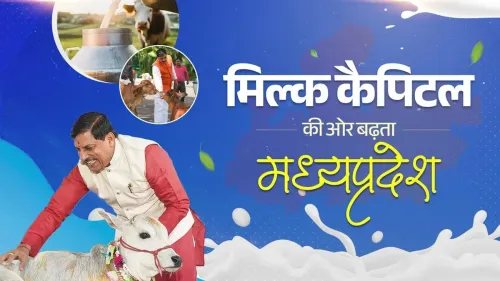
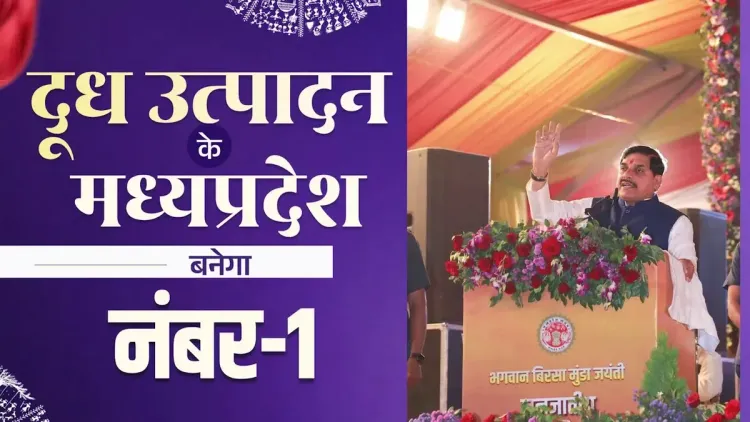
Chief Minister Dr. Mohan Yadav announced in Khandwa on 16 November 2026 that Madhya Pradesh — currently third in national milk output — aims to become India's top milk-producing state, framing dairy expansion as the primary lever for raising farmer incomes.
Key Takeaways
Madhya Pradesh currently ranks third in national milk production, behind Uttar Pradesh and Rajasthan.
Mohan Yadav has set an explicit target of making MP number one in the country.
The announcement was made at an event in Khandwa district on 16 November 2026 .
Dairy promotion is being positioned as a direct tool to increase farmer incomes rather than a standalone agri-business push.
Central schemes including the Rashtriya Gokul Mission and the National Programme for Dairy Development provide the policy backbone for state-level dairy expansion.
Realising the goal will require matching rhetoric with budget allocations for cold-chain infrastructure, breed improvement, and cooperative networks.
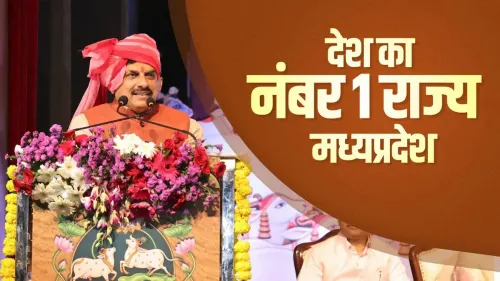
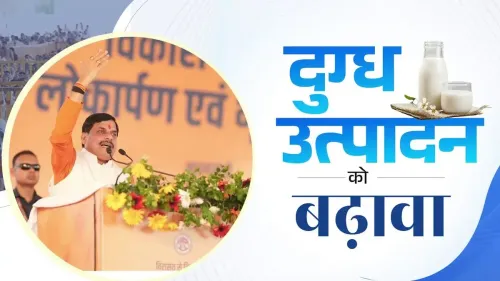
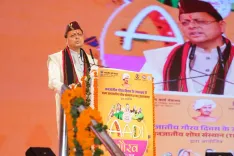
Madhya Pradesh currently sits at third place in national milk production — but Chief Minister Dr. Mohan Yadav has just made clear that third is not where the state intends to stay. Speaking at an event in Khandwa on Monday, 16 November 2026, the Chief Minister's Office of Madhya Pradesh shared his declaration: dairy expansion is the state's chosen engine for lifting farmer incomes, and the target is nothing less than the top rank in India.
CM Yadav's statement, in his own words: 'प्रदेश में किसानों की आय बढ़ाने के उद्देश्य से दूध उत्पादन को प्रोत्साहित किया जा रहा है' — 'Milk production is being encouraged in the state with the aim of increasing the income of farmers. At present Madhya Pradesh ranks third in the country in milk production. Our goal is to take the state to the first position.'
Where MP Stands — and Who It Must Overtake
India's dairy map has long been shaped by two giants. Uttar Pradesh and Rajasthan have historically dominated national output, with Madhya Pradesh trailing in the tier just below. For a landlocked state whose economy leans heavily on agriculture, the gap is both a challenge and an opportunity. The dairy sector offers something rare: a commodity that generates income across the year, not just at harvest time, making it a natural lever for rural household stability.
The state's push sits inside a broader national architecture. The Rashtriya Gokul Mission, launched in 2014, has channelled central funds into breed improvement and productivity enhancement in states including Madhya Pradesh. The National Programme for Dairy Development, active since the 2010s, has backed cooperative infrastructure and cold-chain investment across states competing for a larger share of the national milk pool.
Khandwa as a Signal, Farmers as the Audience
The choice of Khandwa district as the venue is itself a message. Khandwa sits in the Nimar region of western Madhya Pradesh — predominantly agrarian, with large populations of small and marginal farmers for whom an additional income stream from dairying could meaningfully move the needle. When a Chief Minister plants a headline target at a district-level event rather than in a state capital, the audience is unambiguous: the rural voter and the working farmer.
Dr. Yadav, who took office in December 2023, has repeatedly framed agricultural diversification as a pillar of his administration's economic strategy. Dairy fits that frame precisely — it doesn't displace crop farming but runs alongside it, using the same household labour and the same land. Scaling it, however, requires infrastructure: chilling units, cooperative collection networks, veterinary support, and breed upgradation programmes at the village level.
The Gap Between Ambition and Allocation
Ambition is the easy part. The harder question is how the state budget will back the goal. Bridging the gap between third place and first demands sustained capital spending on cold-chain logistics, animal husbandry extension services, and farmer-facing credit access — the unglamorous machinery that converted Gujarat's dairy ambition into the Amul model decades ago. Watch the next state budget session and any supplementary demands for grants: the numbers there will reveal whether this is a headline or a road map.
India's dairy sector produced over 230 million tonnes of milk annually as of recent estimates, making it the world's largest producer. A state that climbs to the top of that ranking isn't just winning a domestic competition — it is positioning its farmers at the centre of one of the planet's biggest food economies. That is the prize CM Yadav has put on the board in Khandwa today.
Point of View
The CM converts a diffuse welfare promise into a measurable accountability benchmark, raising the political stakes for delivery. The challenge is structural: Madhya Pradesh lacks the cooperative density of Gujarat or the sheer bovine population of Uttar Pradesh, so closing the gap demands sustained institutional investment, not just periodic announcements. If the next state budget reflects genuine capital commitment to dairy infrastructure, this becomes policy; if not, it remains a popular applause line.
NationPress
16 Nov 2026
Frequently Asked Questions
What rank does Madhya Pradesh hold in milk production in India?
Madhya Pradesh currently ranks third in milk production nationally, according to CM Dr. Mohan Yadav's statement on 16 November 2026.
What is CM Mohan Yadav's target for Madhya Pradesh dairy sector?
CM Dr. Mohan Yadav has set a target of making Madhya Pradesh the number one milk-producing state in India.
Which states are ahead of Madhya Pradesh in milk production?
Uttar Pradesh and Rajasthan have historically ranked above Madhya Pradesh in national milk output, placing MP in the third position.
What central scheme supports dairy development in Madhya Pradesh?
The Rashtriya Gokul Mission, launched in 2014, supports breed improvement and milk productivity across states including Madhya Pradesh, alongside the National Programme for Dairy Development.
Why is dairy promotion important for farmers in Madhya Pradesh?
Dairying generates income throughout the year rather than only at harvest, making it a stable supplementary income source for small and marginal farming households in the state.