Uttarakhand CM Unveils Tribal Welfare Push at Adi Gaurav Mahotsav
Synopsis
Uttarakhand's Chief Minister unveiled a multi-pronged tribal welfare package at the Adi Gaurav Mahotsav on 16 November 2026, renaming two tribal ITIs after historical heroes, launching the Janjati Rozgar Utkarsh Yojana, announcing a ₹50,000 ST marriage grant, creating four district welfare officer posts, and committing ₹1 crore to tribal research and cultural preservation.
Key Takeaways
The tribal ITI at Khatima has been renamed after Maharana Pratap and the tribal ITI at Chakrata after Veer Shaheed Kesari Chand .
The Mukhyamantri Janjati Rozgar Utkarsh Yojana has been launched to provide employment and self-employment opportunities to tribal youth in Uttarakhand.
Eligible Scheduled Tribe families will receive ₹50,000 in assistance for the marriage of daughters.
District Tribal Welfare Officer posts have been created in Pithoragarh, Dehradun, Chamoli , and Udham Singh Nagar to strengthen last-mile scheme delivery.
A ₹1 crore corpus fund has been established for the State Janjati Shodh Sansthan to fund tribal research and cultural preservation.
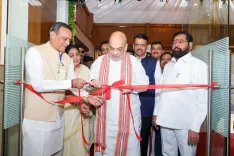
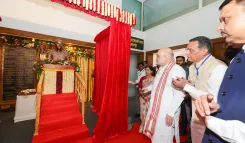
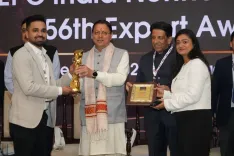
The announcements were made at the Adi Gaurav Mahotsav on 16 November 2026 , attended by Cabinet Minister Khajan Das, Mayor Saurabh Thapliyal, and large numbers of tribal community members.
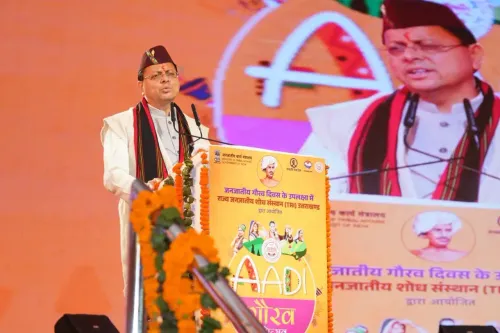
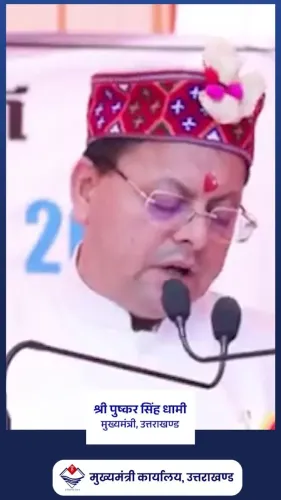
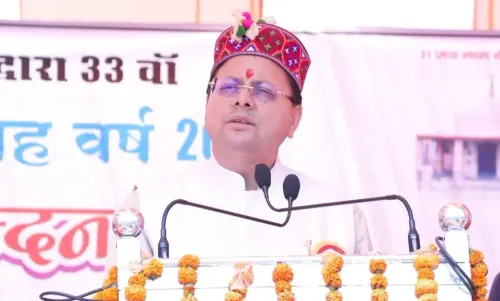
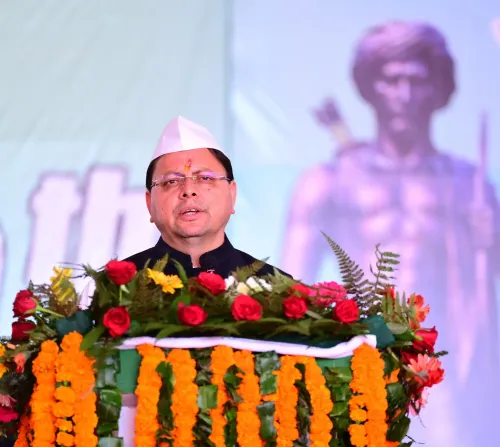
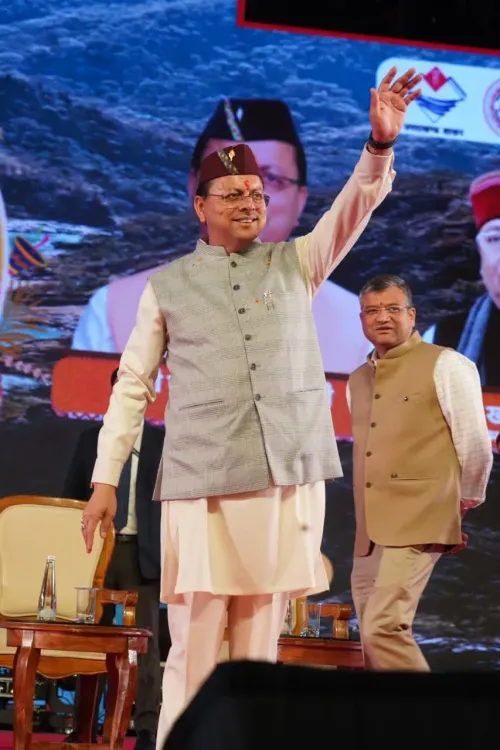
Two tribal ITIs renamed after legendary heroes, a dedicated employment scheme, and a ₹50,000 marriage grant for Scheduled Tribe daughters — Uttarakhand's Chief Minister's Office detailed a sweeping package of tribal welfare measures on Monday, 16 November 2026, as the Chief Minister addressed the Adi Gaurav Mahotsav (Festival of Indigenous Pride) in the state.
Two ITIs, Two Heroes — A Renaming With a Message
The government announced that the tribal ITI at Khatima will now bear the name of Maharana Pratap, the celebrated Rajput warrior who has long been a symbol of resistance and pride across North India. The tribal ITI at Chakrata has been renamed after Veer Shaheed Kesari Chand, a local martyr from the Jaunsar-Bawar region of Uttarakhand's tribal belt. The renamings are not merely ceremonial: by anchoring skill-training institutions to icons from tribal and warrior heritage, the state is signalling that vocational education for tribal youth comes wrapped in cultural dignity.
Mukhyamantri Janjati Rozgar Utkarsh Yojana: Jobs and Self-Reliance
At the centre of the economic agenda is the Mukhyamantri Janjati Rozgar Utkarsh Yojana — the Chief Minister's Tribal Employment Excellence Scheme — designed to connect tribal youth with employment and self-employment pathways. The Chief Minister stated that making tribal youth 'economically self-reliant' is a government priority, not an afterthought. Alongside the scheme, eligible Scheduled Tribe families will receive ₹50,000 in financial assistance for the marriage of daughters — a targeted social-security measure aimed at the most vulnerable ST households.
Four New District Welfare Posts to Plug the Last Mile
Policy announcements mean little without delivery machinery. The government has created District Janjati Kalyan Adhikari (District Tribal Welfare Officer) posts in four districts: Pithoragarh, Dehradun, Chamoli, and Udham Singh Nagar. These new positions are explicitly intended to ensure that scheme benefits reach eligible families without bureaucratic friction — a direct acknowledgement that Uttarakhand's dispersed hill geography has historically made last-mile delivery a challenge for tribal sub-plan spending since the state's formation in 2000.
₹1 Crore Corpus for Tribal Research and Cultural Preservation
Beyond economics, the Chief Minister argued that tribal development must protect what money cannot replace: culture, folk traditions, and heritage. The State Janjati Shodh Sansthan (State Tribal Research Institute) will be backed by a ₹1 crore corpus fund, earmarked for research, academic studies, and the documentation and preservation of tribal cultural traditions. Tribal festivals, sports festivals, and science festivals are also being organised as recurring platforms for community expression.
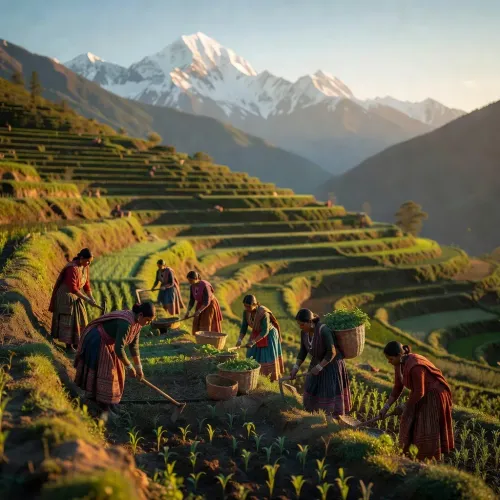
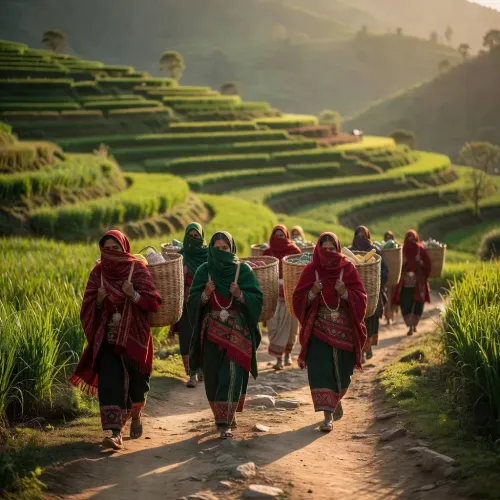
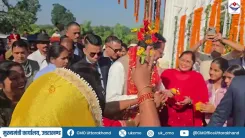
At the Adi Gaurav Mahotsav itself, tribal handicrafts, traditional artworks, and locally produced goods were on display — what the Chief Minister described as evidence of 'creativity, hard work, skill, and the spirit of self-reliance' across generations. The government committed to expanding market access for tribal artisans and local product makers so that traditional skills survive into the next generation.
Who Was in the Room
The event drew a wide cross-section of stakeholders: Cabinet Minister Khajan Das, Mayor Saurabh Thapliyal, Secretary Shridhar Babu Adyanki, tribal community representatives, tribal artisans and entrepreneurs, and officers from the State Tribal Research Institute and the Tribal Welfare Department were all present — a signal that this was a governance event as much as a cultural celebration.
The Chief Minister closed with a phrase that doubles as a political commitment: 'vikalp rahit sankalp' — an 'unwavering, non-negotiable resolve' to make Uttarakhand the country's best-governed state, with tribal society's participation at its core. The schemes are now live. The four new welfare officer posts are created. What follows will be watched closely.
Point of View
Targeted welfare delivery (marriage grant, employment scheme), and institutional strengthening (four new welfare officer posts) — in a template increasingly common in BJP-governed states seeking to consolidate support among Scheduled Tribe communities ahead of electoral cycles. The ₹1 crore corpus for the tribal research institute is modest but signals intent to institutionalise cultural preservation rather than leave it to ad hoc festivals. The real test will be whether the four new District Tribal Welfare Officers translate the scheme architecture into measurable outcomes for Uttarakhand's Bhotia, Tharu, and Jaunsari communities, whose development indicators have historically lagged behind hill-district averages despite decades of sub-plan spending.
NationPress
16 Nov 2026
Frequently Asked Questions
What is the Mukhyamantri Janjati Rozgar Utkarsh Yojana in Uttarakhand?
The Mukhyamantri Janjati Rozgar Utkarsh Yojana is a state government scheme aimed at providing tribal youth in Uttarakhand with employment and self-employment opportunities to make them economically self-reliant.
Which tribal ITIs were renamed in Uttarakhand and after whom?
The tribal ITI at Khatima was renamed after Maharana Pratap, and the tribal ITI at Chakrata was renamed after Veer Shaheed Kesari Chand, in honour of historical tribal and warrior heroes.
What financial assistance is Uttarakhand giving for Scheduled Tribe daughters' marriage?
Uttarakhand is providing ₹50,000 as financial assistance for the marriage of daughters from eligible Scheduled Tribe families.
What is the Adi Gaurav Mahotsav in Uttarakhand?
The Adi Gaurav Mahotsav is a state-organised festival celebrating indigenous tribal heritage, where tribal handicrafts, traditional artworks, and local products are showcased alongside government welfare announcements.
How much has Uttarakhand allocated to the State Tribal Research Institute?
The Uttarakhand government has set aside a ₹1 crore corpus fund for the State Janjati Shodh Sansthan to support research, academic studies, and the preservation of tribal culture and traditions.