CM Dhami Reaffirms Tribal Welfare Push via Janjati Mahotsav
Synopsis
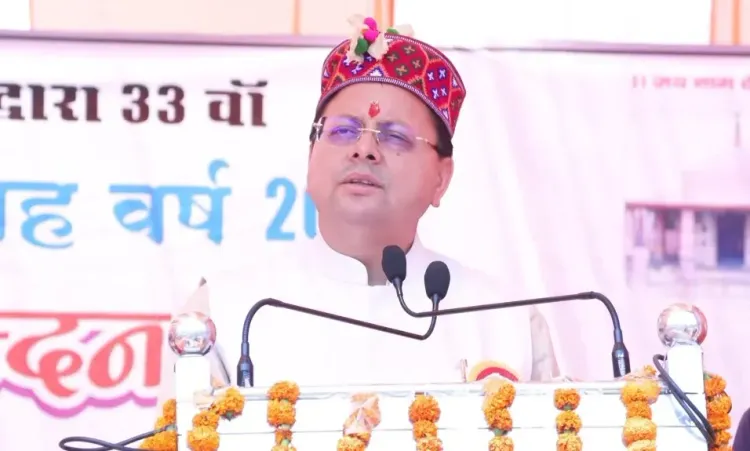
Chief Minister Pushkar Singh Dhami reaffirmed on June 8, 2026 that the Uttarakhand government is committed to the holistic development of tribal communities, citing the annual Janjati Mahotsav as a key platform for preserving indigenous culture and heritage.
Key Takeaways
CM Pushkar Singh Dhami stated the Uttarakhand government is continuously working for the holistic development of tribal society.
The annual Janjati Mahotsav is cited as the government's primary platform for promoting tribal culture and heritage.
Uttarakhand is home to Scheduled Tribe communities including the Jaunsari , Bhotia , and Tharu peoples.
India's Articles 46 and 275 constitutionally mandate state support for Scheduled Tribe welfare and development.
The statement sets expectations for potential tribal welfare allocations in the forthcoming state budget session.
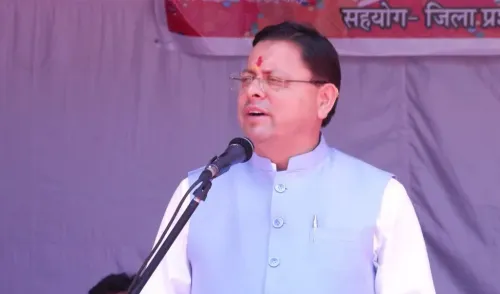
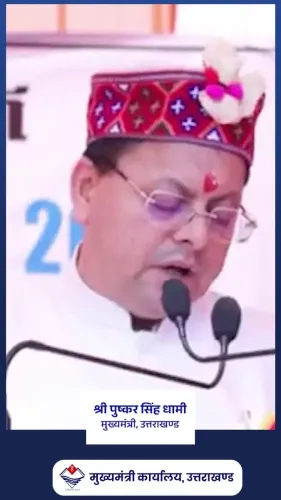
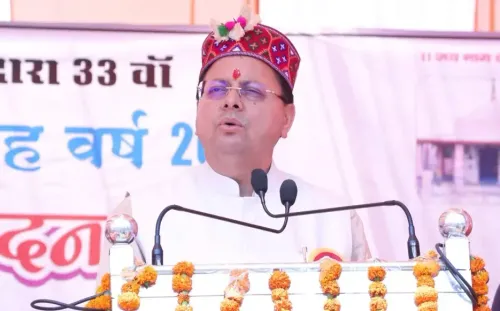
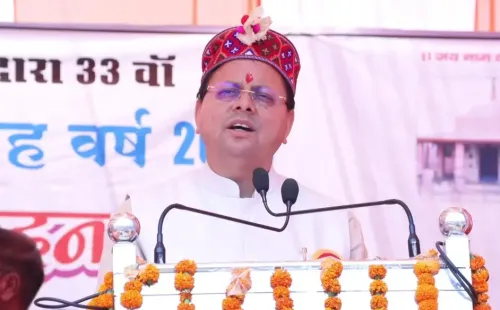
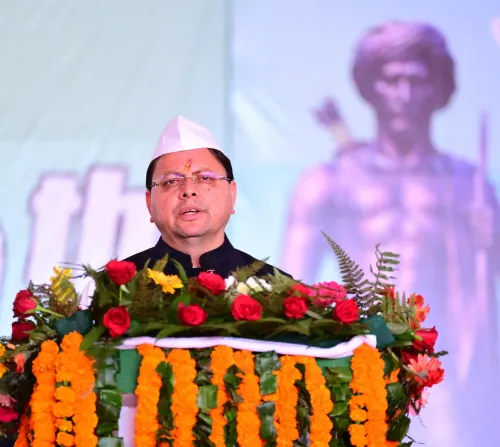
The Chief Minister's Office of Uttarakhand, citing Chief Minister Pushkar Singh Dhami, on Monday, June 8, 2026, reaffirmed the state government's commitment to the holistic development of tribal communities, highlighting the annual Janjati Mahotsav as a key platform for preserving and promoting indigenous culture and heritage.
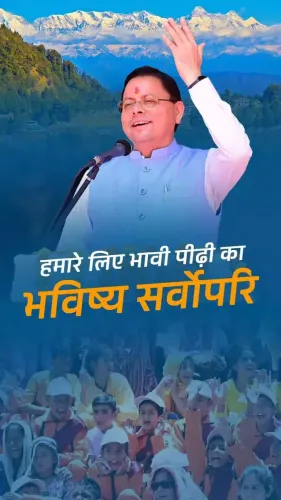
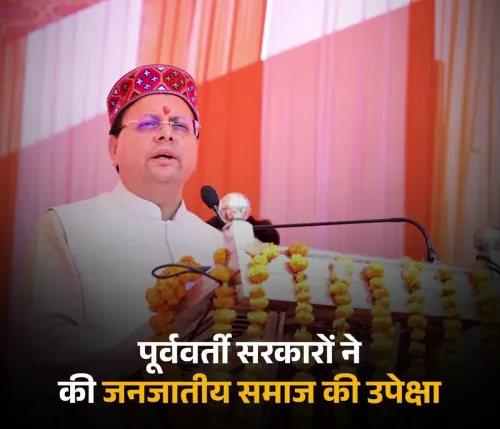
In the post, CM Dhami is quoted as saying: 'Hamari sarkar janjatiya samaj ke samagra vikas hetu nirantar karya kar rahi hai' ('Our government is continuously working for the holistic development of tribal society'). He further stated that through the annually held Janjati Mahotsav, the government has worked to provide a strong platform to tribal culture and heritage.
Context
Uttarakhand, carved out of Uttar Pradesh in 2000, is home to several Scheduled Tribe communities including the Jaunsari, Bhotia, and Tharu peoples. These groups have historically faced challenges of geographic isolation, limited economic opportunity, and cultural marginalisation. The state government's articulation of tribal welfare as a continuing priority reflects both constitutional obligations and political signalling ahead of future budget and legislative sessions.Policy Backdrop
India's constitutional framework, particularly Articles 46 and 275, mandates that both central and state governments actively promote the educational and economic interests of Scheduled Tribes and provide grants for tribal welfare. The Ministry of Tribal Affairs, established by the Government of India in 1999, coordinates national-level programmes, while state governments implement complementary schemes. Uttarakhand's Janjati Mahotsav fits within a broader national pattern of states combining targeted development spending with cultural festivals to fulfil these mandates — making welfare visible while simultaneously supporting indigenous artisans and performers.Stakeholders and Impact
The primary beneficiaries of these initiatives are Uttarakhand's tribal communities and their artisans, craftspersons, and cultural practitioners. The Janjati Mahotsav provides an annual public stage for indigenous art forms, traditional crafts, and folk practices that might otherwise receive limited mainstream attention. For tribal artisans in particular, such state-backed platforms can translate into livelihood opportunities through direct sales, exposure, and institutional recognition. The broader public, including tourists and policymakers, also gains a window into the state's cultural diversity.What's Next
Attention will now turn to the next edition of the Janjati Mahotsav and whether the forthcoming Uttarakhand state budget session includes supplementary allocations specifically earmarked for tribal welfare schemes. The government's public reaffirmation of this commitment sets an expectation benchmark against which actual budgetary and programmatic decisions will be measured. Sustained follow-through in the form of concrete scheme announcements or expanded festival infrastructure would give substance to the policy position articulated by CM Dhami.Point of View
Celebratory platforms to demonstrate constitutional compliance while generating political goodwill among indigenous communities. For CM Dhami, who has positioned himself as a champion of both development and cultural identity since taking office in 2021, such statements serve a dual purpose: signalling policy continuity and building a record ahead of budget and electoral cycles. The emphasis on 'holistic development' rather than specific schemes or allocations, however, leaves the commitment open to scrutiny. Whether this translates into measurable outcomes for tribal artisans and communities will depend on what follows in the state's legislative and budgetary calendar.
NationPress
19 Sept 2026
Frequently Asked Questions
What is Janjati Mahotsav in Uttarakhand?
Janjati Mahotsav is an annual state-organised tribal festival in Uttarakhand designed to showcase and support the indigenous culture, heritage, and traditions of the state's Scheduled Tribe communities, including the Jaunsari, Bhotia, and Tharu peoples.
Which tribal communities live in Uttarakhand?
Uttarakhand is home to several Scheduled Tribe communities, most notably the Jaunsari, Bhotia, and Tharu peoples, who are spread across different geographic regions of the state.
What has CM Pushkar Dhami said about tribal welfare?
CM Pushkar Singh Dhami stated on June 8, 2026 that the Uttarakhand government is continuously working for the holistic development of tribal society and has used the annual Janjati Mahotsav to provide a strong platform for tribal culture and heritage.
What constitutional provisions protect tribal welfare in India?
Articles 46 and 275 of the Indian Constitution mandate that state and central governments actively promote the educational and economic interests of Scheduled Tribes and provide grants specifically for tribal welfare programmes.
What is the Ministry of Tribal Affairs in India?
The Ministry of Tribal Affairs was established by the Government of India in 1999 to coordinate welfare programmes and policy for Scheduled Tribes at the national level, with state governments implementing complementary schemes.