MP CM Mohan Yadav backs UCC, urges youth to join politics at Bhopal Youth Parliament
Synopsis
At a youth parliament event days before India’s 80th Independence Day, MP CM Mohan Yadav made his most pointed pitch yet for the Uniform Civil Code — claiming 76% of Muslim women surveyed in Madhya Pradesh support it. The claim, if it holds scrutiny, reframes a politically charged debate and signals the BJP-governed state’s intent to lead on UCC implementation.
Key Takeaways
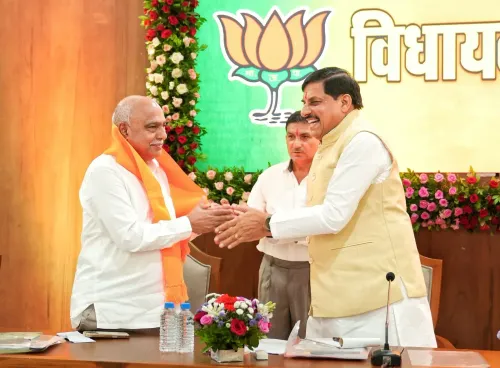
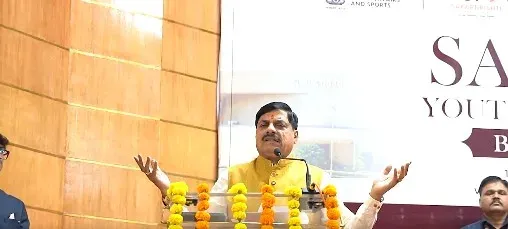
Madhya Pradesh CM Mohan Yadav addressed the Sansad Youth Parliament 2026 at the MP Assembly in Bhopal on 13 August 2026 .
More than 52 participants from 12 states attended the event, described by Yadav as a ‘mini India.’ Yadav claimed 76 per cent of Muslim women surveyed in Madhya Pradesh supported the Uniform Civil Code .
He said Madhya Pradesh is among the first major states to have passed a Bill for UCC implementation .
Yadav urged youth to enter politics, calling it essential for ‘strengthening democracy’ and ‘nation-building.’ The event was held ahead of India’s 80th Independence Day , with tributes paid to freedom fighters including Subhas Chandra Bose .
Madhya Pradesh Chief Minister Mohan Yadav on Thursday, 13 August 2026, used the Sansad Youth Parliament 2026 at the Madhya Pradesh Assembly in Bhopal to champion the Uniform Civil Code (UCC) and call on young Indians to enter public life. Addressing more than 52 participants from 12 states, Yadav framed political participation as a national duty ahead of the country's 80th Independence Day.
The Call to Youth
Chief Minister Yadav urged the assembled delegates to look beyond conventional career paths. “Young people should come into politics and play an active role in strengthening democracy. They can become doctors and engineers, but they should also come forward in politics and contribute to nation-building,” he said.
Describing the Assembly premises as a ‘mini India’ given the diversity of participants, Yadav said the presence of young people from across states reflected the country’s pluralism and potential. The event, held just days before Independence Day, was framed as a platform to connect youth with legislative processes.
Uniform Civil Code at the Centre of His Address
A significant portion of Yadav’s speech focused on the Uniform Civil Code, which the Madhya Pradesh government has been moving to implement. He said the state had conducted wide consultations across districts and communities before proceeding with the legislation.
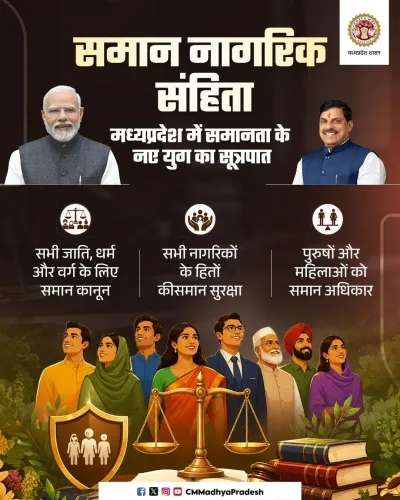
Yadav claimed that 76 per cent of Muslim women surveyed had expressed support for the UCC. “For us, the law should be equal for Ram and Rahim. No community, including Muslim women, should be deprived of their rights for the sake of vote-bank politics,” he said.
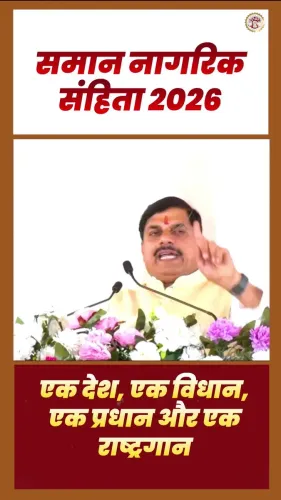
He positioned Madhya Pradesh as one of the leading states to have passed a Bill for UCC implementation, describing it as a step toward the principle of ‘one country, one law.’ This comes amid ongoing national debate over whether a uniform personal law framework can be applied across India’s religiously diverse population without infringing on minority rights — a concern critics have repeatedly raised.
Cultural and Constitutional Anchors
Yadav also invoked India’s philosophical traditions, citing Vasudhaiva Kutumbakam — the Sanskrit principle meaning ‘The World is One Family’ — as a foundation for national progress rooted in unity and mutual respect.
Referring to the Ayodhya Ram temple, he noted that Indian citizens had respected the judiciary’s role in resolving the matter, citing the Supreme Court judgment that cleared the path for the temple’s construction as an example of constitutional trust.
Tribute to Freedom Fighters
On the eve of Independence Day, Yadav recalled the contributions of freedom fighters, including Subhas Chandra Bose, and said the sacrifices of that generation placed a responsibility on today’s youth to actively contribute to India’s development — not just economically, but through civic and political engagement.
With the UCC debate intensifying at the national level and state-level implementations being closely watched, Madhya Pradesh’s moves on the legislation are likely to remain a focal point in the run-up to future electoral cycles.
Point of View
Sample size, or an independent audit, the number functions more as political messaging than as data. The UCC has historically polled as a wedge issue, and Madhya Pradesh’s push to lead on implementation is clearly calibrated for electoral signalling. What the youth parliament framing does cleverly is soften the ideological edges of the UCC argument by embedding it within a broader civic-participation narrative. Whether that framing survives contact with the legislative and legal scrutiny the UCC will inevitably face is another matter.
NationPress
28 Sept 2026
Frequently Asked Questions
What did MP CM Mohan Yadav say at the Sansad Youth Parliament 2026?
Chief Minister Mohan Yadav urged young people to enter politics and championed the Uniform Civil Code at the Sansad Youth Parliament 2026 in Bhopal on 13 August 2026. He described political participation as essential for democracy and called Madhya Pradesh a leader in UCC implementation.
What is Madhya Pradesh’s position on the Uniform Civil Code?
Madhya Pradesh has passed a Bill for implementing the Uniform Civil Code and is among the first major states to do so, according to CM Yadav. The state government claims to have conducted consultations across districts and communities before moving ahead with the legislation.
What did Mohan Yadav claim about Muslim women and the UCC?
Yadav claimed that 76 per cent of Muslim women surveyed in Madhya Pradesh had supported the Uniform Civil Code. He said no community should be denied rights due to vote-bank politics, though the survey’s methodology and source were not detailed in his address.
Who attended the Sansad Youth Parliament 2026 in Bhopal?
More than 52 young participants from 12 states attended the Sansad Youth Parliament 2026 at the Madhya Pradesh Assembly in Bhopal. CM Yadav described the gathering as a ‘mini India’ reflecting the country’s diversity.
Why did Yadav reference Subhas Chandra Bose and the Ayodhya temple?
Yadav invoked freedom fighter Subhas Chandra Bose to remind youth of the responsibility inherited from those who sacrificed for independence. He cited the Supreme Court’s Ayodhya judgment as an example of citizens’ trust in India’s constitutional and judicial institutions.