CM MP Office: PRASAD Scheme, Simhastha 2028 Drive Cultural Revival
Synopsis
The Chief Minister's Office of Madhya Pradesh has spotlighted India's religious infrastructure push under PM Modi, citing over ₹1,700 crore in PRASAD scheme works at Kashi Vishwanath, Mahakal Mahalok, and Kedarnath, alongside state-level preparations for Simhastha 2028 in Ujjain.
Key Takeaways
The CMO Madhya Pradesh on 16 June 2026 highlighted India's cultural infrastructure push at three major pilgrimage sites.
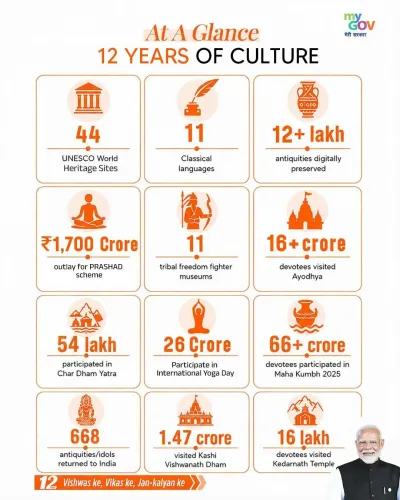
The PRASAD scheme has channelled over ₹1,700 crore in development works at Kashi Vishwanath Dham , Mahakal Mahalok , and Kedarnath Dham .
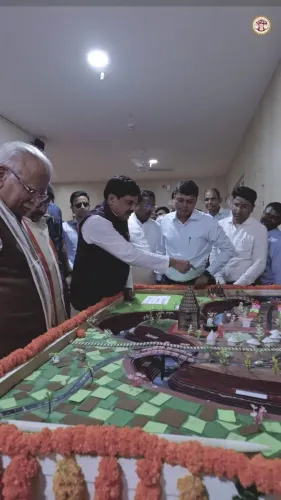
Madhya Pradesh is constructing multiple themed 'loks' (cultural precincts) as part of preparations for Simhastha 2028 in Ujjain .
The PRASAD scheme was launched in 2014–15 to upgrade pilgrimage infrastructure at select destinations across India.
The Kashi Vishwanath Corridor was inaugurated in December 2021 ; Mahakaleshwar precinct redevelopment has been underway since 2018 .
Pilgrims, local traders, and the broader tourism economy in Ujjain and partner cities are the primary stakeholders.
The Chief Minister's Office of Madhya Pradesh on Tuesday, 16 June 2026 highlighted India's ongoing religious and cultural infrastructure push, citing grand redevelopments at Kashi Vishwanath Dham, Mahakal Mahalok, and Kedarnath Dham under the guidance of Prime Minister Narendra Modi, and underscoring the state's preparations for Simhastha 2028 in Ujjain.
Context
The post, shared from the official CMO Madhya Pradesh account, declares that 'sांस्कृतिक चेतना का नया अध्याय लिख रहा 'भारत'' ('India is writing a new chapter of cultural consciousness'). It frames the redevelopment of three of Hinduism's most prominent pilgrimage sites as part of a unified national vision, tagging Prime Minister Modi's office, Chief Minister Dr Mohan Yadav, and the Ministry of Culture at both the central and state levels.
The post specifically references the PRASAD scheme — the Pilgrimage Rejuvenation and Spiritual Augmentation Drive — as channelling over ₹1,700 crore in development works across these sites, while also pointing to the construction of various 'loks' (themed precincts) in Madhya Pradesh as part of preparations for Simhastha 2028.
Policy Backdrop
The PRASAD scheme, launched by the Ministry of Tourism in 2014–15, was designed to upgrade pilgrimage infrastructure at select religious destinations across India, blending heritage conservation with modern amenities for pilgrims. The scheme has since been coordinated alongside state-level projects at Jyotirlinga shrines and Kumbh Mela sites.
The Kashi Vishwanath Corridor in Varanasi was formally inaugurated in December 2021 as a flagship heritage redevelopment project. The Mahakaleshwar temple precinct in Ujjain has been undergoing phased redevelopment since 2018, with the Mahakal Mahalok corridor significantly expanding the pilgrim experience around the Jyotirlinga shrine. Kedarnath Dham in Uttarakhand has seen reconstruction and upgraded access infrastructure following the devastating 2013 floods.
Madhya Pradesh's current focus on themed 'loks' — immersive cultural precincts — mirrors the model employed at Mahakal Mahalok and is being scaled ahead of Simhastha 2028, the Kumbh Mela cycle scheduled in Ujjain.
Stakeholders and Impact
The primary beneficiaries of these projects are the millions of pilgrims who visit these shrines annually. Improved infrastructure — wider corridors, better sanitation, enhanced connectivity, and curated cultural precincts — directly affects the quality and safety of the pilgrimage experience.
Local traders, hospitality providers, and the broader tourism economy in cities like Ujjain, Varanasi, and Kedarnath stand to gain from increased and better-managed pilgrim footfall. Simhastha 2028 in particular is expected to draw tens of millions of visitors to Ujjain, making the current infrastructure push critical to the event's success.
The Ministry of Culture and the Ministry of Tourism, along with the Government of Madhya Pradesh, are the key institutional actors coordinating funding, approvals, and on-ground execution for these works.
What's Next
Attention will turn to state budget allocations and tender awards for Simhastha 2028 infrastructure works in Ujjain, as the event is now under two years away. Any additional PRASAD project sanctions from the central tourism ministry in upcoming announcements will be closely watched as a signal of continued central support.
The broader pattern of central-state coordination on religious tourism corridors — combining central scheme funding with state-level execution — is likely to intensify as 2028 approaches, with Madhya Pradesh positioning itself as a model for culturally rooted infrastructure development.
Point of View
Framing infrastructure spending at religious sites as civilisational renewal rather than routine tourism development. The invocation of three Jyotirlinga-linked sites alongside the ₹1,700 crore PRASAD figure serves to reinforce the BJP's long-running narrative of restoring India's sacred geography. Simhastha 2028 is shaping up as Madhya Pradesh's equivalent of the Prayagraj Mahakumbh — a mega-event that doubles as a political showcase — and the early drumbeat from the CMO signals that the state intends to own that narrative well in advance. The tagging of both central and state culture ministries underlines how tightly the political and administrative machinery is aligned on this agenda.
NationPress
15 Sept 2026
Frequently Asked Questions
What is the PRASAD scheme in India?
The PRASAD scheme — Pilgrimage Rejuvenation and Spiritual Augmentation Drive — is a central government initiative launched in 2014–15 by the Ministry of Tourism to develop and upgrade infrastructure at major pilgrimage sites across India, including amenities, connectivity, and heritage conservation.
What is Simhastha 2028 in Madhya Pradesh?
Simhastha 2028 is the next Kumbh Mela cycle scheduled to be held in Ujjain, Madhya Pradesh. It is one of the largest religious gatherings in the world, and the state government is undertaking major infrastructure works — including themed cultural precincts called 'loks' — to prepare for the event.
What is Mahakal Mahalok in Ujjain?
Mahakal Mahalok is an expanded pilgrimage corridor and cultural precinct surrounding the Mahakaleshwar Jyotirlinga temple in Ujjain, Madhya Pradesh. It was developed in phases from 2018 onward to improve the pilgrim experience and is being further enhanced ahead of Simhastha 2028.
How much money has been spent on Kashi Vishwanath and Kedarnath redevelopment?
The CMO Madhya Pradesh's post cites over ₹1,700 crore in development works under the PRASAD scheme across Kashi Vishwanath Dham, Mahakal Mahalok, and Kedarnath Dham combined. A precise breakdown per site was not specified in the post.
What is the Kashi Vishwanath Corridor project?
The Kashi Vishwanath Corridor is a heritage redevelopment project in Varanasi, Uttar Pradesh, that expanded and beautified the precinct surrounding the Kashi Vishwanath temple. It was formally inaugurated in December 2021 and is considered a flagship project under PM Modi's cultural infrastructure push.