MP CM's Office Launches Gopal-Krishna Gram Puraskar for Dairy Villages
Synopsis
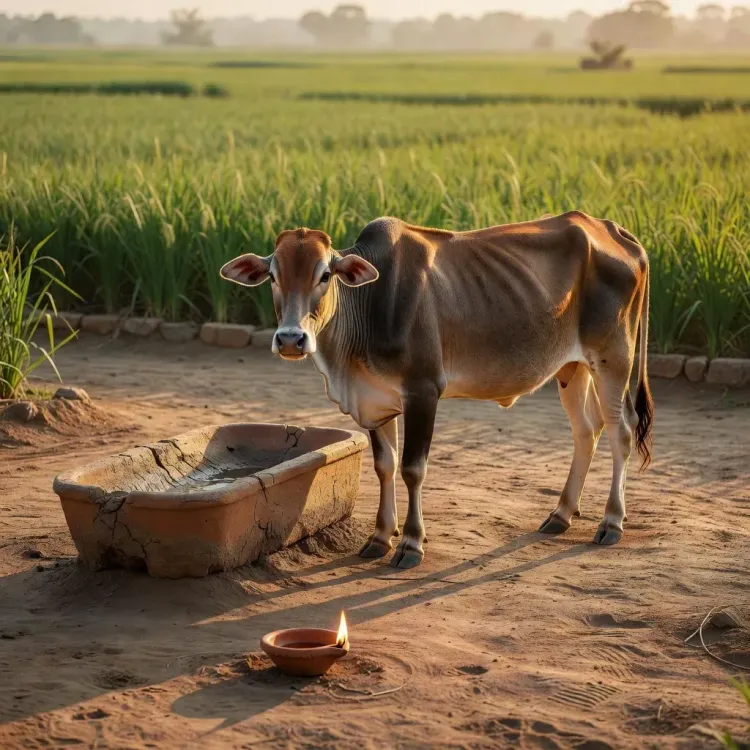
Madhya Pradesh's Chief Minister's Office has launched the Gopal-Krishna Gram Puraskar competition to reward villages excelling in dairy and animal husbandry, spotlighting the state's third-place national milk production ranking under CM Dr. Mohan Yadav's rural development push.
Key Takeaways
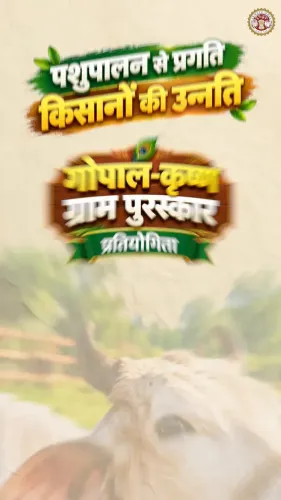
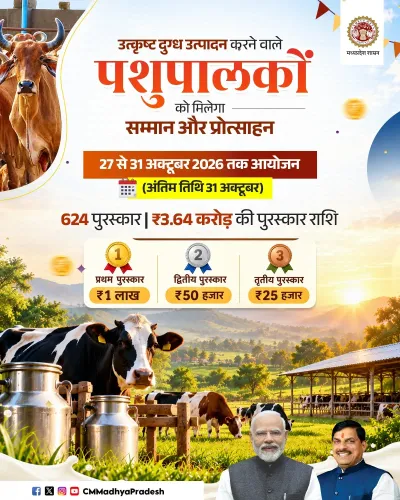
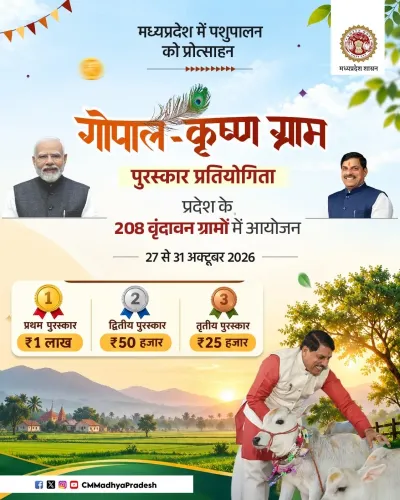
The Chief Minister's Office of Madhya Pradesh announced the Gopal-Krishna Gram Puraskar Pratiyogita on October 31, 2026 .
Madhya Pradesh claims to rank third nationally in milk production, a figure highlighted in the official post.
The competition is run by the Department of Animal Husbandry, Madhya Pradesh and targets village-level excellence in dairy practices.
The initiative aligns with the Centre's Rashtriya Gokul Mission (launched 2014) for indigenous breed conservation and productivity.
Mohan Yadav is directly associated with the scheme as part of his broader rural and agricultural development agenda since December 2023 .
The next key milestone is the announcement of winning villages and updated national dairy output statistics.
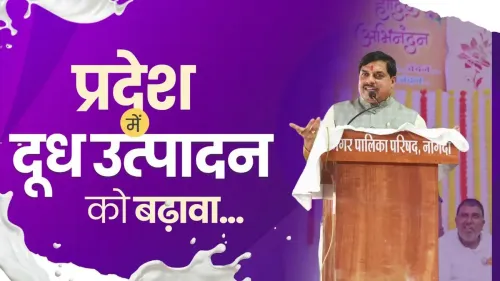
Madhya Pradesh has staked a claim among India's top dairy-producing states — and the state government is now turning that momentum into a competition. The Chief Minister's Office of Madhya Pradesh announced the Gopal-Krishna Gram Puraskar Pratiyogita (Gopal-Krishna Village Award Competition) on Saturday, October 31, 2026, framing it as a push for 'samridh pashupalkan, khushhaal kisaan' — 'prosperous animal husbandry, happy farmers' — while highlighting that Madhya Pradesh currently ranks third in the country for milk production.
What the Gopal-Krishna competition rewards
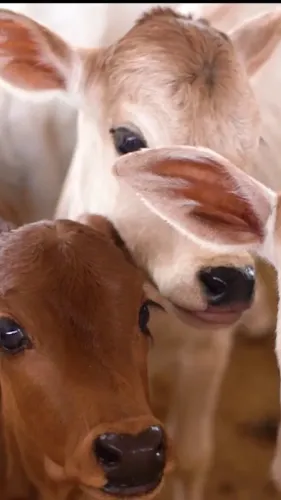
The Gopal-Krishna Gram Puraskar Pratiyogita is a village-level award scheme run by the Department of Animal Husbandry, Madhya Pradesh, designed to recognise gram panchayats that demonstrate excellence in livestock rearing and dairy practices. By putting competitive prestige behind cattle care and milk output, the state is trying to convert grassroots pride into measurable rural income gains. Villages that perform best in criteria tied to dairy development stand to win formal state recognition — a model several Indian states have used to nudge farmer behaviour without direct cash transfers.
MP's rise to third in national dairy rankings
The third-place claim in national milk production places Madhya Pradesh in competitive company, jostling with dairy powerhouses like Uttar Pradesh and Rajasthan that have dominated the rankings for decades. The state has recorded consistent growth in milk output over the past decade, driven partly by its alignment with the Centre's Rashtriya Gokul Mission — launched in 2014 — which targets conservation of indigenous cattle breeds and productivity improvement. Chief Minister Dr. Mohan Yadav, who has kept rural and agricultural development central to his agenda since taking office in December 2023, is tagged directly in the post, signalling executive ownership of the initiative.
Diversifying village livelihoods beyond the crop cycle
The broader logic here is diversification. Madhya Pradesh's farm economy has long rested heavily on soybean and wheat cultivation, leaving millions of small and marginal farmers exposed to monsoon volatility. Animal husbandry — and dairy in particular — offers a year-round income stream that buffers against bad harvests. Award competitions like this one serve as low-cost policy tools: they cost the exchequer relatively little while generating local rivalry and community accountability that no subsidy alone can buy. The real test will come when the state announces the winning villages and publishes updated milk output figures from the Department of Animal Husbandry and Dairying.
For now, the message from Bhopal is clear — the cow belt's third-place dairy ranking is not a ceiling. It's a starting line.
Point of View
Claiming third place in national dairy rankings doubles as a governance credential ahead of what remains a competitive political landscape in the Hindi heartland. The link to the Rashtriya Gokul Mission also lets the state amplify a central government programme, reinforcing alignment between Bhopal and Delhi. Whether village-level awards translate into sustained productivity gains depends on follow-through: transparent evaluation, timely prize disbursement, and integration with veterinary and cooperative infrastructure on the ground.
NationPress
31 Oct 2026
Frequently Asked Questions
What is the Gopal-Krishna Gram Puraskar competition in Madhya Pradesh?
It is a village-level award competition run by the Department of Animal Husbandry, Madhya Pradesh, that recognises gram panchayats excelling in dairy farming and livestock rearing practices, aimed at boosting farmer incomes through animal husbandry.
What is Madhya Pradesh's rank in milk production in India?
The Chief Minister's Office of Madhya Pradesh states that the state currently ranks third in the country for milk production, reflecting consistent growth in dairy output over the past decade.
What is the Rashtriya Gokul Mission and how does it relate to MP's dairy push?
The Rashtriya Gokul Mission is a central government scheme launched in 2014 to conserve indigenous cattle breeds and improve milk productivity. Madhya Pradesh has aligned its state dairy initiatives with this mission to boost output and farmer incomes.
Who is Dr. Mohan Yadav and what is his role in this initiative?
Dr. Mohan Yadav is the Chief Minister of Madhya Pradesh since December 2023. He is directly tagged in the official post announcing the competition, indicating executive ownership of the rural dairy development drive.
How do village award competitions help dairy farmers in India?
Village-level competitions create community accountability and local rivalry that encourages better livestock care and dairy practices without large direct cash outlays. Several Indian states use such schemes to improve rural livelihoods and diversify farm income beyond seasonal crop cultivation.