CM Mohan Yadav Launches Rs 1,500 Monthly Aid for PVTG Women
Synopsis
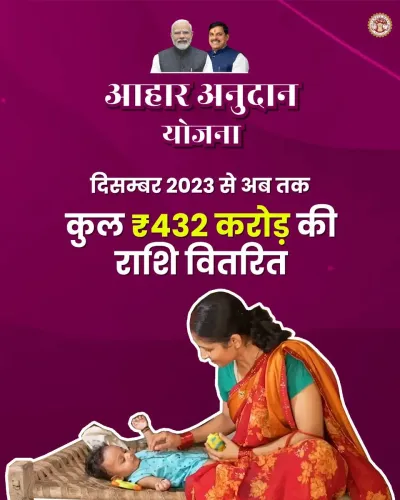
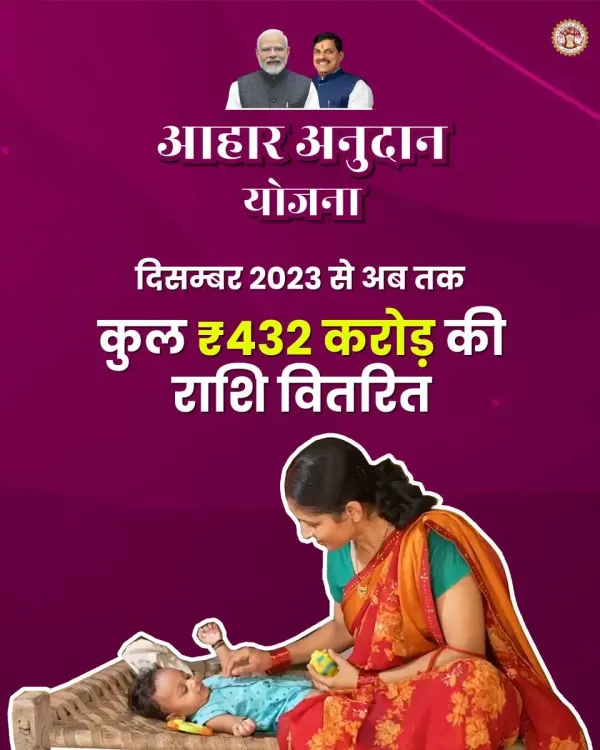
Madhya Pradesh's Chief Minister's Office has announced the Aahaar Anudan Yojana, providing Rs 1,500 per month to female heads of Particularly Vulnerable Tribal Group households for nutrition and economic support, building on both state and central tribal welfare frameworks.
Key Takeaways
The Aahaar Anudan Yojana provides Rs 1,500 per month to female heads of PVTG households in Madhya Pradesh .
The scheme is aimed at delivering 'nutrition and security' to tribal homes, per the official announcement on 27 May 2026 .
The initiative is tagged to Chief Minister Dr.
Mohan Yadav and falls under the Tribal Welfare Department .
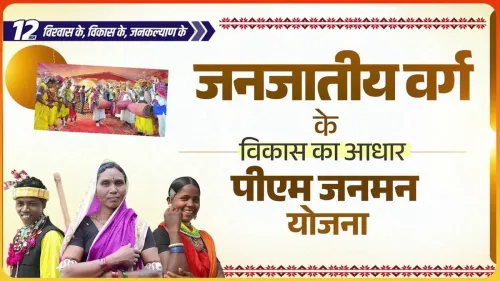
It complements the central government's PM JANMAN scheme launched in November 2023 for 75 PVTGs nationwide.
Madhya Pradesh has one of India's largest tribal populations, making PVTG-targeted schemes particularly significant in the state.
Beneficiary registration processes and integration with central frameworks remain key implementation questions.
The Chief Minister's Office of Madhya Pradesh announced the Aahaar Anudan Yojana on Wednesday, 27 May 2026, a scheme providing monthly cash assistance of Rs 1,500 to female heads of Particularly Vulnerable Tribal Group (PVTG) households across the state, framing the initiative as bringing 'nutrition and security to every home.'
Context
The post from the Chief Minister's Office describes the scheme as 'har ghar tak poshan aur suraksha ka sambal' ('support of nutrition and security to every home'), with the monthly transfer directed specifically at women who head PVTG households. Chief Minister Dr. Mohan Yadav, tagged in the announcement, has positioned tribal welfare as a priority since taking office in December 2023. The scheme falls under the purview of the Madhya Pradesh Tribal Welfare Department.
Policy Backdrop
Madhya Pradesh is home to one of the largest tribal populations in India, with several communities classified as Particularly Vulnerable Tribal Groups — a category reserved for tribes with declining or stagnant populations, low levels of literacy, and a largely pre-agricultural economy. The central government's PM JANMAN scheme, launched in November 2023, had already set a national framework for targeted support to 75 PVTGs across states, covering nutrition, housing, and last-mile delivery of welfare benefits. The Aahaar Anudan Yojana appears to build on this framework at the state level, directing resources specifically toward female household heads — a group that research consistently identifies as critical to improving household nutrition outcomes. Madhya Pradesh has also operated the Vanbandhu Kalyan Yojana since the early 2010s to bridge socio-economic gaps in tribal areas, and the new scheme adds a direct cash transfer layer to that architecture.
Stakeholders and Impact
The primary beneficiaries are women who serve as the heads of PVTG households — a subset of tribal communities considered among the most economically and socially marginalised in India. By routing the Rs 1,500 monthly transfer directly to female heads, the scheme follows a well-established principle in social protection design: placing resources in the hands of women tends to improve household spending on food and nutrition. The Tribal Welfare Department is the implementing body, and the scheme's success will depend on the robustness of beneficiary identification and registration processes, particularly in remote scheduled areas where documentation gaps are common.
What's Next
Key questions going forward include the rollout timeline, the mechanism for beneficiary registration, and whether the scheme will be formally integrated with the central PM JANMAN framework to avoid duplication and maximise coverage. Upcoming state budget sessions are expected to shed light on the financial allocation and the projected number of beneficiaries. The announcement signals that direct benefit transfers for tribal welfare will remain a central plank of the Yadav government's social policy agenda through the remainder of its term.
Point of View
Allowing the ruling party to claim visible welfare delivery ahead of electoral cycles. Targeting female household heads is both sound social policy and politically astute, as it ties welfare optics to women's empowerment messaging. The scheme's real test will be administrative: PVTG communities are among the hardest to reach for formal benefit delivery, and past schemes in this space have struggled with exclusion errors. If the Yadav government can demonstrate clean last-mile delivery, it sets a replicable model for other states with significant PVTG populations.
NationPress
20 Sept 2026
Frequently Asked Questions
What is the Aahaar Anudan Yojana in Madhya Pradesh?
The Aahaar Anudan Yojana is a Madhya Pradesh government scheme that provides a monthly cash assistance of Rs 1,500 to women who are the heads of Particularly Vulnerable Tribal Group households, aimed at supporting nutrition and economic security.
Who benefits from the Aahaar Anudan Yojana?
The scheme specifically targets female heads of Particularly Vulnerable Tribal Group (PVTG) households in Madhya Pradesh, a category covering some of the most marginalised tribal communities in India.
How much money is given under the Aahaar Anudan Yojana?
Eligible beneficiaries receive Rs 1,500 per month as direct financial assistance under the scheme.
What is a Particularly Vulnerable Tribal Group (PVTG)?
PVTGs are tribal communities identified by the Government of India as especially vulnerable due to declining populations, low literacy, a pre-agricultural economy, and extreme geographic isolation. Madhya Pradesh has several such communities.
How does Aahaar Anudan Yojana relate to PM JANMAN?
PM JANMAN is a central government scheme launched in November 2023 to provide targeted support to 75 PVTGs across India. The Aahaar Anudan Yojana is a state-level initiative that complements this framework by adding a direct monthly cash transfer for PVTG women in Madhya Pradesh.