CM MP Office: PM JANMAN Reaches 12 Lakh+ PVTG Families
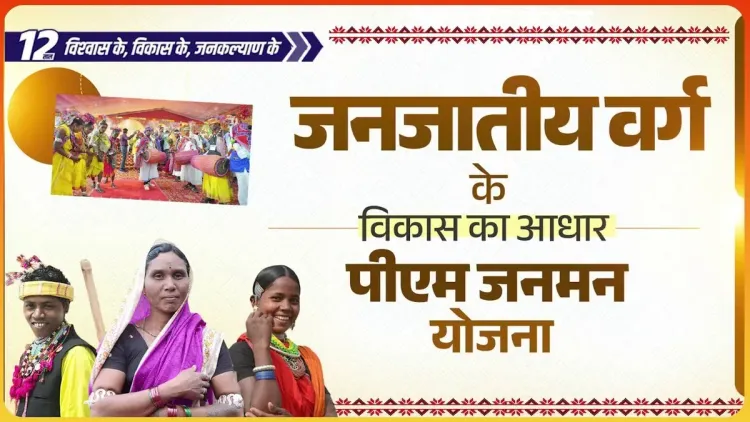
Synopsis
The Chief Minister's Office of Madhya Pradesh reported that PM JANMAN Yojana is now reaching over 12 lakh PVTG families nationally. In Madhya Pradesh, more than 1.43 lakh of the targeted 1.89 lakh homes are complete, 62 Van Dhan Kendras have been sanctioned, and Rs 98 crore in development works have been inaugurated.
Key Takeaways
PM JANMAN Yojana is reaching over 12 lakh families of Particularly Vulnerable Tribal Groups across India, according to the Chief Minister's Office of Madhya Pradesh.
In Madhya Pradesh , more than 1.43 lakh housing units have been completed against a target of 1.89 lakh , leaving roughly 46,000 units pending.
62 Van Dhan Kendras have been sanctioned in Madhya Pradesh to support tribal gatherers with forest produce processing and market linkages.
Development works worth over Rs 98 crore have been inaugurated or had their foundation stones laid under the scheme in the state.
The PM JANMAN Mission was approved in November 2023 with a national outlay of Rs 24,000 crore targeting 75 identified PVTG communities .
The Chief Minister's Office of Madhya Pradesh on Wednesday, June 10, 2026 shared a progress update on the PM JANMAN Yojana, highlighting that the scheme is now reaching over 12 lakh families of Particularly Vulnerable Tribal Groups (PVTGs) across the country, with significant implementation milestones reported from Madhya Pradesh.
Context
The post, shared from the official handle of the Chief Minister's Office, outlines four key achievements under the PM JANMAN (Prime Minister's Janjati Adivasi Nyaya Maha Abhiyan) scheme. Services are stated to be reaching 12 lakh-plus families nationally, while in Madhya Pradesh, the target of 1.89 lakh housing units has seen more than 1.43 lakh units completed. Additionally, 62 Van Dhan Kendras have been sanctioned in the state, and development works worth over Rs 98 crore have been inaugurated or had their foundation stones laid.
The update is tagged to @PMOIndia, @TribalAffairsIn, and @WelfareTribal, signalling coordination between the state government and central ministries overseeing tribal welfare. The hashtag #12YearsOfGaribKalyan (12 years of welfare for the poor) places the update within a broader communication campaign marking a governance milestone.
Policy Backdrop
The PM JANMAN Mission was approved by the Union Cabinet in November 2023 with a total outlay of Rs 24,000 crore, aimed at achieving saturation coverage across 75 identified PVTG communities in India. The scheme converges multiple central programmes — including housing under PMAY, road connectivity, drinking water, and livelihood support — targeting some of the country's most geographically isolated and economically marginalised tribal populations.
The Van Dhan Vikas Kendras referenced in the post are part of a TRIFED-led initiative launched in 2018 to create tribal producer collectives, enabling gatherers of minor forest produce to access processing facilities and connect with formal markets. Madhya Pradesh, home to a large Scheduled Tribe population and several PVTG communities, has been a central focus of these national tribal development efforts.
Stakeholders and Impact
The primary beneficiaries of PM JANMAN are PVTG households — communities identified by the government as among the most vulnerable, often living in remote forest areas with limited access to basic services. Completed housing units directly address shelter insecurity, while the Van Dhan Kendras are intended to provide livelihood support to tribal gatherers who depend on forest produce for income.
The Rs 98 crore worth of development works — covering inaugurations and foundation-laying ceremonies — signals continued infrastructure investment in tribal habitations. For communities historically underserved by mainstream development programmes, these interventions represent a targeted push for inclusion in basic service delivery.
What's Next
Attention will now turn to the pace of completion of the remaining housing gap — approximately 46,000 units still pending against the Madhya Pradesh target of 1.89 lakh. The Ministry of Tribal Affairs is expected to release periodic progress reports on PVTG habitations, and any supplementary budget provisions in 2026-27 could determine whether scheme targets are met within the current financial year.
As the central government marks governance milestones, the convergence of housing, livelihood, and infrastructure under a single PVTG-focused mission will be closely watched as a model for area-specific welfare delivery in states with large tribal populations.
Point of View
Particularly around political milestones — here, the '#12YearsOfGaribKalyan' campaign. The specific housing completion figures and Van Dhan Kendra count signal that the state is presenting itself as a front-runner in PVTG welfare implementation, which carries significance given Madhya Pradesh's large tribal electorate. The convergence of housing, livelihood, and infrastructure under a single PVTG-focused mission also reflects a broader shift in tribal policy from community-agnostic transfers to targeted, community-specific saturation programmes. Whether ground-level delivery matches the reported numbers will be the key question as independent assessments and ministry audits follow.
NationPress
24 Oct 2026
Frequently Asked Questions
What is PM JANMAN Yojana and who does it benefit?
PM JANMAN (Prime Minister's Janjati Adivasi Nyaya Maha Abhiyan) is a central government scheme approved in November 2023 with an outlay of Rs 24,000 crore, targeting 75 Particularly Vulnerable Tribal Group communities across India with housing, connectivity, education, and livelihood support.
How many houses have been built under PM JANMAN in Madhya Pradesh?
According to the Chief Minister's Office of Madhya Pradesh, more than 1.43 lakh housing units have been completed in the state against a target of 1.89 lakh under the PM JANMAN scheme.
What are Van Dhan Vikas Kendras and how many are in Madhya Pradesh?
Van Dhan Vikas Kendras are tribal producer collectives set up under a TRIFED initiative launched in 2018 to help tribal gatherers process and market minor forest produce. The Chief Minister's Office stated that 62 such centres have been sanctioned in Madhya Pradesh under PM JANMAN.
How many PVTG families is PM JANMAN reaching across India?
The Chief Minister's Office of Madhya Pradesh stated on June 10, 2026 that the PM JANMAN Yojana is currently reaching over 12 lakh families of Particularly Vulnerable Tribal Groups nationwide.
What development works worth Rs 98 crore were inaugurated under PM JANMAN in Madhya Pradesh?
The Chief Minister's Office of Madhya Pradesh stated that development works valued at over Rs 98 crore have been inaugurated or had their foundation stones laid in the state under the PM JANMAN scheme, though a detailed project-wise breakdown was not provided in the post.