MP to Set Up Fast Track Courts in 4 Cities: CM Mohan Yadav
Synopsis
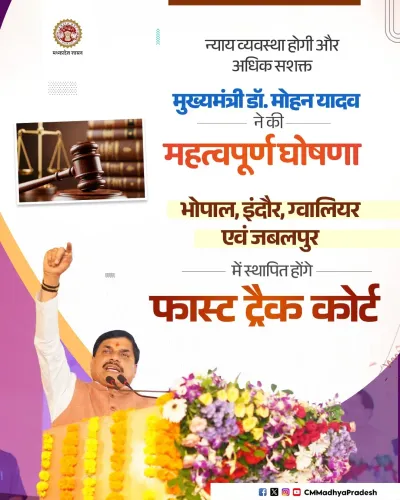
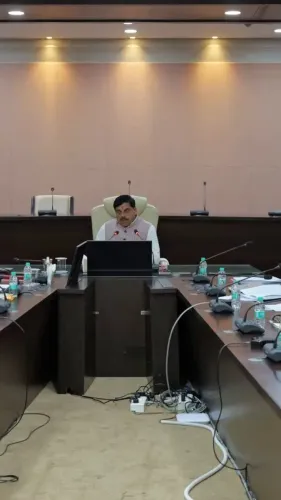
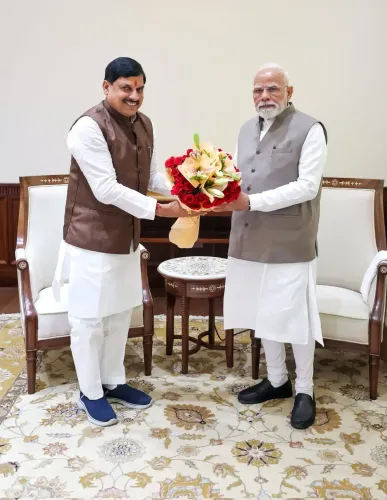
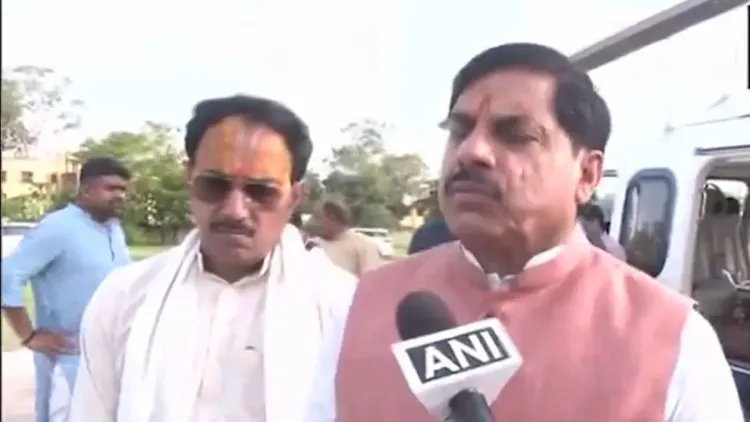
The Madhya Pradesh government has decided to set up fast track courts in Bhopal, Indore, Jabalpur and Gwalior following PM Narendra Modi's national announcement. CM Dr Mohan Yadav said the courts will ensure swift, time-bound resolution of cases involving youth.
Key Takeaways
Madhya Pradesh will establish fast track courts in four cities : Bhopal, Indore, Jabalpur, and Gwalior.
The decision follows an announcement by Prime Minister Narendra Modi on fast track courts at the national level.
CM Dr Mohan Yadav confirmed the move, emphasising swift and time-bound disposal of youth-related cases .
Fast track courts have been a central judicial reform tool in India since the year 2000 , with renewed focus after the 2013 Criminal Law Amendments.
Operational details — including judge appointments, bench count, and case categories — are yet to be announced by the state government.
The initiative could be expanded to other district headquarters beyond the initial four cities depending on outcomes.
The Chief Minister's Office of Madhya Pradesh announced on Friday, 24 July 2026 that the state government has decided to establish fast track courts in Bhopal, Indore, Jabalpur, and Gwalior, following a national-level announcement by Prime Minister Narendra Modi. The courts are intended to ensure swift, time-bound resolution of cases involving youth.
Context
Chief Minister Dr Mohan Yadav confirmed the decision, stating — as posted by the CMO — that 'इन न्यायालयों के माध्यम से युवाओं से जुड़े मामलों का त्वरित एवं समयबद्ध निराकरण सुनिश्चित हो सकेगा' ('Through these courts, swift and time-bound disposal of cases related to youth will be ensured'). The announcement positions Madhya Pradesh as an early state-level responder to the Prime Minister's directive on fast track judicial mechanisms.
The four cities selected — Bhopal, Indore, Jabalpur, and Gwalior — are the largest urban centres in the state and together account for a significant share of Madhya Pradesh's pending caseload.
Policy Backdrop
Fast track courts have been a recurring instrument of judicial reform in India since the central government first launched the scheme in 2000 to expedite long-pending criminal trials. The mechanism gained renewed momentum after the 2013 Criminal Law Amendments, when several states set up dedicated fast track benches focused on offences against women and children.
The current round of expansion, triggered by Prime Minister Modi's announcement, extends the fast track framework to youth-related matters more broadly — a category that encompasses juvenile cases, crimes involving young victims, and offences by or against persons in the youth demographic. Madhya Pradesh's move follows the established pattern of state governments operationalising central judicial efficiency goals at the district and divisional level.
Stakeholders and Impact
The primary beneficiaries are expected to be youth entangled in the judicial system — whether as accused, victims, or witnesses — who currently face prolonged wait times in overburdened ordinary courts. Faster disposal reduces the social and economic cost of prolonged litigation for families and reduces undertrial detention periods.
The judiciary in Madhya Pradesh carries a substantial backlog across its district courts. Dedicated fast track benches, once operationalised, are expected to draw down that backlog in the priority youth category without displacing regular court calendars. Civil society groups working on juvenile justice and crime victim support have consistently advocated for such specialised mechanisms.
What's Next
The immediate questions centre on operational timelines: when the courts in all four cities will begin hearing cases, how many benches will be constituted, and what funding and judicial appointments will underpin them. The state government has not yet detailed the number of judges to be designated or the precise case categories that will qualify for fast track treatment.
Observers will watch whether the initiative expands beyond the initial four cities to smaller district headquarters, and whether measurable case-disposal targets are set — a key indicator of whether this announcement translates into durable judicial reform or remains a policy signal.
Point of View
Which gives the administration flexibility but also leaves the reform's actual scope ambiguous until operational guidelines are published. Fast track courts have a mixed record in India: they succeed when backed by dedicated judges and ring-fenced budgets, and stall when treated as administrative labels on existing benches. The real test for CM Mohan Yadav will be whether Madhya Pradesh moves from announcement to measurable case-disposal outcomes within a defined timeline.
NationPress
24 Jul 2026
Frequently Asked Questions
Which cities in Madhya Pradesh will get fast track courts?
The Madhya Pradesh government has decided to set up fast track courts in four cities: Bhopal, Indore, Jabalpur, and Gwalior.
What types of cases will Madhya Pradesh fast track courts handle?
According to the CMO announcement, the courts will focus on cases involving youth, ensuring swift and time-bound resolution. Precise case categories have not yet been specified by the state government.
Why is Madhya Pradesh setting up fast track courts now?
The decision follows an announcement by Prime Minister Narendra Modi on fast track courts at the national level. Madhya Pradesh is aligning its judicial infrastructure with the central directive.
What is the history of fast track courts in India?
The central government first launched the fast track courts scheme in 2000 to clear long-pending criminal cases. The mechanism was expanded after the 2013 Criminal Law Amendments, with many states setting up dedicated benches for offences against women and children.
When will the new fast track courts in Madhya Pradesh start functioning?
The state government has announced the decision but has not yet disclosed specific operational timelines, the number of benches, or judge appointment details for the courts in Bhopal, Indore, Jabalpur, and Gwalior.