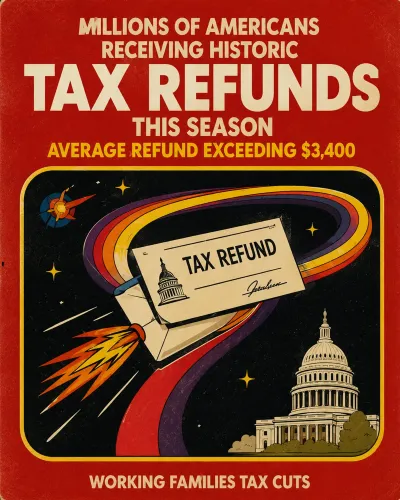
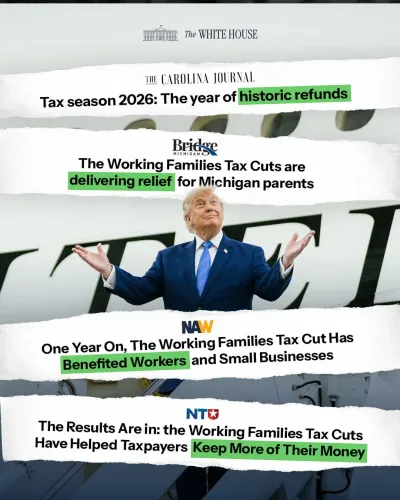
White House Credits Trump Tax Law With $1 Trillion Output Gain
Synopsis
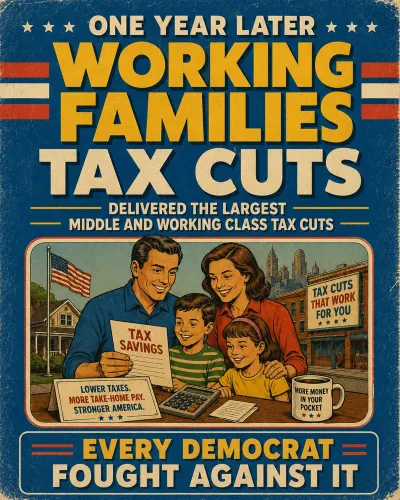
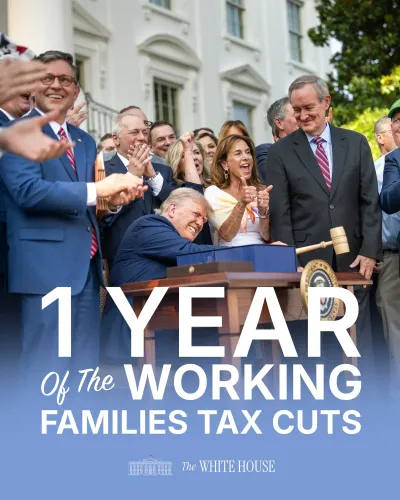
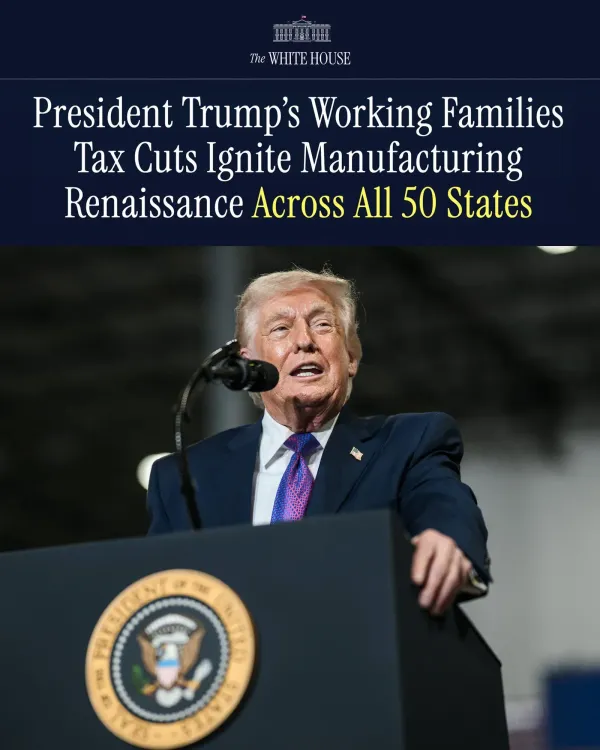
The White House on July 25, 2026, credited President Trump's tax legislation — branded the Working Families Tax Cuts — with preserving over $1 trillion in economic output and driving millions of jobs across all 50 US states and the manufacturing sector.
Key Takeaways
The White House posted on July 25, 2026 , claiming $1 trillion+ in preserved economic output from Trump's tax legislation.
The law is being labelled the Working Families Tax Cuts , a rebranding of the Tax Cuts and Jobs Act signed in December 2017 .
The administration says the legislation has driven millions of jobs across all 50 US states .
The manufacturing sector is specifically highlighted as a key beneficiary of the tax reforms.
The TCJA cut the corporate tax rate from 35% to 21% — the largest US tax overhaul since 1986 .
Upcoming Bureau of Labor Statistics data and congressional action on expiring provisions are the key developments to watch.
The White House on Friday, July 25, 2026, claimed that legislation it is calling the Working Families Tax Cuts has preserved more than $1 trillion in economic output and driven millions of jobs across all 50 US states, crediting the law with fuelling investment, innovation, and growth in the manufacturing sector.
Context
The official White House account posted that President Donald Trump's 'historic legislation' is 'fueling investment, innovation, and growth' nationwide. The post specifically highlighted the manufacturing sector as a key beneficiary, framing the tax policy as a driver of broad-based economic expansion. The White House described the results as spanning 'all 50 states,' underscoring a national rather than regional claim.
The legislation being referenced traces its origins to the Tax Cuts and Jobs Act (TCJA), enacted in December 2017 — the most sweeping overhaul of the US federal tax code since 1986. That law reduced the corporate tax rate from 35% to 21% and restructured individual income tax brackets, with provisions affecting both businesses and working households.
Policy Backdrop
The Tax Cuts and Jobs Act of 2017 was signed into law during Trump's first term and has remained a centrepiece of Republican economic messaging. Supporters have long argued that the reduction in corporate tax rates unlocked domestic investment and made American manufacturing more competitive globally. Critics have contended that the bulk of benefits accrued to corporations and higher-income households rather than working families.
The White House's current framing — using the label 'Working Families Tax Cuts' — represents a deliberate rhetorical positioning of the law around middle- and lower-income beneficiaries. The $1 trillion output preservation figure cited in the post is a significant claim; independent verification of that specific number through standard economic reporting channels remains outstanding as of the post's publication date.
Stakeholders and Impact
The administration's messaging targets two primary constituencies: working families who benefited from revised individual tax brackets, and manufacturers who gained from the lower corporate rate and expensing provisions. The emphasis on all 50 states is a political signal that the benefits are geographically distributed rather than concentrated in coastal or urban economies.
For India, where bilateral trade and investment ties with the United States are substantial, sustained growth in American manufacturing and consumer demand carries downstream significance. A buoyant US industrial base can influence demand for Indian exports, supply-chain partnerships, and the pace of foreign direct investment flows in both directions.
What's Next
Upcoming Bureau of Labor Statistics employment reports will offer independent data points against which the administration's jobs claims can be measured. Congressional debate over whether to extend, modify, or allow certain TCJA provisions to lapse — several individual-rate cuts are set to expire — is expected to intensify through 2026. How lawmakers resolve those expiry questions will determine whether the economic trajectory the White House is highlighting continues or reverses course.
The administration's sustained emphasis on tax-cut outcomes signals that fiscal policy achievements will remain central to its political messaging heading into the next electoral cycle, with manufacturing-state voters likely the primary audience for claims of job creation and output growth.
Point of View
Household-centred narrative. Anchoring the claim around a $1 trillion output figure and a 50-state jobs story is consistent with an administration seeking to build a durable economic legacy ahead of the next electoral cycle. The emphasis on manufacturing resonates with the Rust Belt and industrial-state constituencies that have been central to Trump's political coalition. Independent economic assessments of the specific figures cited will be critical to evaluating whether the messaging reflects verifiable outcomes or aspirational framing.
NationPress
24 Jul 2026
Frequently Asked Questions
What are the Working Families Tax Cuts?
The Working Families Tax Cuts is the name the Trump administration is using to describe tax legislation — rooted in the Tax Cuts and Jobs Act of 2017 — that the White House says has preserved over $1 trillion in economic output and created millions of American jobs.
What did the Tax Cuts and Jobs Act 2017 do?
The Tax Cuts and Jobs Act, signed in December 2017, was the largest overhaul of the US tax code since 1986. It cut the corporate tax rate from 35% to 21% and restructured individual income tax brackets, affecting both businesses and working households.
How does the US tax cut affect India?
A stronger US manufacturing base and sustained consumer demand can boost Indian exports, support supply-chain partnerships, and influence the pace of US foreign direct investment into India, making American fiscal policy directly relevant to the Indian economy.
What is the $1 trillion economic output claim about?
The White House claims that Trump's tax legislation has preserved more than $1 trillion in economic output. Independent verification of this specific figure through standard economic reporting remains outstanding as of the post's publication date.
When do Trump tax cuts expire?
Several individual-rate provisions of the Tax Cuts and Jobs Act are scheduled to expire, and congressional debate over whether to extend or modify those provisions is expected to intensify through 2026.