MP CM Mohan Yadav unveils Sleemanabad Tunnel to bring Narmada water to Vindhya

Synopsis
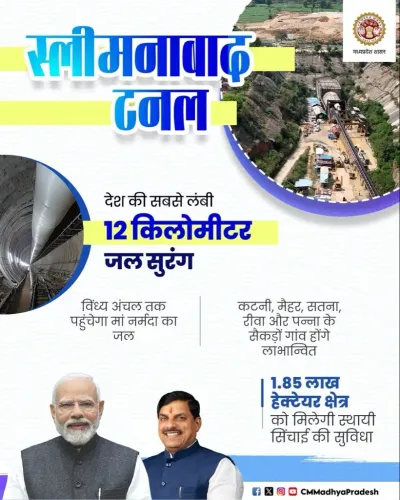
Madhya Pradesh's CMO has announced the Sleemanabad Tunnel Project — a 12-km tunnel to carry Narmada water into the historically water-scarce Vindhya plateau, promising to expand irrigation across 2.5 lakh hectares and transform agriculture for the region's farmers.
Key Takeaways
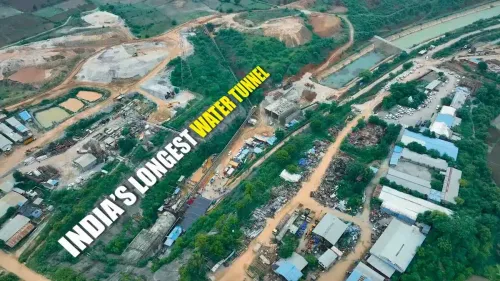
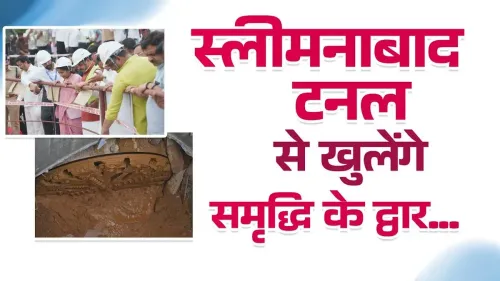
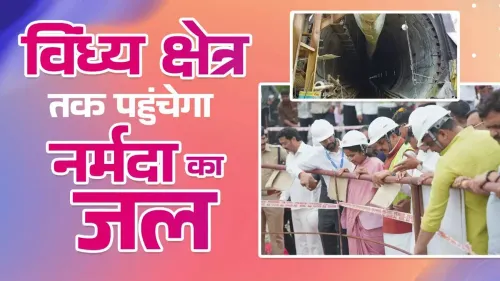
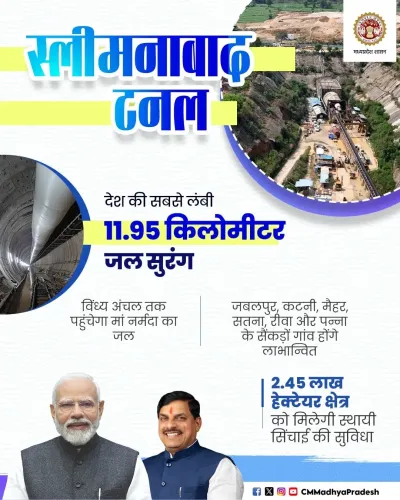
The Sleemanabad Tunnel Project proposes a 12-kilometre tunnel to route Narmada water into the Vindhya region of Madhya Pradesh.
The state government claims the project will add 2.5 lakh hectares of irrigated farmland in the region.
Mohan Yadav is cited as the political driver of the initiative.
The Vindhya plateau — covering districts including Rewa, Satna, Sidhi, and Singrauli — has historically had limited canal irrigation due to its rugged terrain.
The project fits within the broader Narmada Valley Development Authority mission and aligns with the national Pradhan Mantri Krishi Sinchayee Yojana .
Key milestones to watch include budget allocations, environmental clearances, and land-acquisition proceedings.
Water is power — and in Madhya Pradesh, it is about to flow uphill. The Chief Minister's Office of Madhya Pradesh announced on Friday, 16 October 2026 a landmark irrigation initiative: the Sleemanabad Tunnel Project, a 12-kilometre tunnel engineered to carry Narmada water deep into the rain-shadow hinterland of the Vindhya region, with the state government claiming it will expand irrigated farmland by 2.5 lakh hectares.
A tunnel through the Vindhya plateau — what the project promises
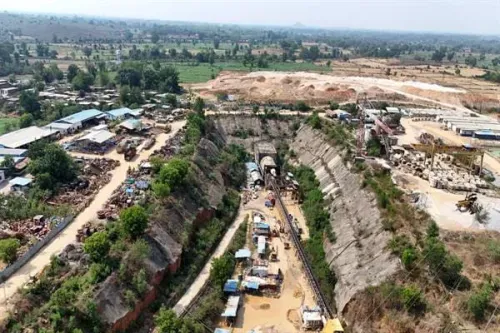
The CMO post, tagging Chief Minister Dr. Mohan Yadav and the state Public Works and Rural Development Ministry, declared: 'Vindhya ki dharti par samridhdhi ki dhara' — 'a stream of prosperity on the land of Vindhya.' The centrepiece is a sub-surface tunnel that would pierce the Vindhya escarpment, redirecting Narmada flows into an area that has historically depended on erratic rainfall and shallow groundwater for agriculture.
The Vindhya plateau stretches across northern Madhya Pradesh, covering districts such as Rewa, Satna, Sidhi, and Singrauli. It is geographically formidable — a rugged highland — which is precisely why conventional canal networks have struggled to reach it. A pressurised tunnel system is the engineering answer to that terrain problem.
Narmada's long journey from source to policy
The Narmada Valley Development Authority (NVDA), operational since the 1980s, has been the institutional spine of Madhya Pradesh's water ambitions. Successive state governments have drawn on Narmada waters to address irrigation deficits across central India, with the river anchoring some of India's most contested and consequential hydraulic infrastructure. The Sleemanabad project represents the latest chapter in that multi-decade effort — now targeting the Vindhya arc, which has remained at the margins of prior irrigation expansion.
The project also aligns with the Pradhan Mantri Krishi Sinchayee Yojana (PMKSY), the national scheme designed to extend irrigation coverage and improve water-use efficiency at the farm level. State-level tunnel and water-transfer projects that feed into PMKSY targets can access central co-funding, giving Madhya Pradesh a fiscal incentive beyond the immediate agricultural payoff.
What 2.5 lakh hectares actually means for Vindhya farmers
The figure of 2.5 lakh hectares of additional irrigated area — if realised — would be transformative for a region where a second crop is still a luxury for most smallholder farmers. Reliable irrigation breaks the single-crop trap, enabling rabi sowing after the monsoon and protecting yields in deficit rainfall years. For the farming communities of Vindhya, the tunnel is not merely infrastructure; it is the difference between subsistence and surplus.
Construction milestones, budget allocations in upcoming state budgets, environmental clearances, and any land-acquisition proceedings will be the real test of the project's pace. Madhya Pradesh has a track record of large irrigation announcements — the velocity of execution will define this one's legacy.
Point of View
Targeting the Vindhya belt — a constituency-rich, historically underserved zone — ahead of future electoral cycles. It continues a decades-long Madhya Pradesh playbook of leveraging Narmada infrastructure as both a development instrument and a political asset. The alignment with PMKSY gives the project central co-funding potential, but the gap between large irrigation announcements and on-ground delivery has been a persistent credibility question for the state. Execution speed and transparent budget tracking will determine whether this becomes a genuine transformation story or another deferred promise.
NationPress
16 Oct 2026
Frequently Asked Questions
What is the Sleemanabad Tunnel Project in Madhya Pradesh?
The Sleemanabad Tunnel Project is a proposed irrigation infrastructure initiative in Madhya Pradesh that involves constructing a 12-kilometre tunnel to convey water from the Narmada River into the Vindhya plateau region, aiming to expand irrigated farmland by 2.5 lakh hectares.
Which areas will benefit from the Sleemanabad Tunnel?
The project targets the Vindhya region of northern Madhya Pradesh, which includes districts such as Rewa, Satna, Sidhi, and Singrauli — areas with historically limited irrigation infrastructure due to rugged terrain.
Who announced the Sleemanabad Tunnel Project?
The announcement was made by the Chief Minister's Office of Madhya Pradesh on 16 October 2026, tagging Chief Minister Dr. Mohan Yadav.
How does the Narmada River connect to Madhya Pradesh's irrigation plans?
The Narmada River, which originates in Madhya Pradesh, has been the backbone of the state's irrigation expansion since the 1980s through the Narmada Valley Development Authority. Multiple large-scale projects draw on its waters to address agricultural deficits across central India.
What is the Pradhan Mantri Krishi Sinchayee Yojana and how is it relevant?
PMKSY is a national scheme to expand irrigation coverage and improve water-use efficiency at the farm level. State projects like the Sleemanabad Tunnel that align with its objectives can access central co-funding, making them financially attractive for state governments.