Muharram ends peacefully in UP; Razvi credits Yogi govt's law and order
Synopsis
A senior Islamic cleric's public praise for Yogi Adityanath's law-and-order handling of Muharram — and a direct allegation that violence would have erupted under Akhilesh Yadav — makes this more than a routine festival wrap. It signals a clerical endorsement with clear political undertones in a state where minority community sentiment is a perennial flashpoint.
Key Takeaways
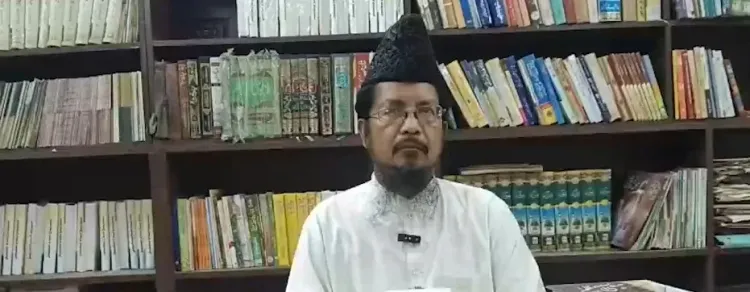
All India Muslim Jamaat President Maulana Shahabuddin Razvi Bareilvi declared that Muharram concluded peacefully across Uttar Pradesh on 27 June .
Razvi credited Chief Minister Yogi Adityanath and state police for maintaining law and order during the 10-day observance.
He alleged that violent incidents would have occurred had Akhilesh Yadav been in power — a claim the Samajwadi Party has not responded to.
Muharram was observed nationally with processions and mourning gatherings marking the martyrdom of Imam Hussain (AS) in the Battle of Karbala .
The month also marks the start of the Islamic Hijri New Year , based on a lunar calendar.
All India Muslim Jamaat President Maulana Shahabuddin Razvi Bareilvi on Saturday, 27 June said that the 10-day observance of Muharram concluded without incident across Uttar Pradesh, attributing the peaceful conduct to the law-and-order arrangements put in place by the state government under Chief Minister Yogi Adityanath. The remarks came from Bareilly, a city with significant religious significance in the region.
What Razvi Said
'The festival of Muharram went really well. The ten days of Muharram were very peaceful, and everything passed off smoothly,' Razvi said. He added that no untoward situation arose in either Uttar Pradesh or Uttarakhand, noting that there was no need to cut electricity wires or trees — a common logistical challenge during processions involving tall tazias.
'This all happened because Chief Minister Yogi Adityanath maintained law and order. I want to thank the government and the police officials who made all the necessary arrangements,' he said.
Political Dig at Akhilesh Yadav
Razvi also took a pointed swipe at Samajwadi Party chief and former Uttar Pradesh Chief Minister Akhilesh Yadav. 'If Akhilesh Yadav had been in power, violent incidents would have taken place,' he alleged. The remarks reflect the ongoing political contest over the Muslim community's confidence in law-enforcement across successive state administrations. Razvi's comments, notably, come from a prominent Islamic clerical figure whose endorsement carries weight beyond electoral politics.
Muharram Observed Across India
Muharram was observed across the country this year, with devotees participating in religious processions, mourning gatherings, and commemorative prayer meetings. The month holds deep significance in Islam as the first month of the Islamic Hijri calendar and one of the four sacred months during which warfare is traditionally forbidden — the word 'Muharram' itself means 'forbidden' in Arabic.
The observance centres on Ashura, the 10th day of Muharram, which marks the martyrdom of Imam Hussain (AS), grandson of Prophet Muhammad (SAW), in the Battle of Karbala. Mourning processions, majlis (religious gatherings), and acts of remembrance are held across India and globally during this period.
Significance of the Islamic New Year
The first day of Muharram also marks the beginning of the Islamic New Year. The Hijri calendar is lunar, with each month beginning upon the sighting of the new moon. While no specific acts of worship are prescribed for New Year's Day in Islamic tradition, many Muslims use the occasion to reflect on the life and teachings of Prophet Muhammad (SAW) and the early Muslim community.
With Muharram passing peacefully in one of India's most populous and religiously diverse states, the administration's security arrangements will be closely studied ahead of other upcoming religious observances.
Point of View
Uncontested so far, will likely be amplified in BJP's outreach to Muslim voters ahead of future state elections. What mainstream coverage misses is the significance of a prominent Bareilly-based cleric — a city that is itself a centre of the Barelvi tradition — lending public legitimacy to a BJP government's governance record. Whether this reflects a broader shift in clerical opinion or is an isolated statement of one leader warrants closer scrutiny.
NationPress
26 Sept 2026
Frequently Asked Questions
What did Maulana Razvi say about Muharram in Uttar Pradesh?
Maulana Shahabuddin Razvi Bareilvi, President of the All India Muslim Jamaat, said that the 10-day Muharram observance passed off entirely peacefully in Uttar Pradesh, crediting Chief Minister Yogi Adityanath's law-and-order arrangements. He thanked both the state government and police officials for their preparations.
Why did Razvi criticise Akhilesh Yadav over Muharram?
Razvi alleged that violent incidents would have occurred during Muharram had Samajwadi Party chief Akhilesh Yadav been in power, contrasting the current peaceful observance with what he implied would have been a more volatile situation under the previous SP administration. The allegation was not independently verified.
What is Muharram and why is it significant?
Muharram is the first month of the Islamic Hijri calendar and one of Islam's four sacred months. It is observed in remembrance of the martyrdom of Imam Hussain (AS), grandson of Prophet Muhammad (SAW), in the Battle of Karbala, and also marks the start of the Islamic New Year.
Was Muharram observed peacefully across India this year?
According to reports, Muharram was observed peacefully across India, with devotees participating in religious processions, mourning gatherings, and prayer meetings. Uttar Pradesh, often a sensitive state for communal events, saw no major untoward incidents, according to Maulana Razvi's statement.
What is the All India Muslim Jamaat?
The All India Muslim Jamaat is an Islamic clerical organisation based in Bareilly, Uttar Pradesh. Its president, Maulana Shahabuddin Razvi Bareilvi, is a prominent religious figure associated with the Barelvi tradition of Sunni Islam, which has a significant following in South Asia.