Rajnath Singh at IPRD 2026: Trust, wise tech use to shape Indo-Pacific future
Synopsis
At IPRD 2026 in New Delhi, Defence Minister Rajnath Singh delivered a pointed message: the Indo-Pacific's future will be shaped not by who has the most advanced technology, but by how wisely it is used and how equitably it is shared. His warning against a new tech-driven inequality among regional nations adds a sharp edge to India's maritime diplomacy.
Key Takeaways
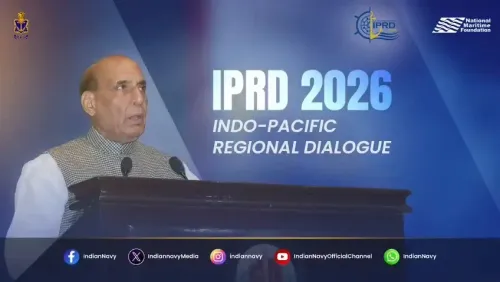
Defence Minister Rajnath Singh addressed the Indo-Pacific Regional Dialogue (IPRD)-2026 in New Delhi on 4 November 2026 .
He asserted that the Indo-Pacific’s future depends on mutual trust and the wise use of technology , not technology alone.
Singh warned that global maritime security is under strain from ‘deliberate disruptions’ to trade and the weaponisation of narrow maritime passages.
He cautioned that AI and advanced maritime tech must not deepen inequality among Indo-Pacific nations with differing capabilities.
Prime Minister Modi’s Indo-Pacific Oceans Initiative (IPOI) , launched in 2019 , was cited as a practical cooperation framework spanning seven areas .
India’s ‘Maritime Amrit Kaal Vision 2047’ was presented as the country’s long-term maritime transformation roadmap.
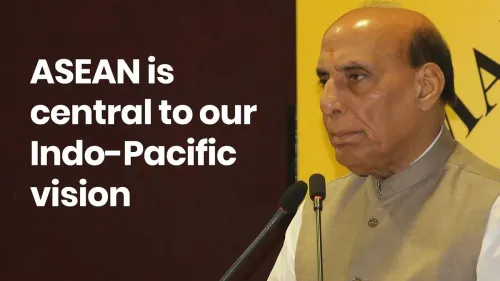
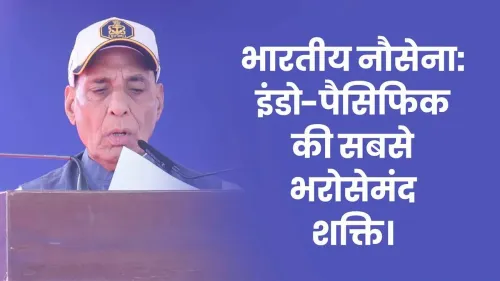
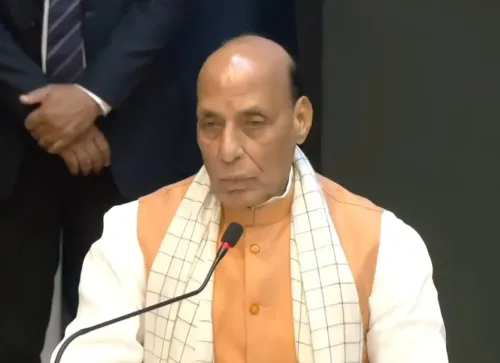
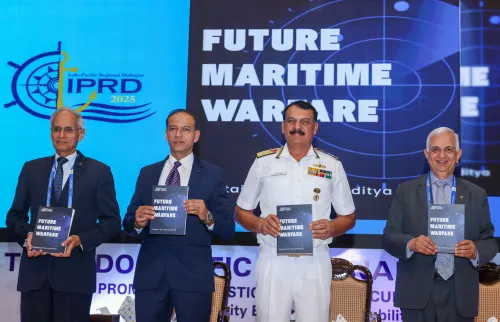
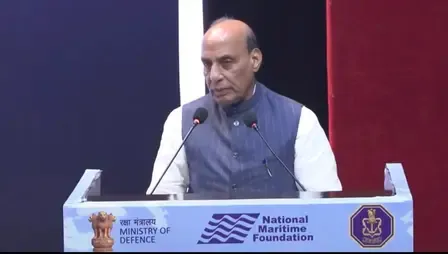
Defence Minister Rajnath Singh on Wednesday, 4 November 2026, declared that the future of the Indo-Pacific region will not be determined by technology alone, but by how wisely nations deploy it and the degree of mutual trust they build through cooperation. Addressing a special session of the Indo-Pacific Regional Dialogue (IPRD)-2026 in New Delhi, Singh outlined India's maritime vision and called for inclusive technological progress across the region.
India's Maritime Identity and Responsibilities
Singh opened by grounding India's Indo-Pacific engagement in historical context, asserting that oceans have never been distant or unfamiliar to the country. “For centuries, Indian sailors have traversed these maritime routes, carrying not only goods but also knowledge, culture, and human connections,” he said. This legacy, he argued, is a core reason why India has “consistently contributed responsibly to a free, open, and rules-based international order.”
He added that India’s maritime responsibilities extend well beyond its national coastline, and the country remains firmly committed to an open, inclusive, and rules-based maritime system.
Growing Strain on Global Maritime Security
Singh painted a sobering picture of the current maritime security environment, warning that it is under significant strain due to what he described as “deliberate disruptions” to trade. “Freedom of navigation along sea routes is being openly challenged, and narrow maritime passages are increasingly being used as strategic tools,” he cautioned. “This growing instability at sea poses a serious challenge to the broader international order.”
Crucially, he rejected isolationism as a response. The answer to disruption, he stressed, is not a retreat from globalisation or the closure of maritime spaces, but rather making “interdependence more secure through diversified supply chains.” This framing aligns with India’s broader push to position itself as a reliable alternative node in global trade networks.
Technology, AI, and the Risk of a New Divide
Acknowledging the transformative potential of emerging technologies, Singh highlighted how Artificial Intelligence (AI) is reshaping data analysis, while autonomous systems are expanding the scope of maritime surveillance and operations. “Advanced sensors are enhancing ocean-monitoring capabilities. Progress in materials science, biotechnology, and data analytics is opening new avenues for research and application,” he noted, adding that these developments carry “far-reaching implications for maritime security and economic activity.”
However, he issued a pointed warning: technology must not become another axis of inequality. “The Indo-Pacific region includes countries with significant differences in technological and economic capabilities. If the benefits of technological progress remain limited to a few countries, the region will not be able to achieve the collective resilience it requires,” he said. This caution speaks directly to concerns among smaller Indo-Pacific nations about being left behind in the AI and defence-tech race.
IPOI Framework and Maritime Amrit Kaal Vision 2047
Singh recalled that Prime Minister Narendra Modi announced the Indo-Pacific Oceans Initiative (IPOI) in 2019, describing it as a practical framework for maritime cooperation across seven interconnected areas. He positioned the IPRD as a complementary mechanism that brings together diverse stakeholders to address specific challenges and develop actionable solutions.
He also cited India’s ‘Maritime Amrit Kaal Vision 2047’ as a comprehensive roadmap that places strong emphasis on technology, innovation, research, education, and skill development. As India works toward becoming a developed nation by 2047, Singh said the maritime sector will be central to national transformation, with ambitions extending to building a “comprehensive maritime ecosystem” rather than merely expanding trade or naval capability.
Singh concluded by reaffirming that contributing to a peaceful, secure, and prosperous maritime region — through cooperation, strong partnerships, and collective effort — remains a key priority for India in the Indo-Pacific.
Point of View
Even without naming Beijing. The call for inclusive tech-sharing is strategically smart — it positions India as a benign regional leader rather than a great-power rival. But the gap between India’s maritime ambitions and its current naval and economic heft remains wide; the ‘Maritime Amrit Kaal Vision 2047’ is a long horizon, and the region’s smaller nations will watch whether India’s partnership offers are backed by concrete capacity-building, not just dialogue platforms.
NationPress
4 Nov 2026
Frequently Asked Questions
What did Rajnath Singh say at IPRD 2026 about the Indo-Pacific?
Defence Minister Rajnath Singh said the future of the Indo-Pacific will be determined not by technology alone, but by how wisely nations use it and how much mutual trust they build through cooperation. He made these remarks at the Indo-Pacific Regional Dialogue (IPRD)-2026 in New Delhi on 4 November 2026.
What is the Indo-Pacific Oceans Initiative (IPOI)?
The Indo-Pacific Oceans Initiative (IPOI) is a cooperative framework announced by Prime Minister Narendra Modi in 2019 to advance maritime collaboration across seven interconnected areas. Singh described it at IPRD 2026 as a practical mechanism linking national priorities to regional outcomes.
Why did Rajnath Singh warn about technology inequality in the Indo-Pacific?
Singh cautioned that the Indo-Pacific includes nations with significant gaps in technological and economic capabilities, and that if the benefits of AI and advanced maritime technology remain concentrated among a few countries, the region cannot achieve the collective resilience it needs. He stressed that technology should not become a new source of inequality.
What is India’s Maritime Amrit Kaal Vision 2047?
It is India’s long-term maritime roadmap aimed at building a comprehensive maritime ecosystem by 2047, with strong emphasis on technology, innovation, research, education, and skill development. Singh presented it at IPRD 2026 as central to India’s goal of becoming a developed nation by that year.
What threats to maritime security did Singh highlight at IPRD 2026?
Singh said the global maritime security environment is under strain due to deliberate disruptions to trade and the use of narrow maritime passages as strategic tools. He called for making interdependence more secure through diversified supply chains rather than retreating from globalisation.