Nadda announces Cabinet nod for BHAVYA-Rasayan chemical parks scheme
Synopsis
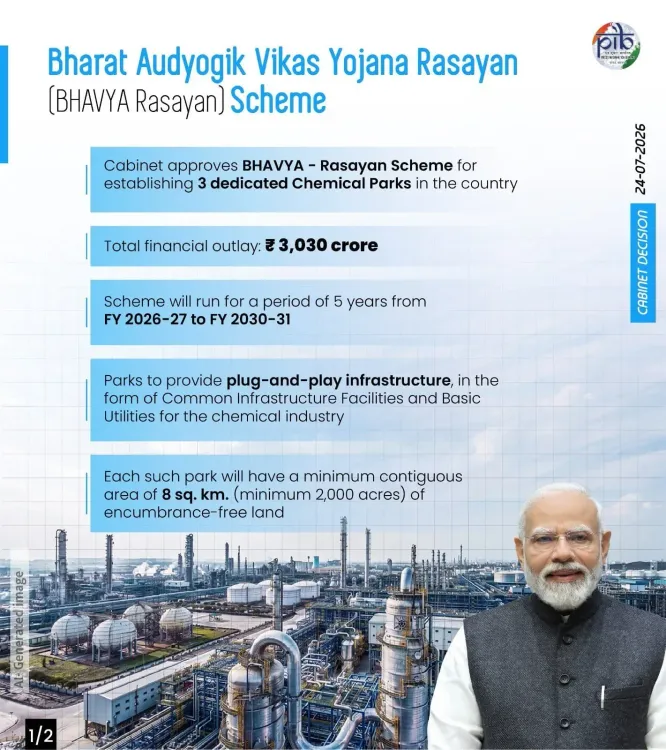
The Union Cabinet has approved the BHAVYA–Rasayan Scheme to build three world-class Chemical Parks in India with a ₹3,030 crore outlay. Announced by Minister J. P. Nadda, the scheme aims to boost investment, exports, import substitution, and employment in the chemical sector under the Viksit Bharat@2047 vision.
Key Takeaways
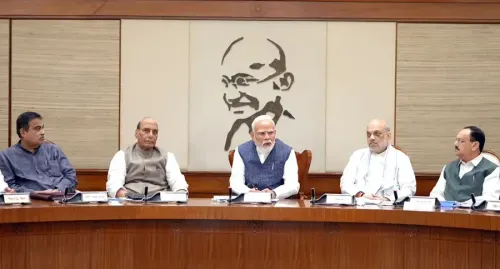
The Union Cabinet , chaired by PM Narendra Modi , approved the BHAVYA–Rasayan Scheme on 24 July 2026 .
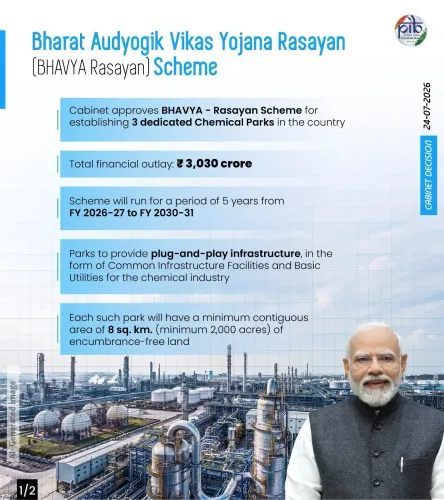
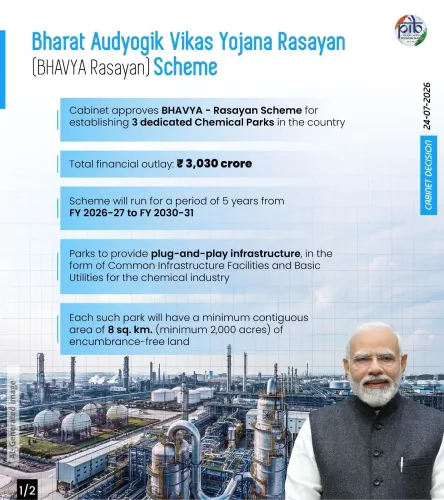
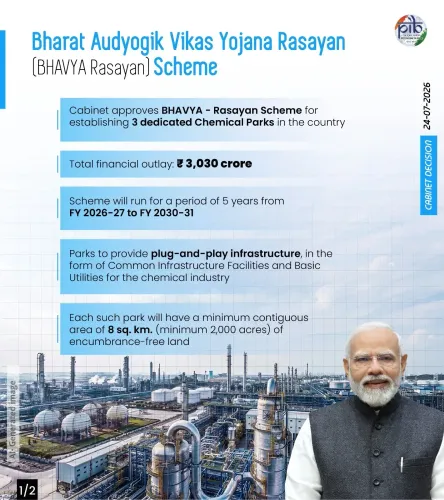
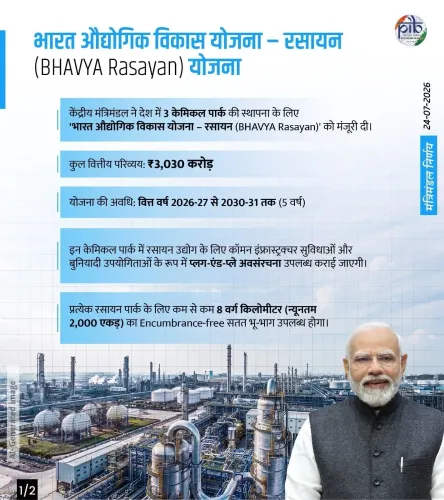
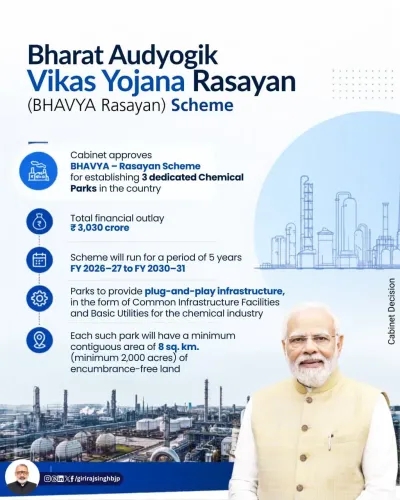
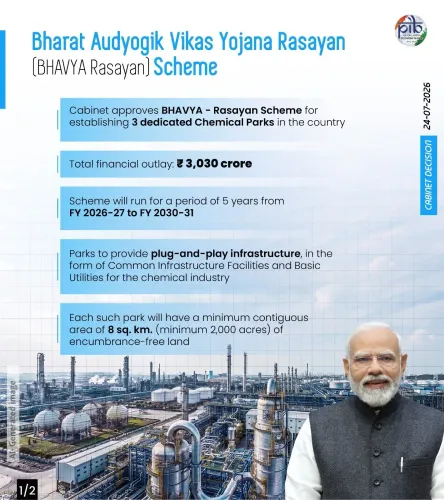
The scheme provides for three world-class Chemical Parks across India with a total outlay of ₹3,030 crore .
Central assistance of up to ₹1,000 crore per park will fund common infrastructure including logistics, utilities, and environmental systems.
Key objectives include accelerating investment, boosting exports, promoting import substitution , and generating large-scale employment.
The scheme is anchored to the government's Viksit Bharat@2047 vision of a developed India by the centenary of Independence.
Site selection for the three parks and release of detailed guidelines are the immediate next steps to watch.
Union Health and Chemicals Minister J. P. Nadda announced on Friday, 24 July 2026 that the Union Cabinet, chaired by Prime Minister Narendra Modi, has approved the BHAVYA–Rasayan Scheme — formally, the Bharat Audyogik Vikas Yojana Rasayan — to establish three world-class Chemical Parks across India, with a total outlay of ₹3,030 crore and central assistance of up to ₹1,000 crore per park.
Context
Nadda, who holds the dual portfolio of Health and Family Welfare and Chemicals and Fertilizers, shared the Cabinet decision on X (formerly Twitter), describing the scheme as a step toward strengthening India's chemical manufacturing ecosystem through 'world-class common infrastructure, lower logistics costs, enhanced global competitiveness, and environmentally sustainable industrial development.' The announcement falls under the government's broader Viksit Bharat@2047 vision — its long-term blueprint for transforming India into a developed economy by the centenary of Independence.
The chemical sector is among India's largest industrial segments, contributing significantly to exports, employment, and downstream manufacturing across pharmaceuticals, agrochemicals, textiles, and consumer goods. Dedicated cluster infrastructure has long been flagged by industry as a prerequisite for scaling capacity and competing with established chemical hubs in China, Germany, and South Korea.
Policy Backdrop
The BHAVYA–Rasayan Scheme builds on a policy lineage stretching back to the Petroleum, Chemicals and Petrochemicals Investment Regions (PCPIR) framework, first notified in 2007, which sought to develop integrated chemical industry clusters with shared infrastructure. The Make in India programme, launched in September 2014, further elevated chemicals and petrochemicals as a priority manufacturing sector, emphasising import substitution and export competitiveness.
The new scheme sharpens these objectives by tying central assistance directly to park-level common infrastructure — logistics, utilities, effluent treatment, and connectivity — rather than individual plant subsidies. This approach is designed to lower the entry cost for manufacturers, particularly small and medium enterprises, while ensuring environmental compliance at the cluster level.
According to the Cabinet decision as announced by Nadda, the scheme will 'accelerate investment, boost exports, promote import substitution, generate large-scale employment, and integrate India's chemical industry into global value chains.'
Stakeholders and Impact
Chemical manufacturers and exporters stand to benefit most directly from the scheme. Shared infrastructure in a dedicated park reduces capital expenditure on individual units, while centralised environmental systems help firms meet increasingly stringent domestic and international compliance standards. For small and medium chemical producers, access to plug-and-play industrial land with ready utilities can be a decisive factor in investment decisions.
The employment dimension is also significant: the chemicals sector supports a dense network of ancillary industries, and large-scale park development typically generates both direct manufacturing jobs and indirect employment in logistics, services, and supply chains. The government's stated objective of import substitution points particularly at specialty chemicals and intermediates — segments where India has historically depended on imports, especially from China.
Environmental sustainability is an explicit design parameter of the scheme. Common effluent treatment and waste-management infrastructure at the park level addresses one of the chemical industry's persistent regulatory and reputational challenges, and aligns with India's commitments under international environmental frameworks.
What's Next
The immediate focus will shift to the selection of sites for the three Chemical Parks, release of detailed operational guidelines, and disbursement of the first tranche of central assistance. The pace of site identification and state-level land acquisition will be closely watched as an early indicator of implementation momentum.
With global supply chains actively diversifying away from single-source dependencies, India's window to position itself as an alternative chemical manufacturing hub is time-sensitive. The BHAVYA–Rasayan Scheme, if executed at scale, could meaningfully shift investment flows into the sector and accelerate India's integration into global chemical value chains — a stated priority of the Viksit Bharat@2047 framework.
Point of View
Moving from aspiration to capital-backed commitment with a defined per-park assistance ceiling. By framing the scheme explicitly around import substitution and global value chain integration, the government is signalling that the chemical sector — long overshadowed by IT and pharmaceuticals in policy attention — is now a front-line priority in the post-China-plus-one supply chain realignment. For Minister Nadda, the announcement reinforces his Chemicals and Fertilizers portfolio at a moment when the BJP is keen to demonstrate manufacturing-sector deliverables. The scheme's success will ultimately hinge on state governments' speed in land acquisition and the quality of environmental governance built into the parks from the outset.
NationPress
24 Jul 2026
Frequently Asked Questions
What is the BHAVYA-Rasayan Scheme?
The BHAVYA–Rasayan Scheme, short for Bharat Audyogik Vikas Yojana Rasayan, is a central government scheme approved by the Union Cabinet in July 2026 to establish three world-class Chemical Parks across India, with a total outlay of ₹3,030 crore and up to ₹1,000 crore in central assistance per park.
How much central funding will each chemical park receive under BHAVYA-Rasayan?
Each of the three Chemical Parks approved under the BHAVYA–Rasayan Scheme is eligible for up to ₹1,000 crore in central government assistance, to be used for common infrastructure such as logistics, utilities, and environmental facilities.
What are the main goals of the BHAVYA-Rasayan chemical parks scheme?
The scheme aims to accelerate investment in chemical manufacturing, boost exports, promote import substitution, generate large-scale employment, and integrate India's chemical industry into global value chains, all in support of the Viksit Bharat@2047 development vision.
Who announced the BHAVYA-Rasayan Scheme?
Union Minister for Health and Family Welfare and Chemicals and Fertilizers, J. P. Nadda, announced the Cabinet approval of the BHAVYA–Rasayan Scheme on 24 July 2026 via a post on X.
Where will the three BHAVYA-Rasayan Chemical Parks be located?
The specific locations for the three Chemical Parks under the BHAVYA–Rasayan Scheme have not yet been announced. Site selection is expected to be among the immediate next steps following the Cabinet approval.