Nadda at ABVIMS Convocation: Super-Specialty Block Coming Soon
Synopsis
Union Health Minister J. P. Nadda, alongside President Droupadi Murmu, attended ABVIMS and Dr. RML Hospital's 12th Convocation in New Delhi, announcing an upcoming super-specialty block and a proposed expansion of undergraduate medical intake from 100 to 250 seats for 324 graduating doctors.
Key Takeaways
324 students graduated at the 12th Convocation of ABVIMS and Dr.
RML Hospital in New Delhi on 20 November 2026 .
A super-specialty block at ABVIMS is set to be operationalised soon, adding high-end clinical capacity.
A new medical college building is proposed to raise undergraduate intake from 100 to 250 seats — a 150 per cent increase.
President Droupadi Murmu and Union Health Minister J.
Nadda both attended, signalling the event's national importance.
The expansions align with the Pradhan Mantri Swasthya Suraksha Yojana (PMSSY) and the National Medical Commission Act 2019 framework for medical seat growth.
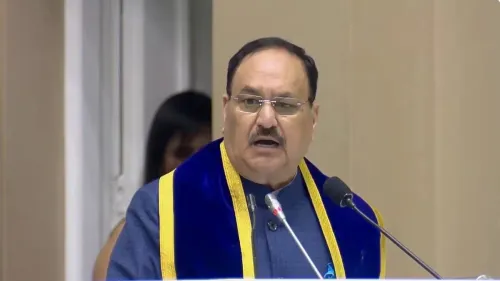
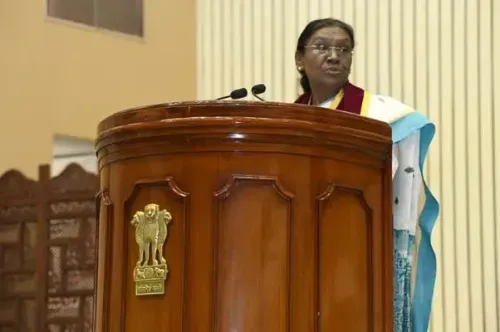
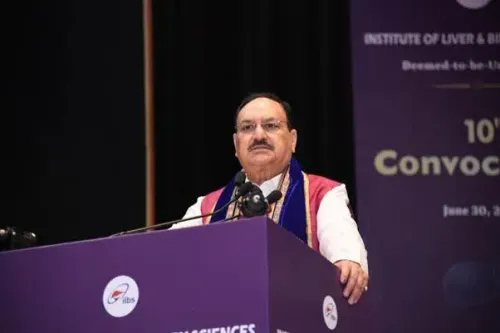
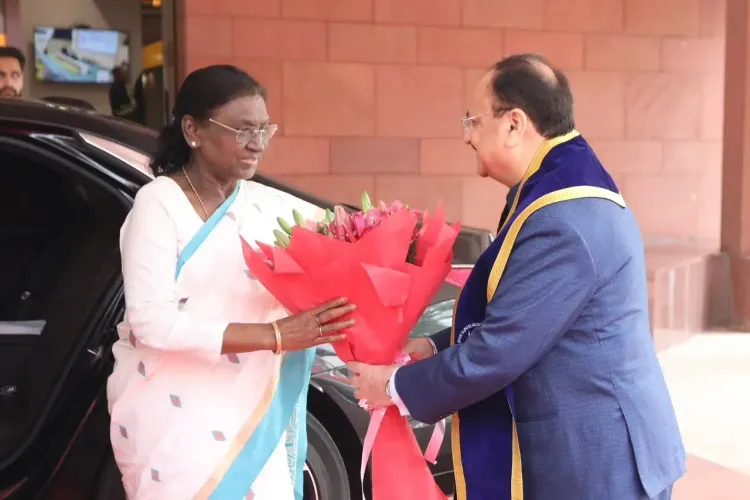
Three hundred and twenty-four young doctors walked out of ABVIMS and Dr. Ram Manohar Lohia Hospital on Friday, 20 November 2026 with degrees in hand — and a promise from the government that the institution delivering those degrees is about to get significantly bigger. Union Health Minister J. P. Nadda joined President Droupadi Murmu at the 12th Convocation of ABVIMS and Dr. RML Hospital in New Delhi, using the occasion to announce two landmark expansions for the central government's flagship tertiary care teaching institute.
A super-specialty block and 150 new MBBS seats on the horizon
Nadda announced that a super-specialty block at ABVIMS is set to be operationalised 'soon,' adding high-end clinical capacity to a hospital already known for pioneering surgical procedures. Beyond that, a new medical college building is proposed that would raise the institute's undergraduate intake from 100 to 250 seats — a 150 per cent jump in annual MBBS admissions at a single central institution. Together, the two expansions represent the most consequential structural upgrade ABVIMS has seen in years.
The Atal Bihari Vajpayee Institute of Medical Sciences, attached to the historic Dr. Ram Manohar Lohia Hospital in central New Delhi, functions as both a frontline tertiary care provider and a training ground for specialists. Its convocation is therefore not merely a graduation ceremony — it is a window into the state of publicly funded medical education in the capital.
Where ABVIMS fits in India's medical-seat expansion drive
The announcements track a multi-year central government effort to narrow India's doctor-to-population gap. The Pradhan Mantri Swasthya Suraksha Yojana (PMSSY), launched in 2003 and expanded across successive budget cycles, has funded upgrades to government medical colleges and seeded new AIIMS-type institutions across states. The National Medical Commission Act of 2019 replaced the Medical Council of India specifically to unlock faster seat expansion and streamline college approvals — the kind of regulatory headroom that makes a jump from 100 to 250 UG seats administratively possible.
Successive Union budgets have earmarked funds for adding both undergraduate and postgraduate seats in existing central government hospitals, with the stated goal of producing enough doctors to serve a population of over 1.4 billion. ABVIMS's proposed expansion is a direct downstream effect of that policy pipeline.
Nadda's charge to the graduating batch
Addressing the 324 graduating doctors, Nadda urged them to 'uphold the highest standards of integrity, compassion, and service to the nation' — framing the profession not merely as a career but as a civic calling. The presence of President Murmu at the convocation lent the ceremony constitutional weight, underscoring the government's signal that medical education is a national priority, not a departmental footnote.
The minister attributed the direction of these reforms to Prime Minister Narendra Modi, describing the government's commitment as ensuring healthcare that is 'affordable, accessible and high-quality' for all citizens — language that mirrors the core mandate of the PMSSY and the broader Ayushman Bharat architecture.
The real test now is delivery: when the super-specialty block opens its doors, and when regulators formally approve the seat expansion, the institution's promises to its newest graduates will either be validated or deferred. Watch those timelines closely.
Point of View
A cost-efficient route to narrowing India's physician deficit. Nadda's choice of a graduation stage to make the announcement is tactically astute: it frames expansion as a commitment to those already in the system, not an abstract budget line. The presence of President Murmu elevates the event from a ministerial photo-op to a constitutional endorsement of the health education agenda. The critical variable is implementation speed — approved expansions at central hospitals have historically faced long gaps between announcement and operationalisation, and those timelines will determine whether this convocation speech is remembered as a turning point or a talking point.
NationPress
20 Nov 2026
Frequently Asked Questions
What is ABVIMS and Dr. RML Hospital?
ABVIMS — the Atal Bihari Vajpayee Institute of Medical Sciences — is a central government tertiary care teaching hospital attached to Dr. Ram Manohar Lohia Hospital in New Delhi. It conducts pioneering surgeries, medical education, and research under the Union Health Ministry.
How many seats will ABVIMS have after the proposed expansion?
The proposed new medical college building at ABVIMS would raise its undergraduate (MBBS) intake from 100 to 250 seats per year, representing a 150 per cent increase in annual admissions.
What is the super-specialty block announced at ABVIMS?
Union Health Minister J. P. Nadda announced that a super-specialty block at ABVIMS is set to be operationalised soon, which will add advanced clinical and surgical capacity to the hospital beyond its existing services.
Who attended the 12th Convocation of ABVIMS?
President Droupadi Murmu and Union Health Minister J. P. Nadda attended the 12th Convocation of ABVIMS and Dr. RML Hospital on 20 November 2026 in New Delhi , where 324 students graduated.
What is the Pradhan Mantri Swasthya Suraksha Yojana (PMSSY)?
PMSSY, launched in 2003 , is a central government scheme designed to upgrade existing government medical colleges and establish new AIIMS-type institutions across India to improve access to quality tertiary healthcare.