Nadda cites Modi's 'Sabka Saath' mantra as India's political shift
Synopsis
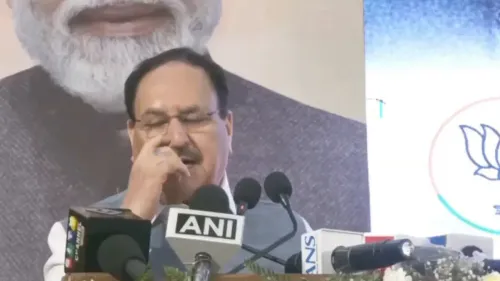
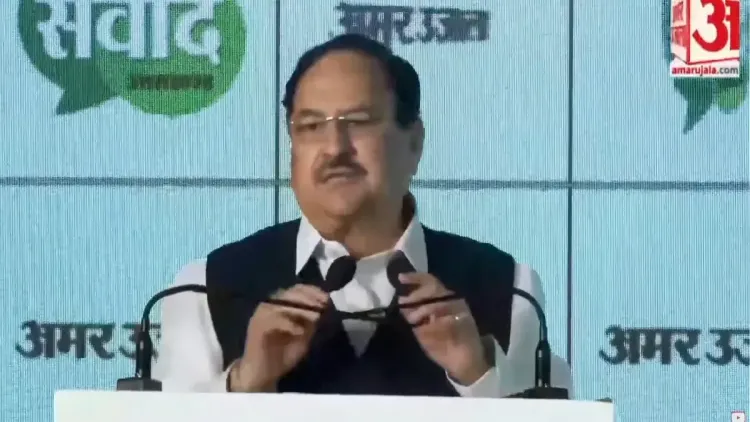
Union Health Minister and BJP president J. P. Nadda on June 24, 2026, invoked PM Modi's four-part governing mantra — 'Sabka Saath, Sabka Vikas, Sabka Vishwas, Sabka Prayas' — arguing that India's political consciousness has shifted from fatalism to collective confidence over the past decade.
Key Takeaways
Nadda , Union Health Minister and BJP national president, posted on June 24, 2026 , crediting PM Modi with transforming India's political discourse.
Nadda argued that 12-13 years ago ordinary citizens believed systemic change was impossible; that fatalism has since been replaced by collective confidence.
He cited Modi's mantra: 'Sabka Saath, Sabka Vikas, Sabka Vishwas, Sabka Prayas' — inclusion, development, trust, and collective effort. 'Sabka Saath, Sabka Vikas' was introduced in 2014 ; 'Sabka Vishwas' was added around 2019 ; 'Sabka Prayas' extended the formulation further.
The statement reinforces the BJP's sustained electoral narrative of a pre-2014 versus post-2014 governance contrast.
The 'Sabka Prayas' pillar is expected to continue shaping the framing of centrally sponsored schemes in upcoming Union Budgets .
Union Health Minister and BJP national president J. P. Nadda on Wednesday, June 24, 2026, invoked Prime Minister Narendra Modi's governing philosophy to argue that India's political consciousness has undergone a fundamental transformation over the past decade, asserting that citizens now believe change is not only possible but inevitable.
Context
In a post on X, Nadda wrote in Hindi that roughly 12 to 13 years ago the average Indian had resigned themselves to the belief that the system would never change — 'बदलाव संभव नहीं है, यही नियति है' ('Change is not possible; this is destiny'). He contrasted that fatalism with what he described as a renewed national confidence, captured in the phrase: 'Yes, we can, and we shall do it.'
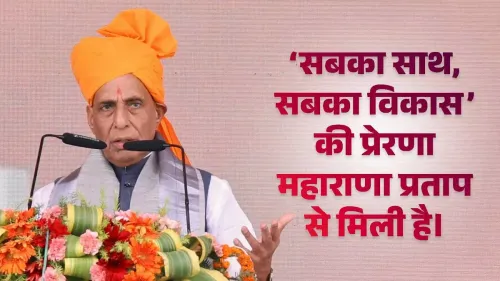
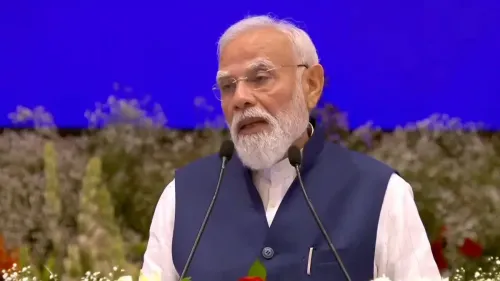
Nadda credited Prime Minister Modi with establishing a new political mantra: 'सबका साथ, सबका विकास, सबका विश्वास और सबका प्रयास' — 'Together with all, development for all, trust of all, and effort of all.'
Policy Backdrop
The four-part formulation has a layered history. BJP introduced 'Sabka Saath, Sabka Vikas' as its core governing philosophy during the 2014 general-election campaign under Modi, framing it as an inclusive development agenda. 'Sabka Vishwas' — trust of all — was formally added around the 2019 elections to signal outreach beyond the BJP's traditional base.
The fourth element, 'Sabka Prayas' (effort of all), extended the formulation further, positioning citizens themselves as co-participants in national development rather than passive recipients of government schemes. Nadda's post reaffirms all four pillars as a unified governing doctrine.
Stakeholders and Impact
The framing is directed at Indian voters and the general public, particularly those who lived through what Nadda characterises as an era of systemic pessimism before 2014. By invoking a before-and-after narrative, the BJP's national president is reinforcing the party's long-standing electoral argument that the post-2014 period represents a qualitative break from earlier governance.
The message also functions internally, signalling to party workers and allied organisations that the ideological scaffolding of 'Sabka Prayas' remains central to the BJP's political communication as the country approaches future electoral cycles.
What's Next
The 'Sabka Prayas' element is expected to shape the framing of centrally sponsored schemes in forthcoming Union Budgets and state-level implementation reviews, with the government likely to continue presenting citizen participation as integral to policy delivery. Nadda's intervention suggests the BJP intends to keep this four-part philosophy at the centre of its public messaging, using it to draw a sustained contrast with the pre-2014 political era.
Point of View
Each addition timed to broaden the coalition the party claims to represent. By framing the pre-2014 era as one of citizen fatalism and the post-2014 period as one of restored agency, Nadda is doing the work of party mythology-building: turning a governing philosophy into a felt emotional shift. The durability of this framing across more than a decade of BJP communication suggests it will remain the party's primary self-description well into the next electoral cycle.
NationPress
24 Jun 2026
Frequently Asked Questions
What is 'Sabka Saath, Sabka Vikas, Sabka Vishwas, Sabka Prayas'?
It is the BJP's four-part governing philosophy, meaning 'Together with all, development for all, trust of all, and effort of all.' The first two elements were introduced in 2014, 'Sabka Vishwas' was added around 2019, and 'Sabka Prayas' extended the formulation to emphasise citizen participation.
What did J. P. Nadda say about India's political change?
Nadda said that 12-13 years ago ordinary Indians believed the system could never change, but over the past decade that fatalism has been replaced by a collective belief that progress is achievable, which he attributed to PM Modi's leadership and governing mantra.
When was 'Sabka Saath, Sabka Vikas' first introduced?
The slogan 'Sabka Saath, Sabka Vikas' was introduced during the BJP's 2014 general-election campaign under Narendra Modi as the party's core inclusive-development philosophy.
What does 'Sabka Prayas' mean and why was it added?
'Sabka Prayas' means 'effort of all' and was added to position citizens as active co-participants in national development, rather than passive beneficiaries, reinforcing a participatory dimension to the BJP's governance narrative.