Nadda condoles Himachal landslide deaths in Kaddoo Nala
Synopsis
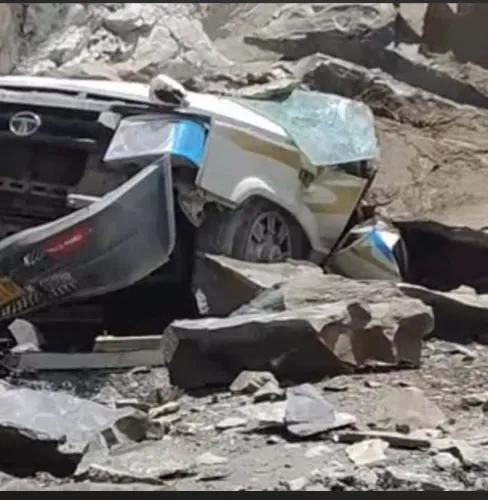
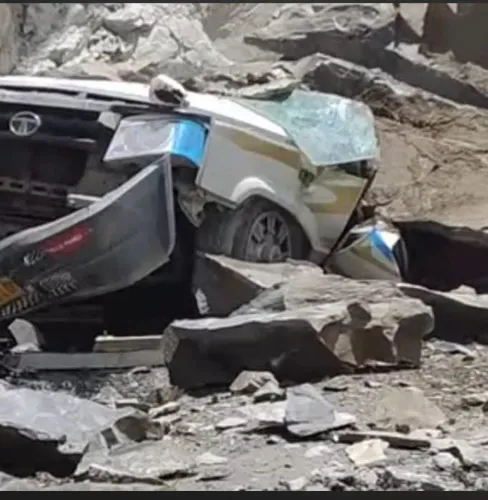
Union Health Minister J. P. Nadda on 24 July 2026 expressed condolences over casualties from a landslide at Kaddoo Nala in the border area of Pangi and Lahaul-Spiti districts in Himachal Pradesh, praying for peace for the departed and strength for bereaved families.
Key Takeaways
A landslide struck Kaddoo Nala in the border region of Pangi and Lahaul-Spiti districts in Himachal Pradesh , causing multiple casualties.
Union Health Minister J.
Nadda posted condolences on X on 24 July 2026 , calling the news 'extremely sorrowful.' Nadda prayed for peace for the souls of the deceased and strength for the bereaved families, closing with ॐ शांति: .
Pangi and Lahaul-Spiti are remote, high-altitude border districts with limited road access, complicating rescue operations.
Landslides are a recurring monsoon hazard in Himachal Pradesh 's Himalayan districts, governed under the Disaster Management Act, 2005 framework.
State and central agencies, including the NDRF , are expected to coordinate rescue and relief assessments in the affected area.
Union Health Minister J. P. Nadda on Friday, 24 July 2026, expressed deep condolences over casualties caused by a landslide in the Kaddoo Nala area along the border region of Pangi and Lahaul-Spiti districts in Himachal Pradesh. The minister described the news of fatalities as 'extremely sorrowful' and prayed for peace for the departed souls and strength for the bereaved families.
Context
In his post on X, Nadda wrote — 'हिमाचल प्रदेश के पांगी और लाहौल-स्पीति जिले के सीमावर्ती क्षेत्र कड़ू नाला में पहाड़ी दरकने से कई लोगों के हताहत होने का समाचार अत्यंत दु:खद है' — ('The news of several people being killed due to a hill collapse at Kaddoo Nala in the border area of Pangi and Lahaul-Spiti district of Himachal Pradesh is extremely sorrowful'). He extended his 'deepest sympathies to the grief-stricken families' and prayed to God to 'grant peace to the souls of the departed and give strength to the bereaved to bear this immense grief,' closing with ॐ शांति: (Om Shanti).
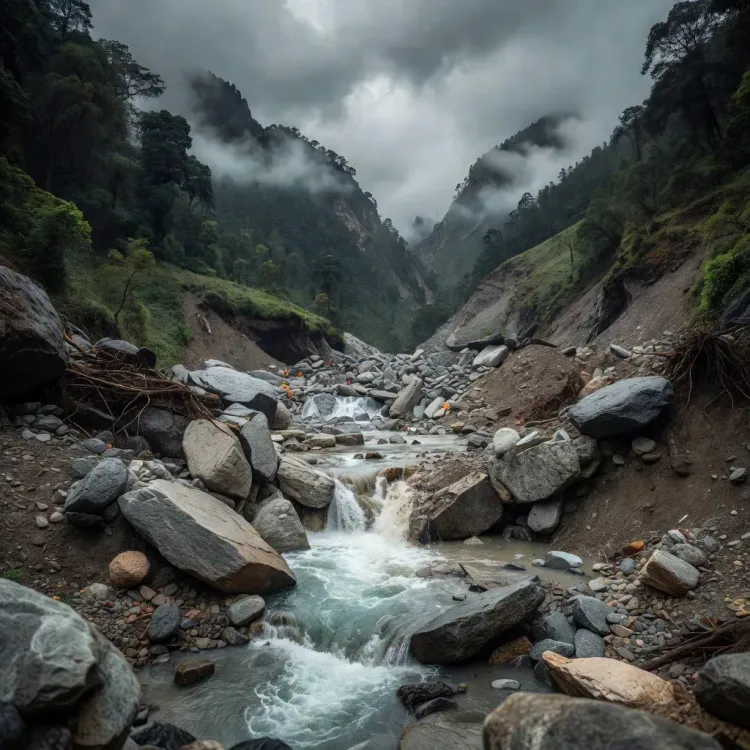
The Kaddoo Nala area sits along the inter-district border between Pangi valley and Lahaul-Spiti, two of Himachal Pradesh's most remote and geologically fragile regions. Both areas are characterised by steep Himalayan slopes, sparse road connectivity, and limited emergency access — factors that complicate rescue and relief operations whenever a natural disaster strikes.
Policy Backdrop
Himachal Pradesh experiences recurring landslides during the monsoon season, driven by heavy rainfall acting on fragile geology and near-vertical slopes. The Disaster Management Act, 2005 established the National Disaster Management Authority (NDMA) to coordinate multi-agency responses to such calamities, with states activating their own State Disaster Response Forces alongside central NDRF teams for rescue missions in affected zones.
Border districts such as Pangi and Lahaul-Spiti present particular operational challenges: single-road access corridors are often themselves damaged by the same events that require emergency response, delaying the deployment of personnel and equipment. These structural vulnerabilities have been a longstanding concern in Himachal Pradesh's disaster preparedness planning.
Stakeholders and Impact
The immediate stakeholders are the families of those killed or injured in the landslide, as well as residents of the wider Kaddoo Nala belt who may face disrupted connectivity and access to essential services in the aftermath. Pangi and Lahaul-Spiti are sparsely populated border areas where even routine administrative reach is limited, making disaster-period support especially critical.
At the national level, condolences from a senior Union minister such as Nadda — who also holds the position of BJP national president — signal federal acknowledgment of the tragedy. State and central agencies are expected to coordinate relief assessments and casualty verification in the hours and days following the incident.
What's Next
The Himachal Pradesh state government is expected to release official casualty figures and details of ongoing rescue operations as access to the Kaddoo Nala site is established. Deployment of NDRF teams and possible central relief package announcements will be closely watched, particularly given the remote and border-sensitive nature of the affected area.
Recurring landslide incidents in Himachal Pradesh's high-altitude districts continue to spotlight the need for all-weather road infrastructure, early-warning systems, and pre-positioned emergency resources in vulnerable Himalayan valleys — a policy challenge that outlasts any single monsoon season.
Point of View
Particularly in BJP-governed or electorally significant states — Himachal Pradesh, however, is currently governed by the Congress, making the gesture one of national solidarity rather than partisan optics. The focus on a remote border district underlines the persistent governance challenge of delivering disaster response to India's high-altitude Himalayan frontier, where connectivity deficits amplify every casualty event. The message, while ceremonial in nature, keeps federal attention on a region that sits at the intersection of disaster vulnerability and strategic border sensitivity. It also reflects the broader expectation that central leadership visibly respond to mass-casualty natural events, regardless of which party holds the state.
NationPress
24 Jul 2026
Frequently Asked Questions
Where did the Himachal Pradesh landslide happen in July 2026?
The landslide occurred at Kaddoo Nala , a border area between Pangi valley and Lahaul-Spiti district in Himachal Pradesh , as mentioned in J. P. Nadda 's post on 24 July 2026 .
What did J. P. Nadda say about the Himachal Pradesh landslide?
Nadda described the news of casualties as 'extremely sorrowful,' extended his deepest sympathies to the bereaved families, and prayed for peace for the souls of the deceased and strength for the grieving relatives.
How many people died in the Kaddoo Nala landslide?
The exact number of casualties has not been officially confirmed in publicly available reports; Nadda 's post referred to 'several people' being killed or injured, and official figures are expected from the Himachal Pradesh state government.
Why are landslides common in Lahaul-Spiti and Pangi?
Lahaul-Spiti and Pangi are high-altitude Himalayan districts with steep, geologically fragile slopes and heavy monsoon rainfall, a combination that makes them among the most landslide-prone areas in Himachal Pradesh .
Which agency handles disaster relief in Himachal Pradesh landslides?
Under the Disaster Management Act, 2005 , the National Disaster Management Authority (NDMA) coordinates federal response, while the National Disaster Response Force (NDRF) is typically deployed for on-ground rescue operations alongside state agencies.