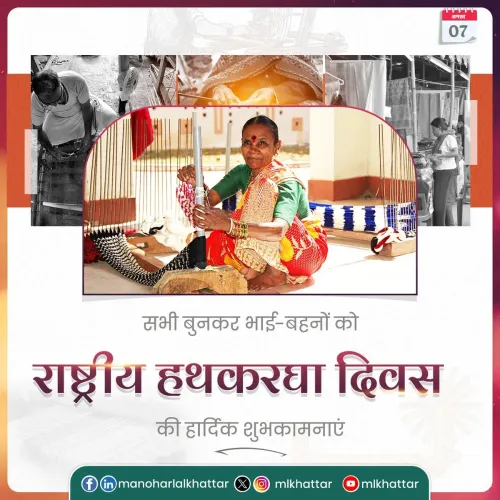
Nadda Greets Weavers on National Handloom Day
Synopsis
On National Handloom Day, Union Minister J. P. Nadda saluted India's weaver communities and called on citizens to embrace Vocal for Local, framing the handloom sector as a pillar of Atmanirbhar Bharat and the Viksit Bharat vision for 2047.
Key Takeaways
National Handloom Day is observed on 7 August every year, marking the anniversary of the 1905 Swadeshi Movement.
The day was instituted in 2015 to honour weavers and promote indigenous textile traditions.
Nadda credited PM Narendra Modi's leadership with giving the handloom sector a new identity and global standing.
The Atmanirbhar Bharat initiative, launched in 2020 , placed domestic handloom production at the centre of India's economic recovery strategy.
Nadda invoked Vocal for Local , urging citizens to buy weaver-made products to empower artisan communities.
The minister framed the textile sector as a key pillar of the Viksit Bharat vision for 2047 .
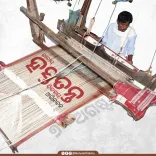
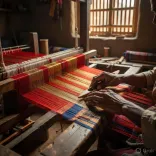
Every year on 7 August, India pauses to honour the millions of hands that keep its handloom tradition alive — and this year, Union Health Minister J. P. Nadda used the occasion to champion the cause of the country's weavers with a call to embrace the swadeshi spirit and build a self-reliant nation.
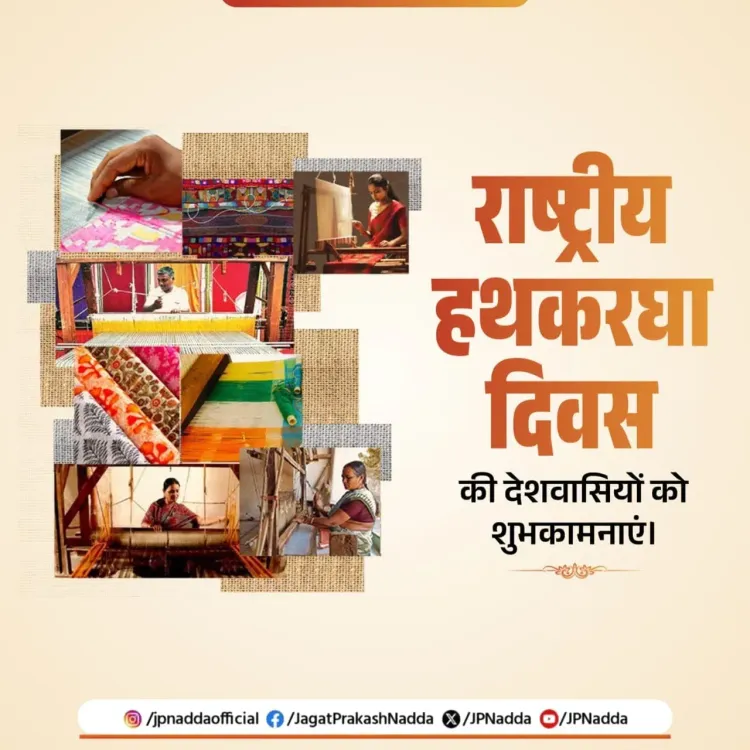
In a post marking National Handloom Day 2026, Nadda extended greetings to all weaver communities, writing: 'I extend heartfelt wishes on National Handloom Day to all weaver brothers and sisters dedicated to building an Atmanirbhar Bharat with the spirit of swadeshi and self-reliance.' He credited Prime Minister Narendra Modi's 'visionary leadership' with giving the handloom sector 'a new identity, new respect, and a distinct place on the global stage.'
Why 7 August carries a deeper weight
National Handloom Day was instituted in 2015 to mark the anniversary of the Swadeshi Movement — the mass campaign launched on this date in 1905 that urged Indians to reject foreign cloth and champion homespun textiles. Choosing that date was deliberate: it anchors a modern economic campaign in a century-old act of cultural defiance. The day is observed annually to honour handloom weavers, spotlight indigenous textile traditions, and push consumption of domestically produced fabrics.Handloom as an engine of Atmanirbhar Bharat
Nadda's message is part of a sustained government narrative that frames traditional crafts not merely as heritage, but as economic assets. The Atmanirbhar Bharat initiative — launched in 2020 — placed domestic production at the centre of India's post-pandemic recovery strategy, and the handloom sector was an early and visible beneficiary. The National Handloom Development Programme, expanded after 2014, has focused on weaver welfare, design innovation, and stronger market linkages. Successive textile policies have also pushed for geographical indication tags for regional weaves — from Banarasi silk to Pochampally ikat — integrating handloom clusters into both domestic and export supply chains. Nadda's post explicitly invoked the 'Vocal for Local' campaign, urging citizens to 'adopt the mantra of Vocal for Local and empower local weavers and artisans' by choosing products made by weaver brothers and sisters. The appeal mirrors parallel government drives in khadi and handicrafts — sectors where heritage preservation and livelihood generation are treated as the same goal.Textiles as India's 'new strength'
Perhaps the sharpest line in Nadda's post was a forward-looking one: 'Today, as the country moves towards building a Viksit Bharat, the textile sector is emerging as the country's new strength.' The phrase Viksit Bharat — developed India — is the government's overarching vision for 2047, and placing handloom within that frame elevates the sector from a welfare concern to a pillar of national ambition. For India's weavers, that framing matters: it signals continued policy attention and budget priority in the years ahead. The loom, it turns out, is not just a tool of craft — it is a political statement about what kind of economy India wants to build.Point of View
He signals that handloom policy will remain a priority as India moves toward its 2047 development targets. The Vocal for Local appeal also serves a dual purpose: it reinforces cultural nationalism while creating a consumer-driven demand push that complements supply-side schemes. For weavers, the political attention is welcome — but the real test will be whether Budget allocations and export promotion measures match the rhetoric.
NationPress
7 Aug 2026
Frequently Asked Questions
When is National Handloom Day celebrated in India?
National Handloom Day is celebrated every year on 7 August . The date was chosen to mark the anniversary of the Swadeshi Movement launched on 7 August 1905, which called on Indians to champion homespun textiles over foreign cloth.
Why was National Handloom Day started?
The day was instituted in 2015 by the Indian government to honour handloom weavers, promote indigenous textile traditions, and raise public awareness about the cultural and economic importance of the handloom sector.
What is the Vocal for Local campaign?
Vocal for Local is a government campaign that encourages Indian consumers to buy domestically made products, thereby strengthening local economies and supporting artisans, weavers, and small manufacturers across the country.
What is Atmanirbhar Bharat and how does it relate to handlooms?
Atmanirbhar Bharat , or Self-Reliant India, is an initiative launched in 2020 to boost domestic production and reduce import dependence. The handloom sector is a key component, with the National Handloom Development Programme expanded to support weaver welfare, design innovation, and market linkages.
What did JP Nadda say on National Handloom Day 2026?
J. P. Nadda extended greetings to weaver communities, credited PM Modi's leadership with elevating the handloom sector globally, invoked the Vocal for Local mantra, and framed the textile sector as a pillar of the Viksit Bharat vision for 2047.