Nadda marks 11 years of Digital India, highlights health tech gains
Synopsis
Union Health Minister J. P. Nadda on 1 July 2026 marked 11 years of Digital India, highlighting platforms like eSanjeevani, ABDM, Tele-MANAS, and UPI as pillars of healthcare and governance transformation, and reaffirming the government's Viksit Bharat 2047 vision.
Key Takeaways
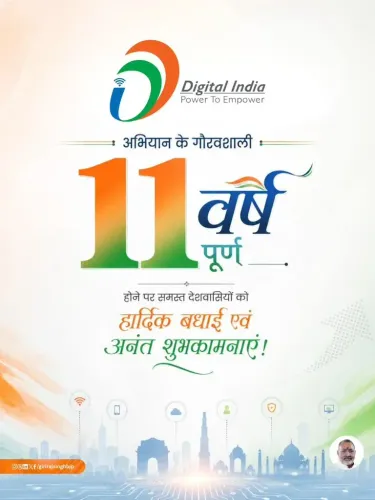
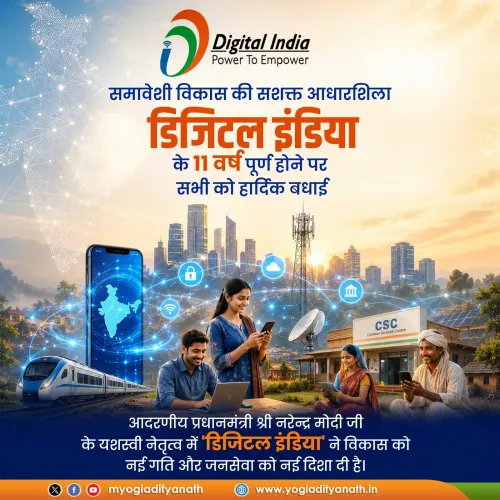
Digital India completed 11 years on 1 July 2026 , having been launched by PM Narendra Modi on 1 July 2015 .
Union Health Minister J.
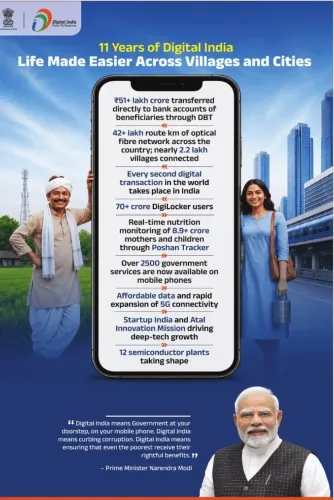
Nadda highlighted eight platforms — Aarogya Setu 2.0, eSanjeevani, ABDM, Tele-MANAS, U-WIN, DBT, eNAM, and UPI — as markers of the programme's sectoral reach. eSanjeevani was scaled during the COVID-19 pandemic to extend telemedicine to underserved areas; Tele-MANAS was added in 2022 for tele-mental health support.
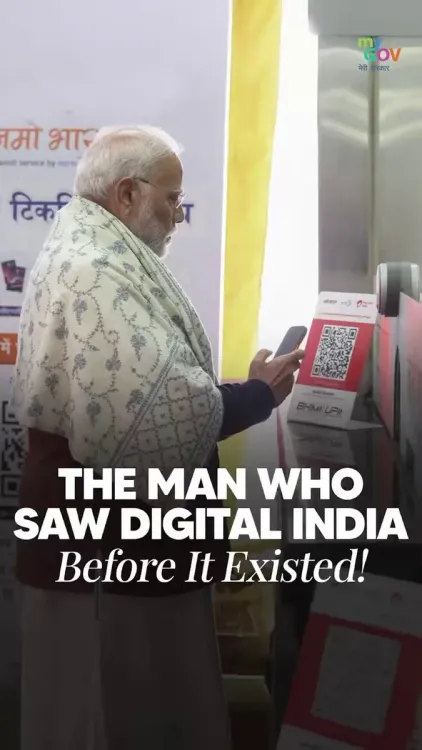
UPI , introduced in 2016 by NPCI , underpins digital financial inclusion and welfare transfers under the broader Digital India framework.
The government reiterated its commitment to last-mile digital access and framed the initiative as foundational to the Viksit Bharat @ 2047 goal.
Upcoming Union Budget allocations and implementation of the Digital Personal Data Protection Act in health records are key policy milestones to watch.
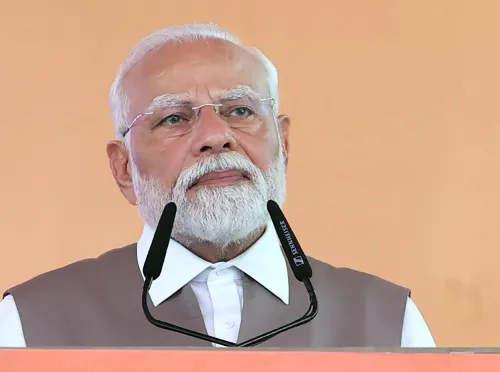
Union Health Minister J. P. Nadda on Wednesday, 1 July 2026 marked the 11th anniversary of the Digital India initiative, crediting the programme with transforming healthcare delivery and governance through a suite of citizen-facing digital platforms. Nadda, who also serves as BJP national president and Union Minister of Chemicals and Fertilizers, said the initiative launched by Prime Minister Narendra Modi in 2015 had built the foundation of a digitally inclusive India.
Context
Digital India was launched on 1 July 2015 as a flagship programme to bridge the digital divide and deliver government services electronically. In his post, Nadda described it as a 'visionary initiative that has transformed digital connectivity, empowered citizens, and built the foundation of a digitally inclusive India.' The anniversary falls as the government continues to push last-mile connectivity and Aadhaar-linked direct benefit transfers across welfare programmes.
Nadda specifically cited platforms spanning health, finance, and agriculture — including Aarogya Setu 2.0, eSanjeevani, the Ayushman Bharat Digital Mission (ABDM), Tele-MANAS, U-WIN, Direct Benefit Transfer (DBT), eNAM, and UPI — as evidence of the programme's reach across sectors.
Policy Backdrop
The Ayushman Bharat Digital Mission, announced in 2021 as an extension of the 2018 Ayushman Bharat framework, aims to create unique digital health IDs and electronic health records for every citizen. eSanjeevani, the government's telemedicine platform, was scaled significantly during the COVID-19 pandemic to reach patients in underserved regions. Tele-MANAS, rolled out in 2022, extended the digital health architecture into tele-mental health support.
On the financial side, the Unified Payments Interface (UPI) — developed by the National Payments Corporation of India (NPCI) and introduced in 2016 — has become the backbone of digital financial inclusion, processing welfare transfers and commercial transactions alike. eNAM, the electronic national agriculture market, brings the same digital logic to farm-gate price discovery and trade.
Stakeholders and Impact
The stated beneficiaries of Digital India's expansion are citizens in remote and underserved areas who previously lacked access to government services. Nadda said the Modi Government 'remains committed to expanding digital access, ensuring that every citizen, including those in the remotest corners of the country, benefits from efficient, transparent, and citizen-centric services.' Direct benefit transfer mechanisms linked to Aadhaar have been credited by the government with reducing leakages in welfare delivery.
Healthcare beneficiaries stand out as a key constituency in Nadda's framing, given his ministerial portfolio. The convergence of ABDM, eSanjeevani, and Tele-MANAS under the Digital India umbrella positions health technology as a central pillar of the programme's second decade.
What's Next
Nadda closed his message with a reference to the government's long-term development vision: 'Together, we move forward towards building a Viksit Bharat @ 2047.' The 2047 target — coinciding with the centenary of Indian independence — frames Digital India's ongoing expansion as foundational to inclusive economic growth. Upcoming Union Budget allocations for digital health infrastructure and parliamentary action on the Digital Personal Data Protection Act will be closely watched as indicators of how the programme evolves in its next phase.
Point of View
ABDM, Tele-MANAS — within the Digital India brand. By leading with healthcare platforms rather than financial or agricultural ones, Nadda signals that health-tech is the ministry's preferred narrative for the programme's second decade. The Viksit Bharat 2047 framing is now standard government lexicon, but its invocation here ties routine anniversary messaging to a longer electoral arc. The absence of specific metrics or targets keeps the statement celebratory rather than accountable, a common feature of anniversary communications from senior ministers.
NationPress
30 Sept 2026
Frequently Asked Questions
When was Digital India launched and by whom?
Digital India was launched on 1 July 2015 by Prime Minister Narendra Modi as a flagship programme to transform India into a digitally empowered society through improved online infrastructure and digital service delivery.
What is the Ayushman Bharat Digital Mission?
The Ayushman Bharat Digital Mission (ABDM) is a national digital health ecosystem that creates unique health IDs and electronic health records for citizens. It was incorporated under the broader Ayushman Bharat framework, which was announced in 2018 .
What is eSanjeevani and who can use it?
eSanjeevani is the government's free telemedicine platform that allows citizens to consult doctors online. It was scaled significantly during the COVID-19 pandemic to serve patients in remote and underserved areas across India.
What is Viksit Bharat 2047?
Viksit Bharat @ 2047 is the Indian government's long-term vision to make India a developed nation by 2047 , coinciding with the centenary of independence. Digital India's expansion is framed as foundational to achieving this goal.