Nadda Highlights NHP 2017's Shift to Holistic Healthcare
Synopsis
Union Health Minister J. P. Nadda highlighted how India's National Health Policy 2017 moved the country beyond a cure-first model, building a holistic system of prevention, promotion, timely diagnosis, treatment, and rehabilitation across primary, secondary, and tertiary care for all 140 crore Indians.
Key Takeaways
National Health Policy 2017 shifted India's healthcare focus from curative to holistic, covering prevention, promotion, timely diagnosis, treatment, and rehabilitation.
The policy aims to strengthen primary, secondary, and tertiary health services to reach all 140 crore Indians.
The 2017 policy builds on the foundation laid by the National Health Policy 2002 and the National Rural Health Mission (2005) .
India's health policy evolution reflects a strategic move from disease-specific vertical programmes toward integrated, universal health systems strengthening.
State-level implementation and upcoming Union Budget health allocations remain key indicators of the policy's real-world progress.
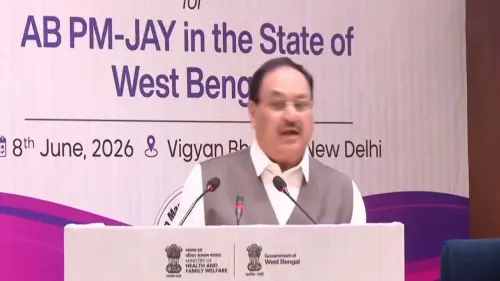
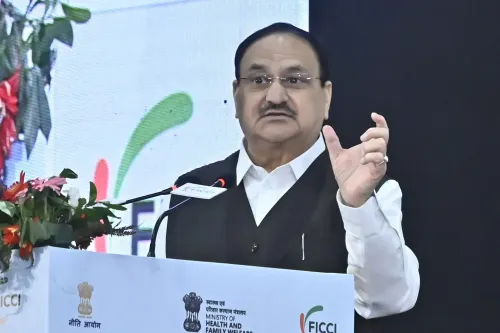
Nine years after India's National Health Policy 2017 rewrote the country's medical playbook, Union Health Minister J. P. Nadda has restated its core promise: that 140 crore Indians deserve not just treatment when they fall sick, but a system designed to keep them well in the first place.
In a post on X on Wednesday, 21 October 2026, Nadda articulated the policy's defining departure from an older, cure-first model. 'राष्ट्रीय स्वास्थ्य नीति-2017 के तहत भारत ने उपचार-केंद्रित दृष्टिकोण से आगे बढ़कर एक समग्र और समावेशी स्वास्थ्य व्यवस्था अपनाई' — ('Under the National Health Policy 2017, India moved beyond a treatment-centred approach and adopted a holistic and inclusive health system') — with explicit emphasis on prevention, promotion, timely diagnosis, treatment, and rehabilitation.
From Vertical Programmes to a Layered System
The National Health Policy 2017 was a deliberate break from decades of disease-specific vertical campaigns. Where earlier programmes targeted individual conditions in silos, the 2017 framework built a three-tier architecture: primary, secondary, and tertiary care knitted together so that a patient in a village health centre and one in an AIIMS ward are both nodes in the same network.
The lineage matters. The National Health Policy 2002 set foundational infrastructure goals. The National Rural Health Mission of 2005 deployed community health workers and fortified primary health centres in underserved districts. The 2017 policy inherited those gains and pushed further — towards universal, integrated care rather than episodic intervention.
Prevention as the Policy's Centre of Gravity
What Nadda's restatement underscores is the policy's deliberate inversion of priorities. Prevention and health promotion sit at the top; rehabilitation closes the loop. The framework asks the system to intercept illness early — through screening programmes, wellness infrastructure, and community-level outreach — rather than wait for patients to arrive at district hospitals in critical condition.
For a country of 140 crore people, that sequencing is not a philosophical preference. It is a fiscal and logistical necessity. Treating preventable disease at scale is orders of magnitude more expensive than preventing it.
Implementation: Where Policy Meets Ground Reality
The real test of any national health policy is state-level execution. State health departments remain the primary delivery machinery, and progress across India's 28 states and 8 Union Territories has been uneven. Analysts and policymakers will be watching how the next Union Budget health allocations align with the policy's three-tier vision — particularly whether funding flows to primary care infrastructure, which is the policy's first and most critical line of defence.
Nadda's emphasis on this framework signals that the central government views the 2017 policy not as a completed chapter but as an active, evolving commitment. The direction is set. The distance left to travel is the story.
Point of View
But a systemic rewiring of how India delivers care. By foregrounding prevention and rehabilitation alongside treatment, the message is aimed as much at state health departments and budget planners as at the public. It fits a broader BJP governance narrative that frames welfare delivery as institution-building rather than one-off transfers. The real analytical question is whether central articulation of the policy translates into measurable primary-care infrastructure gains at the district level, where the policy's impact is ultimately decided.
NationPress
21 Oct 2026
Frequently Asked Questions
What is the National Health Policy 2017?
The National Health Policy 2017 is India's policy framework that shifted the country's healthcare approach from a purely curative model to a holistic system emphasising prevention, health promotion, timely screening, treatment, and rehabilitation across primary, secondary, and tertiary levels of care.
What did JP Nadda say about NHP 2017?
Union Health Minister J. P. Nadda stated that under the National Health Policy 2017, India moved beyond a treatment-centred approach to adopt a comprehensive and inclusive health system, with the goal of reaching all 140 crore citizens through strengthened multi-tier healthcare services.
How is NHP 2017 different from earlier health policies?
Unlike the National Health Policy 2002 and earlier disease-specific vertical programmes, the NHP 2017 integrates all levels of care — primary, secondary, and tertiary — into a unified system and places prevention and health promotion at the centre rather than treating illness as the sole priority.
What are primary, secondary, and tertiary health services in India?
Primary health services cover community-level and preventive care through health centres and workers; secondary services involve district hospitals and specialist care; tertiary services include advanced medical institutions such as AIIMS and major government hospitals for complex conditions.
What is the goal of India's National Health Policy 2017 for 140 crore citizens?
The policy aims to provide universal, equitable, and affordable healthcare to all 140 crore Indians by building a resilient system that prevents illness, promotes wellness, enables early diagnosis, delivers timely treatment, and supports rehabilitation.