Nadda credits Shyama Prasad Mookerjee for saving West Bengal
Synopsis
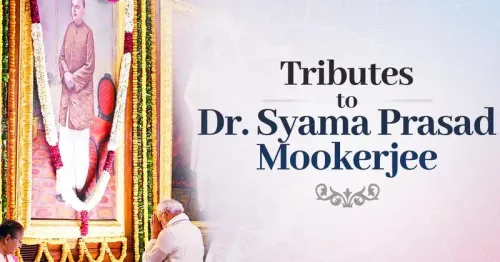
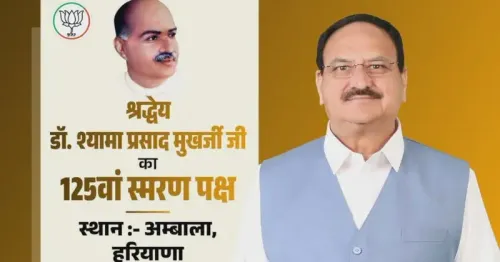
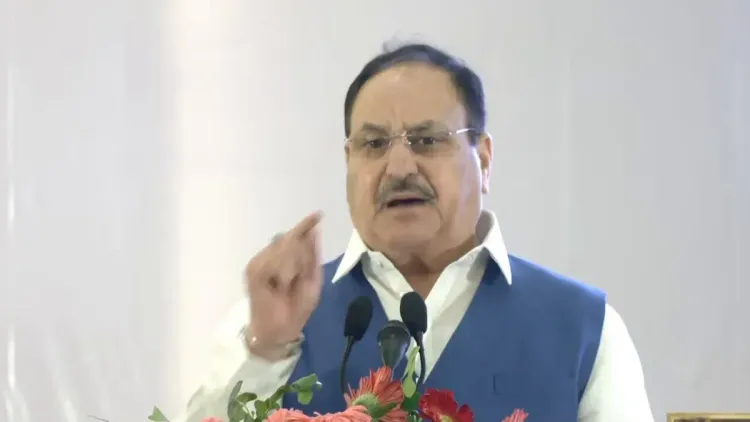
Union Health Minister J. P. Nadda on July 6, 2026 credited Shyama Prasad Mookerjee with saving West Bengal from joining Pakistan at partition, saying Mookerjee consistently chose ideology over office. The remarks come on Mookerjee's birth anniversary and carry sharp political resonance in West Bengal.
Key Takeaways
Nadda on July 6, 2026 credited Shyama Prasad Mookerjee with ensuring West Bengal remained part of India at the 1947 partition .
Nadda invoked Husain Shaheed Suhrawardy , the Muslim League leader who sought to keep all of Bengal within Pakistan.
Mookerjee resigned from Nehru's Union Cabinet in 1950 over the Nehru-Liaquat Pact , prioritising principle over position.
Mookerjee later founded the Bharatiya Jana Sangh in 1951 , the ideological predecessor of the BJP .
Nadda alleged that the Indian National Congress had accepted that all of Bengal would go to East Pakistan — a claim historians treat as contested.
The remarks coincide with Mookerjee's birth anniversary on July 6 and are politically significant ahead of future West Bengal elections .
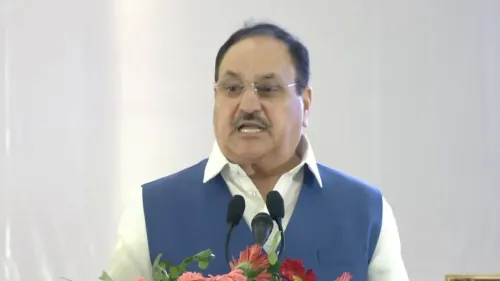
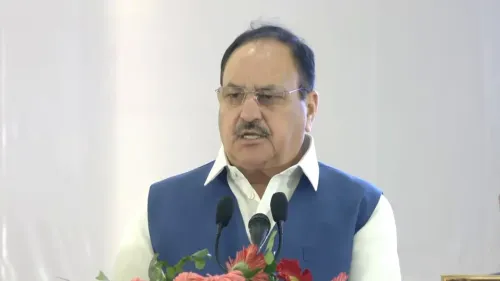
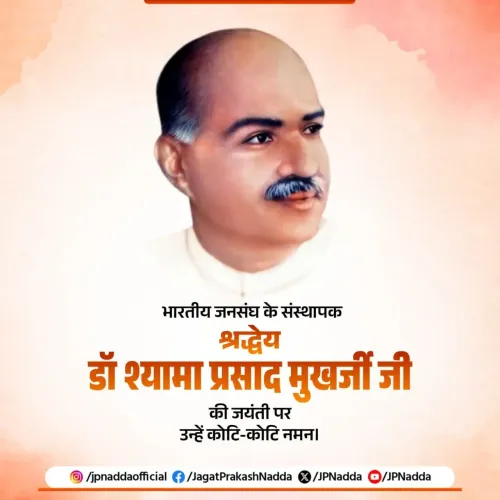
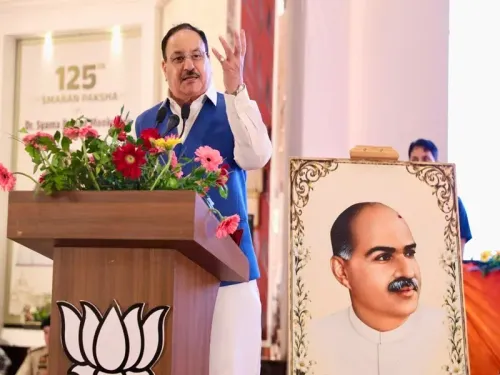
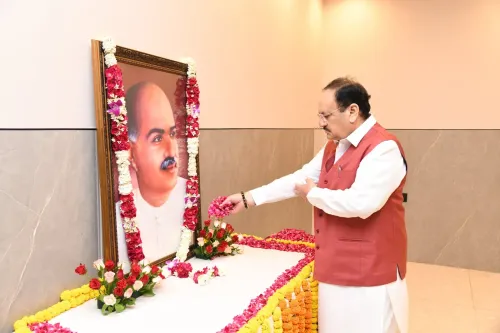
Union Health Minister J. P. Nadda on Monday, July 6, 2026, credited Shyama Prasad Mookerjee with ensuring that the western districts of Bengal remained with India at the time of the 1947 partition, asserting that today's West Bengal exists solely because of Mookerjee's resolve to prioritise principle over political office.
Context
Addressing his remarks in Hindi, Nadda said Mookerjee 'never valued position, but always valued ideology — and whenever ideology demanded it, he gave up his position.' The statement was made in the context of the political choices Mookerjee made during the turbulent months surrounding India's independence and the drawing of the Radcliffe Line in 1947.
Nadda specifically invoked the role of Husain Shaheed Suhrawardy, who served as Prime Minister of Bengal under the British and was a senior Muslim League figure closely associated with the push to keep all of Bengal — both its western and eastern districts — within Pakistan. 'हुसैन सुहरावर्दी की सरकार थी, जिसके अंतर्गत पूरा पश्चिम और पूर्वी बंगाल आता था' ('There was Husain Suhrawardy's government, under which all of West and East Bengal fell'), Nadda said, adding that Suhrawardy had planned for the undivided province to join Pakistan.
Policy Backdrop
Shyama Prasad Mookerjee, a prominent Hindu Mahasabha leader at the time, lobbied actively for the partition of Bengal so that its Hindu-majority western districts would remain with India rather than be absorbed into the proposed Muslim-majority state. Historians credit his sustained campaign — alongside other leaders — with influencing the final boundary award that created a separate West Bengal as an Indian state.
Mookerjee later joined Prime Minister Jawaharlal Nehru's Union Cabinet as Minister of Industry and Supply, but resigned in 1950 in protest against the Nehru-Liaquat Pact, which he believed did not adequately protect Hindu minorities in East Pakistan. He went on to found the Bharatiya Jana Sangh in 1951, the ideological forerunner of today's Bharatiya Janata Party (BJP).
Stakeholders and Impact
Nadda's remarks carry political resonance in West Bengal, where the BJP has invested significantly in establishing Mookerjee as a founding hero of the state's identity. The narrative positions Mookerjee — and by extension the BJP's ideological lineage — as the force that preserved Bengali Hindu interests when, as Nadda put it, the Indian National Congress had 'accepted that the whole of Bengal would go to East Pakistan.'
The claim regarding Congress's position on Bengal's territorial fate is a contested point in historical discourse; the research notes it cannot be verified as a direct documented position. What is established is that the final boundary decision involved multiple stakeholders, including the Radcliffe Commission, the British government, and Indian political leaders across parties.
What's Next
The remarks are likely to draw responses from West Bengal-based parties, particularly the Trinamool Congress, which has historically contested BJP's framing of the state's partition history. With West Bengal assembly elections on the political horizon and partition history remaining a live issue in the state's electoral discourse, such statements from senior BJP leaders tend to set the agenda for weeks of political debate. Commemorative events around Mookerjee's legacy — his birth anniversary falls on July 6 — provide a recurring platform for this historical revisitation.
Point of View
Directly contrasting him with the Congress leadership of the partition era. By invoking Suhrawardy's plan and Congress's alleged acquiescence, the BJP is reinforcing a historical counter-narrative that has become central to its strategy in West Bengal. The timing on Mookerjee's birth anniversary amplifies the message's reach. This is part of a broader BJP effort to deepen its roots in Bengal by anchoring its identity to a figure Bengali voters recognise as a son of the soil rather than an outsider.
NationPress
5 Oct 2026
Frequently Asked Questions
Why is Shyama Prasad Mookerjee credited with creating West Bengal?
Shyama Prasad Mookerjee campaigned actively for the partition of Bengal in 1947 so that its Hindu-majority western districts would remain with India rather than be absorbed into Pakistan. His efforts, alongside others, influenced the Radcliffe Commission's boundary award that created West Bengal as an Indian state.
Who was Husain Suhrawardy and what was his role in Bengal's partition?
Husain Shaheed Suhrawardy was a senior Muslim League leader who served as Prime Minister of Bengal under the British. He advocated for keeping all of undivided Bengal within Pakistan and later became Prime Minister of Pakistan after independence.
Why did Shyama Prasad Mookerjee resign from Nehru's cabinet?
Mookerjee resigned from Prime Minister Jawaharlal Nehru's Union Cabinet in 1950 to protest the Nehru-Liaquat Pact, which he believed failed to adequately protect Hindu minorities in East Pakistan.
What is the BJP's connection to Shyama Prasad Mookerjee?
Mookerjee founded the Bharatiya Jana Sangh in 1951 after resigning from Nehru's cabinet. The Jana Sangh is the direct ideological forerunner of the Bharatiya Janata Party, making Mookerjee a foundational figure for the BJP.
What did JP Nadda say about Shyama Prasad Mookerjee on July 6 2026?
Nadda said Mookerjee always valued ideology over political office, and that today's West Bengal exists because of Mookerjee's resolve during the 1947 partition. He also claimed that the Congress had accepted that all of Bengal would go to East Pakistan.