Nadda quotes Modi: India grows with world, not at its cost
Synopsis
Union Health Minister J. P. Nadda quoted PM Narendra Modi to assert that India — backed by 2,000-plus Global Capability Centres, affordable medicines and a skilled youth workforce — grows cooperatively with the world, not at any nation's expense.
Key Takeaways
Union Health Minister J.
Nadda shared a post on October 13, 2026 quoting PM Narendra Modi on India's role as a global partner.
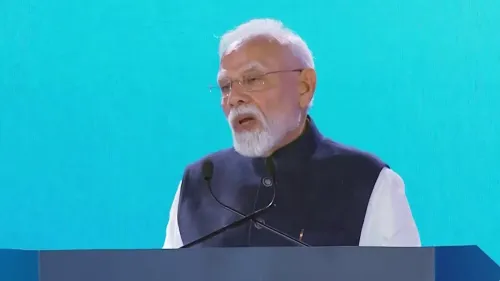
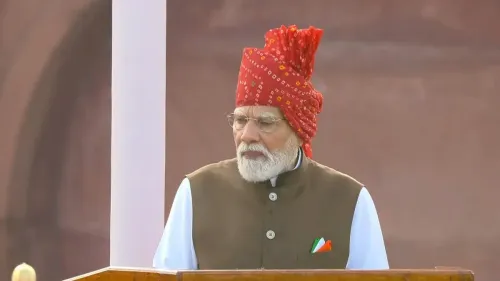
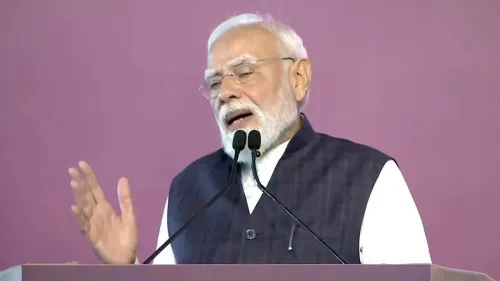
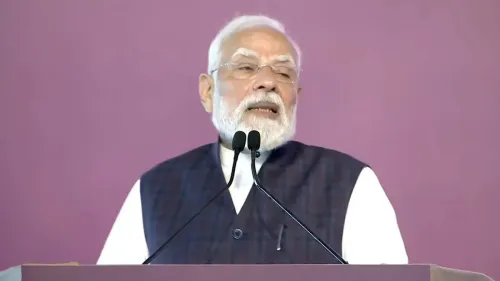
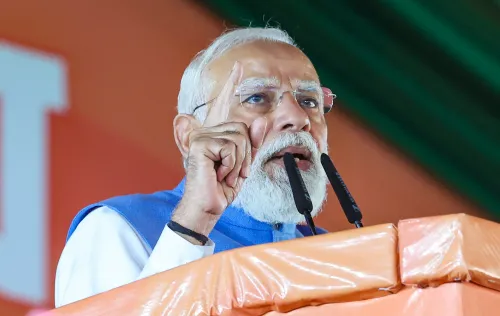
PM Modi's quoted line: 'We do not grow at anyone's cost.
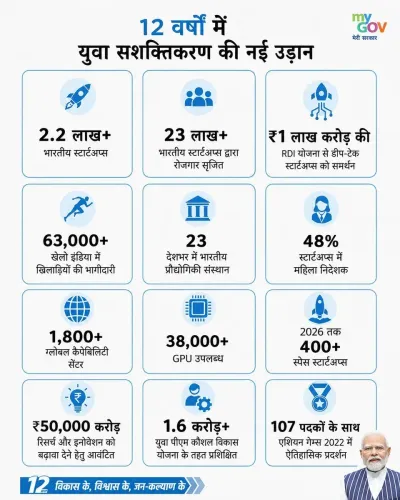
We grow with the world and for the world.' The post cites more than 2,000 Global Capability Centres in India as evidence of its deepening global integration.
India's three-pillar global pitch — affordable medicines, digital solutions, skilled youth — reflects policy threads dating to Make in India (2014) and Vaccine Maitri (2020) .
Nadda, also BJP national president , used his platform to relay a foreign-policy message that transcends his health and chemicals portfolio.
India's place in the 21st century is not that of a challenger — it is that of a partner. That is the central message Union Health Minister J. P. Nadda amplified on Tuesday, October 13, 2026, quoting Prime Minister Narendra Modi in a post that frames India's economic rise as a cooperative, not competitive, force on the global stage.
The post, written in Hindi and English, draws a direct line from affordable medicines to digital solutions to a skilled workforce, positioning all three as pillars of India's reliability as a global partner. 'जब भी दुनिया को एक स्टेडी पिलर की जरूरत होती है' — 'whenever the world needs a steady pillar' — India steps forward, it says. The closing line, attributed to PM Modi, is unambiguous: 'We do not grow at anyone's cost. We grow with the world and for the world.'
More than 2,000 Global Capability Centres anchoring India's tech ambitions
At the heart of the post is a striking data point: more than 2,000 Global Capability Centres (GCCs) are now operating out of India, cited as evidence of how deeply multinational corporations have embedded their innovation and delivery operations here. GCCs — offshore hubs for IT, engineering, analytics and business services — have long been a quiet but powerful thread in India's integration into global value chains.
The growth of GCCs dovetails with a broader policy trajectory that stretches back to the Make in India initiative launched in 2014, which sought to position the country as both a manufacturing base and a services destination for the world. That ambition has steadily expanded to include digital infrastructure and high-skill employment — sectors where Indian talent has become synonymous with global delivery.
Affordable medicines to digital muscle: India's three-pillar pitch
The post's enumeration — affordable drugs, digital solutions, skilled youth — is not accidental. It maps almost precisely onto three areas where India has built a credible international reputation. The country has been a major supplier of generic pharmaceuticals to developing markets for decades, a role formalised diplomatically through the Vaccine Maitri programme announced in 2020, which distributed COVID-19 vaccines to partner nations at scale.
Digital public infrastructure, from payment rails to identity architecture, has similarly drawn interest from governments in Asia, Africa and beyond looking to replicate India's model. And a young, English-proficient workforce continues to staff operations for corporations headquartered from California to Frankfurt. The post knits these threads into a single narrative of trustworthiness.
Why a Health Minister is carrying a foreign-policy message
Nadda's amplification of a foreign-policy framing is itself worth noting. As BJP national president and a senior Cabinet voice, he regularly functions as a relay for the government's broader ideological messaging — not just health and pharmaceuticals, where his ministerial brief sits. The choice to highlight India's pharmaceutical exports alongside its tech workforce signals that the ruling party sees the country's global identity as an integrated whole, not a set of siloed portfolios.
The framing also lands at a moment when India is navigating a complex global environment — seeking investment, defending strategic autonomy, and positioning itself as an alternative supply-chain hub. The message 'we grow with the world' is as much a diplomatic signal as a domestic one.
Whether the GCC count, the medicine pipelines and the digital platforms translate into the 'steady pillar' role Modi's words claim — that verdict will be written in boardrooms, health ministries and parliamentary budget sessions still to come.
Point of View
Indispensable partner rather than a geopolitical disruptor. The invocation of GCCs, pharma exports and digital infrastructure in a single breath signals that the BJP is working to fuse economic nationalism with cooperative globalism ahead of what could be a charged budget and diplomatic season. Framing growth as non-zero-sum is also a direct counter to narratives — at home and abroad — that question whether India's rise comes at others' expense. The message is polished, but the test will be whether policy allocations in health, digital infrastructure and skill development in the next Union Budget back the rhetoric.
NationPress
13 Oct 2026
Frequently Asked Questions
What did J. P. Nadda post about India's global role?
Nadda quoted PM Narendra Modi to say India is a trusted global partner, pointing to affordable medicines, digital solutions, skilled youth, and more than 2,000 Global Capability Centres as proof of cooperative growth.
What are Global Capability Centres and why does India have so many?
Global Capability Centres are offshore hubs set up by multinational firms for IT, engineering and business services. India hosts a large concentration because of its skilled English-proficient workforce, cost competitiveness, and policy push under initiatives like Make in India since 2014.
What is the meaning of Modi's quote 'We do not grow at anyone's cost'?
The phrase frames India's economic rise as cooperative rather than competitive, signalling that India's integration into global value chains benefits partner countries rather than displacing them.
What is Vaccine Maitri and how does it relate to India's global image?
Vaccine Maitri, announced in 2020, was India's programme to supply affordable COVID-19 vaccines to other countries. It became a cornerstone of India's reputation as a reliable provider of affordable medicines to developing nations.
Why is the Health Minister talking about foreign policy?
J. P. Nadda is also the BJP national president, which means he routinely amplifies the ruling party's broader political and diplomatic messaging beyond his ministerial brief of health and pharmaceuticals.