Nadda recalls Emergency arrests as student activist
Synopsis
Union Health Minister and BJP president J. P. Nadda has recalled being arrested multiple times from his classroom during the 1975-77 Emergency, when Congress held power under Indira Gandhi, calling such hardships a natural part of a student activist's journey.
Key Takeaways
Nadda , Union Health Minister and BJP national president, says he was arrested 'many times from my classroom' during the Emergency.
The Emergency (1975–1977) was proclaimed by Indira Gandhi on 25 June 1975 under Article 352 , suspending civil liberties for roughly 21 months .
Thousands of opposition figures, including student leaders, were detained without trial during this period.
Nadda framed the arrests as a formative part of student activism, not as exceptional grievance.
BJP leaders routinely invoke Emergency-era persecution to contrast their party's democratic record with Congress-era governance.
Fifty years after one of India's darkest constitutional chapters, Union Health Minister J. P. Nadda has put his own arrest record on the table — recalling how he was detained from his classroom multiple times during the Emergency of 1975–1977, when the Congress Party under Prime Minister Indira Gandhi suspended civil liberties and jailed political opponents by the thousands.
Arrested in class: the Emergency's reach into campuses
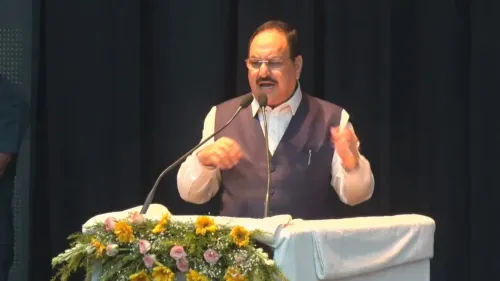
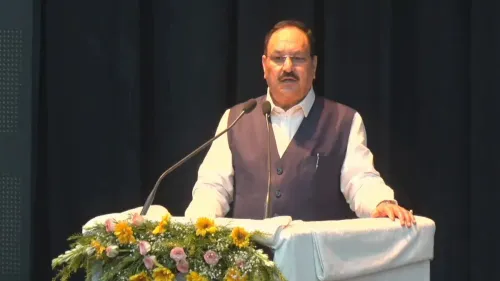
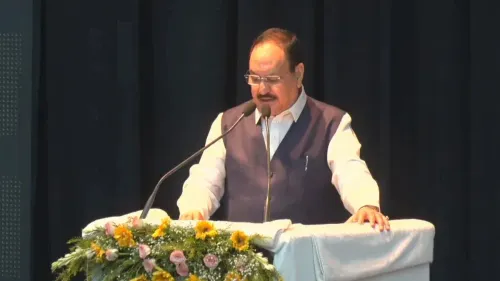
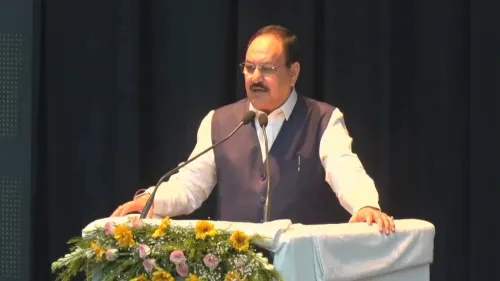
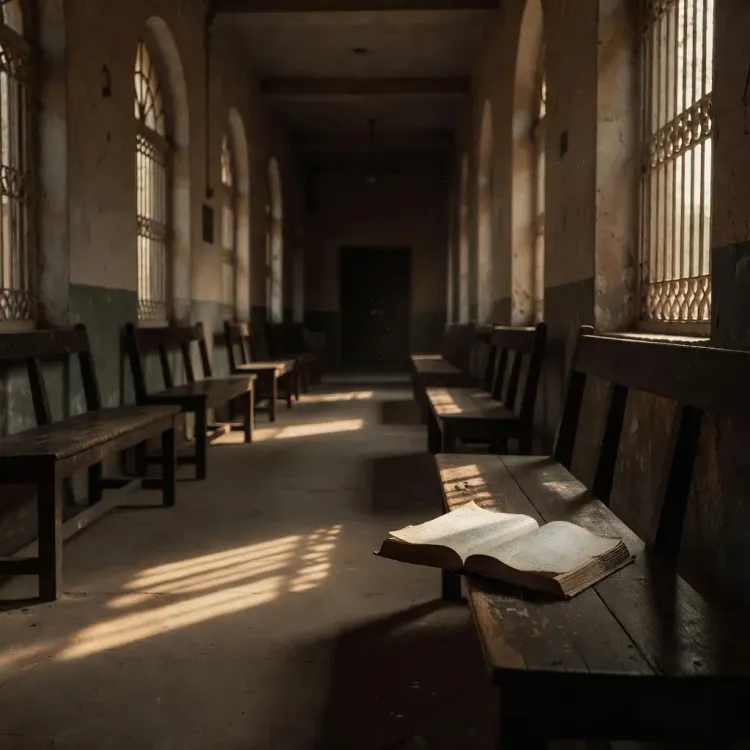
Nadda, speaking from personal experience, stated plainly: 'When I was a student activist, I was arrested many times from my classroom during the Emergency, when the Congress Party was in power.' He added that 'such circumstances are a part of a student activist's journey' — framing repeated detention not as victimhood but as political formation.
The Emergency was proclaimed on 25 June 1975 under Article 352 of the Constitution by Indira Gandhi's Congress government and remained in force until March 1977. During those roughly 21 months, press censorship was imposed, elections were suspended, and thousands of opposition figures — including student leaders affiliated with organisations like the Akhil Bharatiya Vidyarthi Parishad (ABVP), with which Nadda was associated — were detained without trial.
A biographical moment in BJP's Emergency narrative
For BJP national president Nadda, the recollection is both personal and political. BJP leaders have long drawn on Emergency-era arrests as proof of their democratic credentials, positioning the party as the inheritor of the resistance that ultimately ended Congress's authoritarian interlude. Nadda's statement fits squarely into that tradition — but the specificity here is notable: a classroom, a student, repeated arrests. That granular detail gives the account a human texture that party-level talking points rarely carry.
Nadda today holds two Cabinet portfolios — Health and Family Welfare and Chemicals and Fertilizers — in addition to leading the BJP nationally. The distance from a college classroom in the mid-1970s to the apex of Indian politics is the implicit arc his post traces.
Point of View
He anchors BJP's democratic-resistance narrative in lived experience rather than party literature. The timing — as the Emergency's 50th anniversary recedes and BJP continues to press the Congress accountability argument — suggests this is less spontaneous reminiscence and more a deliberate contribution to a long-running historical counter-narrative. Whether Congress chooses to respond or let the remark pass will itself be a political signal worth watching.
NationPress
29 Jul 2026
Frequently Asked Questions
Was JP Nadda arrested during the Emergency?
Yes. Nadda has stated he was arrested multiple times from his classroom during the 1975-77 Emergency when the Congress Party was in power, during his years as a student activist.
What was the Emergency in India?
The Emergency was a 21-month period from 25 June 1975 to March 1977 during which Prime Minister Indira Gandhi invoked Article 352 of the Constitution, suspending civil liberties, imposing press censorship, and detaining thousands of political opponents without trial.
Which student organisation was JP Nadda associated with?
Nadda has a background in student activism and is associated with the Akhil Bharatiya Vidyarthi Parishad (ABVP) , the student wing linked to the BJP's broader ideological family, though the post itself does not name the organisation.
Why do BJP leaders often talk about the Emergency?
BJP leaders reference the Emergency to underscore their party's democratic credentials and to draw a historical contrast with Congress governance, positioning themselves as heirs to the resistance movement that ended authoritarian rule in 1977.
What positions does JP Nadda currently hold?
Nadda serves as Union Minister of Health and Family Welfare , Minister of Chemicals and Fertilizers , and is the national president of the BJP .