Nadda Shares Modi's Independence Day Pledge on Fertilizer Prices
Synopsis
On Independence Day 2026, PM Modi declared India's government is absorbing massive global fertilizer price surges — supplying urea at Rs 300 against a world price of Rs 3,000, and DAP at Rs 1,350 against Rs 5,000 — to protect farmers from international market shocks. BJP president J. P. Nadda amplified the statement on X.
Key Takeaways
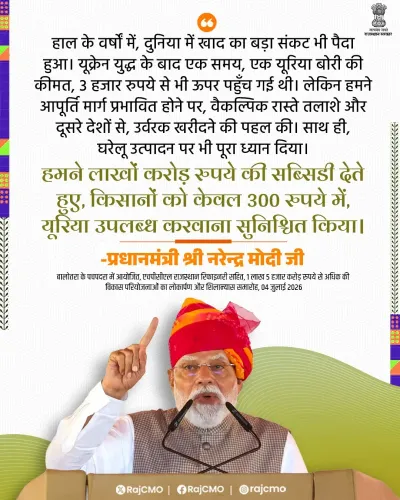
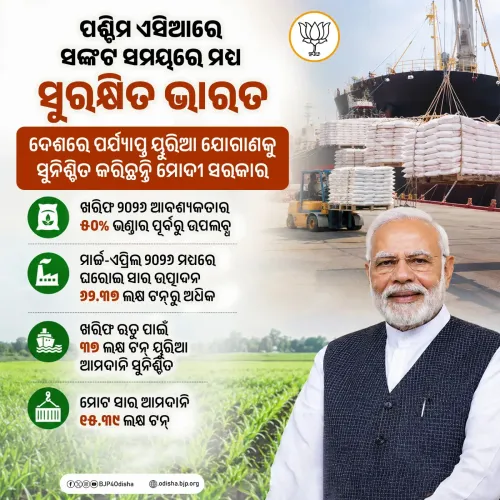
Urea subsidy: The government supplies urea to farmers at Rs 300 per bag against a global procurement cost of Rs 3,000 — absorbing 90 percent of the price.
DAP subsidy: DAP is provided at Rs 1,350 to farmers while global prices have reached Rs 5,000 , a nearly fourfold gap covered by the state.
Independence Day platform: PM Modi highlighted these figures in his 15 August 2026 address, the year's most-watched political speech, signalling political commitment at the highest level.
Policy continuity: Urea price control has been in place for decades; the Nutrient Based Subsidy (NBS) scheme for DAP and other fertilizers has operated since April 2010 .
Budget implications: Any future revision to subsidised fertilizer prices will face heightened political scrutiny following the Prime Minister's public pledge on Independence Day.
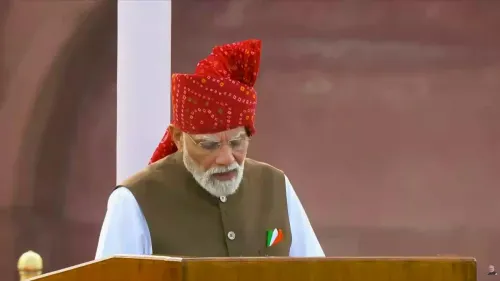
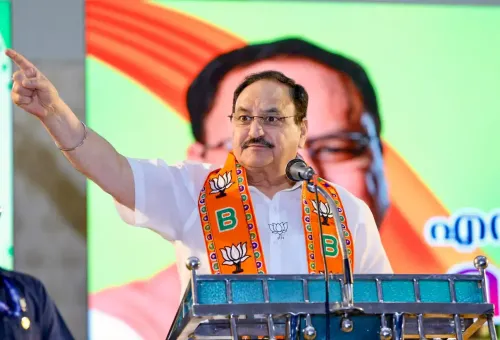
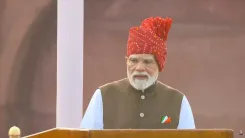
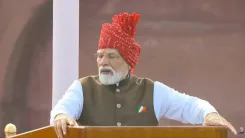
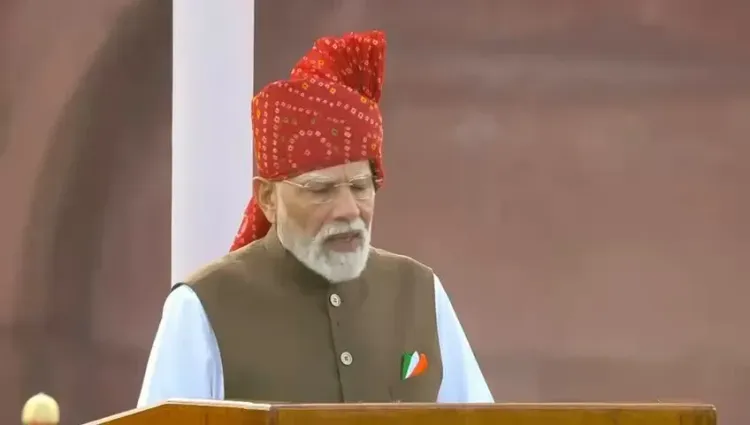
On Independence Day, 15 August 2026, Union Health Minister and BJP national president J. P. Nadda amplified a striking promise from Prime Minister Narendra Modi — that even as global markets push fertilizer prices to record highs, India's farmers will not be left to bear that burden alone.
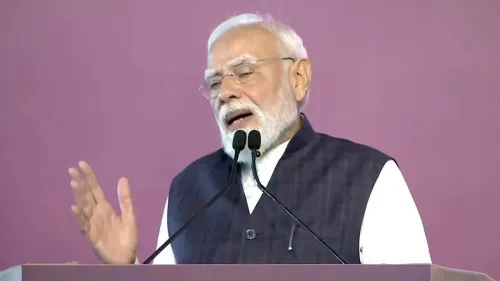
Quoting the Prime Minister's address directly, Nadda shared Modi's words: 'The crises of the world have affected everyone — we are no exception. But today, we are not forcing my country's farmers to carry that burden. The government is carrying it on its own shoulders. Urea that comes to us from the world at Rs 3,000 per bag — we are giving it to our farmers for just Rs 300. DAP has touched Rs 5,000 in global markets, yet we continue to supply it to our farmers at Rs 1,350, so they face no hardship.'
A Decade-Old Safety Net, Stretched to Its Limits
The numbers Modi cited lay bare the scale of what the government calls a conscious policy choice. On urea, the state absorbs roughly 90 percent of the landed cost — a gap that has widened sharply as global supply chains tightened. On DAP (Di-Ammonium Phosphate), the subsidy bridges a nearly fourfold difference between world prices and the farm-gate rate.
This is not a new arrangement. Urea has been under statutory price control for decades, with the government meeting the full differential between production or import costs and the fixed Maximum Retail Price. DAP and other phosphatic and potassic fertilizers fall under the Nutrient Based Subsidy (NBS) scheme, introduced in April 2010, which provides a fixed per-nutrient subsidy while allowing manufacturers to set retail prices — though in practice, cabinet decisions have repeatedly capped those prices to protect farmers.
Why the Independence Day Platform Matters
Choosing Independence Day — the most-watched political address of the year — to highlight fertilizer subsidies is a deliberate signal. Agriculture input costs touch every farming household in India, and global commodity shocks since 2021-22 have made the subsidy bill a politically charged line in the Union Budget. By anchoring the message in the Prime Minister's own words and the #IndiaIndependenceDay hashtag, the BJP leadership frames fiscal sacrifice on farm inputs as an act of national solidarity, not merely a budget allocation.
Fertilizer subsidy expenditure has consistently ranked among the largest items in India's central budget, running into the hundreds of thousands of crore rupees in peak years. The government's willingness to absorb rather than pass on global price spikes has been maintained across political administrations — a rare point of policy continuity in a fiercely contested sector.
With the next Union Budget and potential MRP revision decisions on the horizon, Modi's Independence Day framing sets a high political bar: any move to raise subsidised fertilizer prices will now have to answer directly to a Prime Minister who told the nation, on its biggest stage, that farmers will not carry this burden.
Point of View
000 for urea — the BJP leadership makes the subsidy tangible and personal, not bureaucratic. This framing raises the political cost of any future MRP revision and positions the party as the guarantor of farm-input affordability ahead of budget deliberations. The continuity of the NBS and urea price-control architecture across administrations suggests this is durable policy, but the BJP's choice to dramatise it on Independence Day signals it will be a frontline electoral argument.
NationPress
15 Aug 2026
Frequently Asked Questions
What is the current subsidised price of urea for Indian farmers?
According to PM Modi's Independence Day 2026 address, Indian farmers receive urea at Rs 300 per bag , while the government procures it from global markets at around Rs 3,000 per bag , absorbing the difference as subsidy.
What is the subsidised price of DAP fertilizer in India?
DAP (Di-Ammonium Phosphate) is currently supplied to Indian farmers at Rs 1,350 , even as its price in global markets has reached approximately Rs 5,000 , with the government covering the gap.
What is India's Nutrient Based Subsidy (NBS) scheme?
The Nutrient Based Subsidy (NBS) scheme , introduced in April 2010 , provides a fixed per-nutrient subsidy on phosphatic and potassic fertilizers like DAP, while urea remains under separate statutory price control with the government meeting the full cost differential.
Why did JP Nadda post about fertilizer subsidies on Independence Day?
J. P. Nadda , Union Minister and BJP national president, shared PM Modi's Independence Day speech excerpt to highlight the government's commitment to protecting farmers from global commodity price shocks, framing the subsidy policy as a national priority.
How much does India spend on fertilizer subsidies?
India's fertilizer subsidy expenditure has consistently been among the largest items in the central budget, running into hundreds of thousands of crore rupees in peak years, covering the gap between global import costs and fixed domestic retail prices for urea and DAP.