Nadda Urges Medical Postgraduates to Never Stop Learning
Synopsis
Union Health Minister J. P. Nadda congratulated medical postgraduates on 23 May 2026, urging them to keep learning beyond their degrees and to serve society in building a healthier India — a message aligned with the government's push for continuous professional development under the National Medical Commission framework.
Key Takeaways
Union Health Minister J.
Nadda posted a congratulatory message to medical postgraduates on 23 May 2026 .
He emphasised that degrees mark a milestone, not an endpoint, and that 'the instinct to learn and improve must always remain alive.' The message aligns with the National Medical Commission Act of 2019 , which prioritises competency-based and continuous professional development in medical training.
India has been steadily expanding postgraduate medical seats to address specialist shortages, making workforce quality a key policy focus.
Ayushman Bharat (launched 2018 ) has increased demand for well-trained specialists across a broader health infrastructure.
Observers will watch for new NMC guidelines on mandatory continuing medical education for practising specialists.
Union Health Minister J. P. Nadda on Saturday, 23 May 2026, congratulated a fresh batch of medical postgraduates and called on them to treat lifelong learning as an inseparable part of their professional identity, posting his message on X.
Context
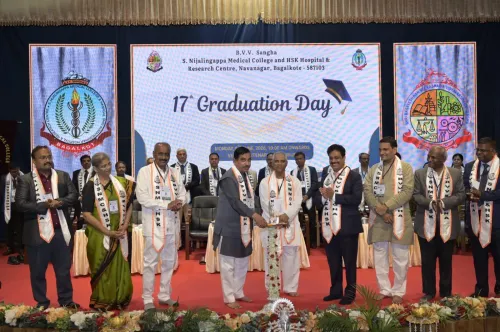
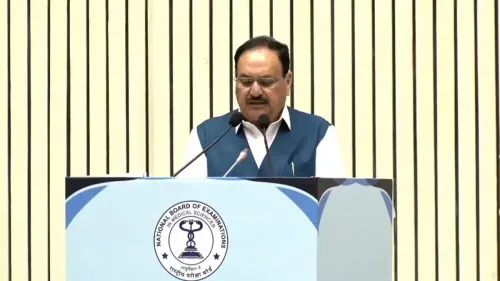
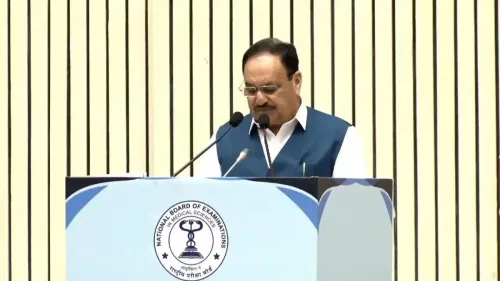
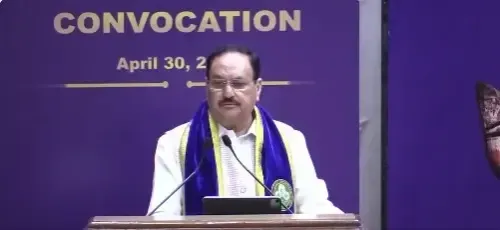
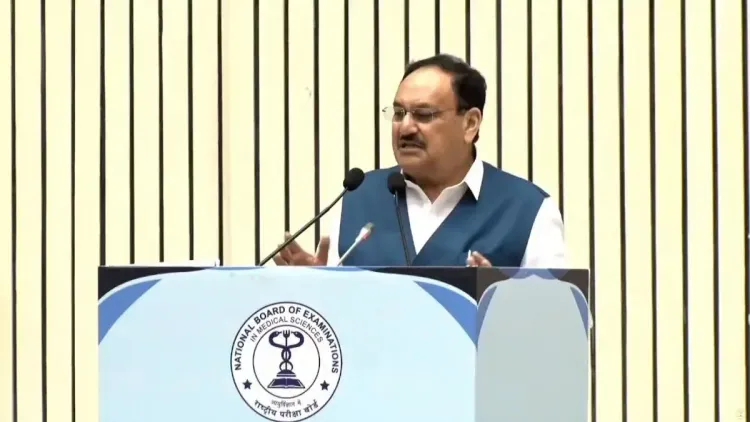
Addressing the newly minted postgraduates, Nadda wrote: 'A student is always a student, and learning should never stop. Medical education is endless, degrees may be achieved, but experience and knowledge continue to grow throughout life.' He urged that 'the instinct to learn and improve must always remain alive.' The post accompanied a video, the contents of which are consistent with a convocation or graduation address to a medical cohort.
The minister concluded with a direct congratulatory note: 'Once again, congratulations to all of you on becoming postgraduates. I wish you great success in life, and may you continue serving society and contribute towards building a healthy India.'
Policy Backdrop
India's medical education landscape has undergone significant reform over the past decade. The National Medical Commission (NMC) Act of 2019 replaced the erstwhile Medical Council of India, introducing tighter quality benchmarks for both undergraduate and postgraduate programmes. Continuous professional development has become a regulatory priority under the NMC framework, making Nadda's emphasis on lifelong learning directly consistent with existing policy direction.
Separately, Ayushman Bharat, launched in 2018, has driven an expansion of health infrastructure across the country, creating a growing demand for well-trained specialists. India has steadily added postgraduate medical seats in recent years to address workforce shortages, and the quality of that workforce — not just its size — has become a central concern for policymakers.
Stakeholders and Impact
The message is addressed most directly to medical postgraduates entering a healthcare system that is simultaneously expanding in reach and rising in complexity. For these professionals, the minister's call to sustain a learning orientation carries practical weight: the NMC has been moving toward competency-based frameworks that require practitioners to demonstrate updated skills throughout their careers.
Broader healthcare delivery missions — including those under Ayushman Bharat — depend heavily on a motivated, continuously upskilled medical workforce. Nadda's framing of postgraduate achievement as a beginning rather than an endpoint reinforces the government's stated goal of building a 'healthy India' through human capital, not infrastructure alone.
What's Next
Observers will watch for any updated National Medical Commission guidelines on postgraduate training standards or mandatory continuing medical education requirements, which would give institutional weight to the minister's message. As BJP national president and the cabinet minister overseeing both health and pharmaceuticals, Nadda's public communications on medical education carry policy signalling value beyond the ceremonial. The coming months may see fresh regulatory circulars or announcements on competency frameworks for practising specialists.
Point of View
He reinforces the National Medical Commission's push toward competency-based, lifelong professional development. For a minister who also oversees the pharmaceutical sector, signalling investment in a high-quality medical workforce serves the dual purpose of strengthening public health delivery and positioning India's healthcare human capital as a strategic asset. The message fits a broader pattern in which the government uses high-visibility occasions — convocations, health days — to amplify policy priorities without formal announcements. Whether it translates into concrete NMC regulatory action on continuing medical education will be the real test of intent.
NationPress
7 Oct 2026
Frequently Asked Questions
What did JP Nadda say to medical postgraduates in May 2026?
J. P. Nadda congratulated medical postgraduates on 23 May 2026 and urged them to treat learning as a lifelong pursuit, saying degrees may be achieved but 'experience and knowledge continue to grow throughout life.'
What is the National Medical Commission and how does it affect medical postgraduates?
The National Medical Commission was established under the NMC Act of 2019, replacing the Medical Council of India. It sets quality standards for medical education and is moving toward competency-based frameworks that require doctors to keep updating their skills throughout their careers.
What is Ayushman Bharat and why does it matter for medical graduates?
Ayushman Bharat, launched in 2018, is India's flagship health coverage and infrastructure expansion scheme. It has significantly increased demand for trained medical specialists, making the quality and continued development of the medical workforce a central government priority.
Why does JP Nadda emphasise lifelong learning in medicine?
As Union Health Minister, Nadda has aligned his messaging with the NMC's regulatory push for continuous professional development. Lifelong learning in medicine is increasingly a formal requirement, not just an aspiration, under India's updated medical education framework.
Has India been increasing postgraduate medical seats?
Yes. India has steadily expanded postgraduate medical college seats in recent years to address specialist shortages, while simultaneously raising quality benchmarks under the National Medical Commission to ensure the growing workforce meets competency standards.