India's first hydrogen train flags off July 17: Zero emissions, world's most powerful

Synopsis
India is about to flag off the world's most powerful hydrogen train — a 3,200-horsepower, zero-emission locomotive built entirely in India. The Jind–Sonipat pilot isn't just a tech showcase; it's a direct challenge to diesel traction on Indian Railways' vast non-electrified network, and a signal that hydrogen has moved from policy paper to platform.
Key Takeaways
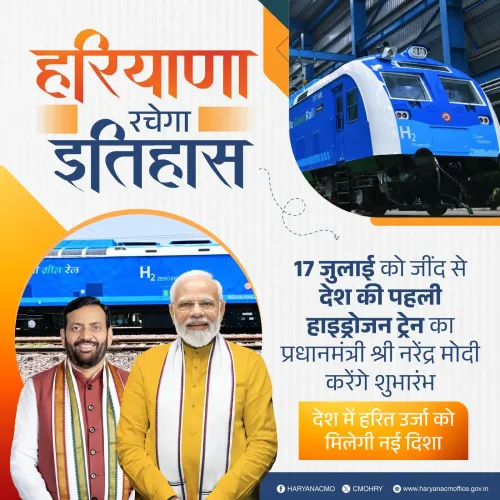
PM Narendra Modi will flag off India's first hydrogen train from Jind, Haryana on 17 July .
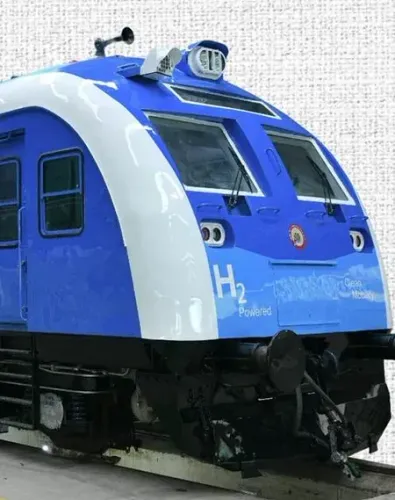
The train runs on a 1,200 kW hydrogen fuel cell system and produces 3,200 horsepower — the world's most powerful hydrogen train.
It emits only water vapour , with zero carbon or smoke emissions.
The train has ten coaches and can carry up to 2,600 passengers .
Hydrogen storage and refuelling infrastructure at Jind is also indigenously built, supporting the Aatmanirbhar Bharat mission.
India joins Germany, Japan, China , and the United States in deploying hydrogen fuel cell technology for passenger rail.
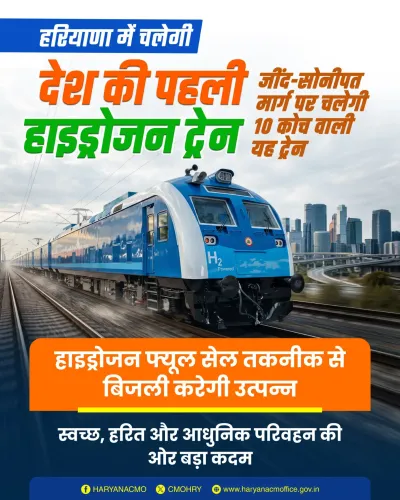
India's first hydrogen-powered train is set to be flagged off by Prime Minister Narendra Modi from Jind, Haryana, on 17 July, marking a landmark moment in the country's green mobility transition. The indigenously designed train will operate on the Jind–Sonipat corridor as a pilot project, emitting only water vapour — with zero carbon output.
Key Specifications
The hydrogen train runs on a 1,200 kW hydrogen fuel cell propulsion system and delivers 3,200 horsepower, making it the world's most powerful hydrogen train by that metric. It comprises ten coaches and has a passenger capacity of 2,600. Unlike diesel-powered rolling stock, the train produces no smoke and no greenhouse gas emissions — water vapour is its only byproduct.
The supporting infrastructure, including hydrogen storage and refuelling facilities at Jind, has also been developed indigenously, reinforcing the project's credentials under the Aatmanirbhar Bharat mission.
What the Government Said
Union Minister for Petroleum and Natural Gas Hardeep Singh Puri described the launch as a landmark, noting that India now joins an elite group of nations — including Germany, Japan, China, and the United States — that are actively exploring hydrogen fuel cell technology for sustainable rail operations. The minister's remarks underscore the strategic significance of the project beyond domestic rail policy.
Why This Matters for Indian Railways
Indian Railways is one of the world's largest rail networks and a significant contributor to the country's carbon footprint. The hydrogen train pilot on the Jind–Sonipat route represents a direct test of whether clean propulsion technology can be scaled across the network. Notably, this is the first time India has deployed hydrogen fuel cell technology in passenger rail — a sector that has historically depended on diesel traction on non-electrified lines.
This comes amid India's broader push to achieve net-zero carbon emissions by 2070, with Railways having already committed to becoming a net-zero emitter by 2030. The hydrogen train adds a new technological pathway alongside the ongoing electrification drive.
Broader Impact and What Comes Next
The Jind–Sonipat pilot is expected to generate operational data that will inform any future scaling of hydrogen rail across India's vast non-electrified network. Industry observers note that the cost of green hydrogen production and the buildout of refuelling infrastructure remain the critical variables determining whether the technology can move beyond pilot status.
If the pilot delivers on its performance benchmarks, it could accelerate India's positioning as a hydrogen economy leader in South Asia, while offering a replicable model for other developing nations grappling with diesel-dependent rail systems.
Point of View
But the harder question is what comes after Jind–Sonipat. India has roughly 13,000 km of non-electrified rail lines where diesel still dominates — and that is the real prize. Green hydrogen remains expensive to produce at scale, and a single pilot corridor does not resolve the infrastructure gap. The government's framing around 'Aatmanirbhar Bharat' is strategically sound, but the transition from pilot to network deployment will test procurement policy, energy pricing, and inter-ministry coordination in ways that a flag-off ceremony cannot answer.
NationPress
16 Jul 2026
Frequently Asked Questions
What is India's first hydrogen train and where will it run?
India's first hydrogen-powered passenger train will operate on the Jind–Sonipat corridor in Haryana as a pilot project. It was flagged off by PM Narendra Modi from Jind on 17 July and is designed to demonstrate zero-emission rail travel using hydrogen fuel cell technology.
Why is India's hydrogen train called the world's most powerful?
The train delivers 3,200 horsepower through a 1,200 kW hydrogen fuel cell propulsion system, which is reported to be the highest power output among hydrogen trains currently in operation or testing globally. It comprises ten coaches and can carry up to 2,600 passengers.
What emissions does the hydrogen train produce?
The train produces only water vapour as a byproduct — there are no carbon dioxide, nitrogen oxide, or particulate emissions. This makes it a zero-carbon alternative to diesel traction on non-electrified rail lines.
Which countries already use hydrogen trains?
Germany, Japan, China, and the United States are among the nations exploring or deploying hydrogen fuel cell technology for rail operations, according to Union Minister Hardeep Singh Puri. India now joins this group with the Jind–Sonipat pilot.
How does this fit into Indian Railways' green goals?
Indian Railways has committed to achieving net-zero carbon emissions by 2030. The hydrogen train pilot adds a new clean-propulsion pathway alongside the ongoing electrification programme, targeting the non-electrified segments of India's vast rail network where diesel traction currently dominates.