NCB trains 26 Maharashtra cops as NDPS Master Trainers in Ghaziabad
Synopsis
The NCB has quietly built a 56-strong Master Trainer pool inside Maharashtra Police — enough to cascade NDPS enforcement training to every district. Paired with simultaneous multi-agency coordination meetings in Bhopal and Guwahati, this is one of the most systematic capacity-building pushes in India's anti-narcotics architecture in recent memory.
Key Takeaways
NCB certified 26 Maharashtra Police officers as NDPS Act Master Trainers in a five-day programme concluding on 31 July 2026 at Ghaziabad .
Combined with the first batch trained in April 2026 , Maharashtra now has a pool of 56 Master Trainers .
The programme was conducted in collaboration with BPR&D–CDTI, Ghaziabad .
Second Quarter JCC Meetings for Madhya Pradesh (Bhopal) and Assam (Guwahati) were held on the same day, focusing on cartel dismantling and financial investigations.
More than 15 central and state agencies participated across the two JCC meetings, reaffirming the Drug-Free India commitment.
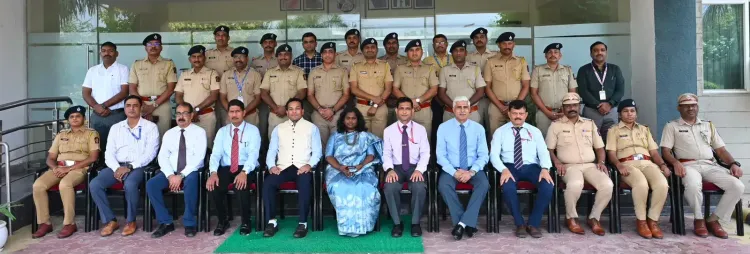
The Narcotics Control Bureau (NCB) on 31 July 2026 concluded a five-day Training of Trainers (ToT) Programme at Ghaziabad, certifying 26 Maharashtra Police officers of Inspector rank and above as Master Trainers in NDPS Act enforcement. The programme was conducted in collaboration with BPR&D–CDTI, Ghaziabad, and marks the second such cohort trained this year.
Maharashtra Now Has 56 Master Trainers
The NCB confirmed in an official post on X that the latest batch builds on the first ToT Programme conducted from 20–24 April 2026. With both programmes now complete, Maharashtra Police has a combined pool of 56 Master Trainers equipped to cascade drug law enforcement training across the state. The scale-up is designed to strengthen frontline capacity in detecting and prosecuting narcotics offences under the NDPS Act.
Joint Coordination Meetings in Bhopal and Guwahati
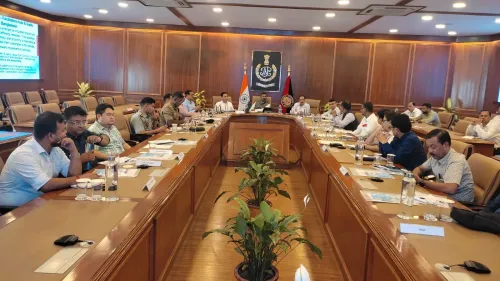
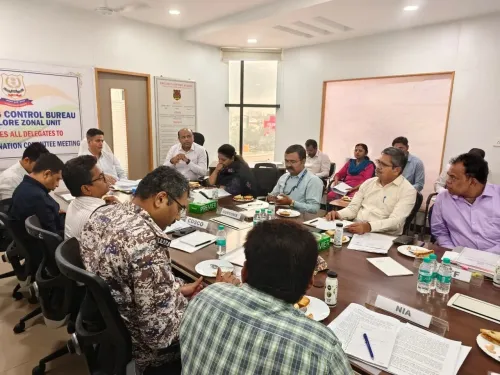
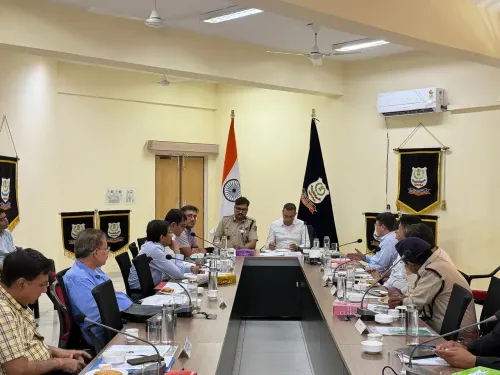
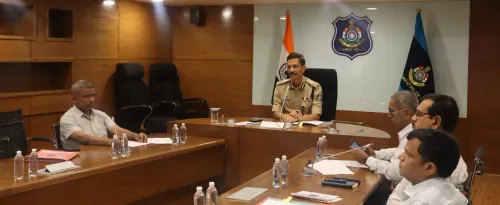
Separately, on Thursday, 31 July 2026, the Second Quarter State-Level Joint Coordination Committee (JCC) Meetings for Madhya Pradesh and Assam were held to sharpen coordinated action against drug trafficking. The Madhya Pradesh meeting was convened in Bhopal and the Assam meeting in Guwahati, according to an official statement.
The Bhopal JCC was jointly chaired by the NCB DDG (Western Region) and the ADG, ANTF, Madhya Pradesh, with participation from the NIA, SIB, Income Tax, Customs, CBN, RPF, the State Prosecution Department, the Food and Drug Administration's Office, and State Excise.
The Guwahati meeting was chaired by R. Sudhakar, Deputy Director General (NER), NCB, and drew representatives from ANTF, Customs, CGST, Income Tax, DGGI, SIB, NIA, ED, DRI, Drug Controller, Assam Rifles, BSF, ITBP, and District Superintendents of Police.
Focus: Financial Probes, Cartel Dismantling, Intelligence Sharing
Discussions at both JCC meetings centred on enhancing joint interrogations, financial investigations, coordinated enforcement operations, and cartel dismantling. Officials reaffirmed their collective commitment to the government's Drug-Free India goal. Notably, intelligence sharing between central and state agencies was flagged as a priority area requiring tighter protocols.
What This Signals for India's Anti-Narcotics Drive
The twin-track approach — building state-level trainer capacity while simultaneously aligning multi-agency intelligence — reflects a broader NCB strategy of decentralising enforcement while maintaining central coordination. Maharashtra, given its coastline and urban drug demand, is a critical theatre; a trained pool of 56 Master Trainers could meaningfully accelerate NDPS prosecutions at the district level. The next round of JCC meetings and further ToT batches are expected in the third quarter of 2026.
Point of View
But inter-agency rivalry — particularly between state ANTF units and central agencies — has historically blunted joint operations. Whether the 'Drug-Free India' framing translates into measurable seizure and prosecution data, rather than meeting minutes, is the accountability question mainstream coverage is not asking.
NationPress
31 Jul 2026
Frequently Asked Questions
What is the NCB's Training of Trainers (ToT) Programme for Maharashtra Police?
It is a five-day programme conducted by the NCB in collaboration with BPR&D–CDTI, Ghaziabad, to certify senior Maharashtra Police officers as Master Trainers in NDPS Act enforcement. Two batches have now been completed in 2026 — the first in April and the second concluding on 31 July — giving Maharashtra a pool of 56 Master Trainers.
How many Master Trainers does Maharashtra Police now have in NDPS enforcement?
Maharashtra Police now has 56 Master Trainers following the completion of both ToT batches in 2026. The first batch of 30 was trained in April 2026 and the second batch of 26 concluded on 31 July 2026 in Ghaziabad.
What were the JCC meetings held on 31 July 2026 about?
The Second Quarter State-Level Joint Coordination Committee meetings for Madhya Pradesh and Assam were held in Bhopal and Guwahati respectively to discuss coordinated drug trafficking enforcement. Agenda items included joint interrogations, financial investigations, cartel dismantling, and intelligence sharing among central and state agencies.
Which agencies participated in the Guwahati JCC meeting?
The Guwahati meeting, chaired by R. Sudhakar, DDG (NER), NCB, included representatives from ANTF, Customs, CGST, Income Tax, DGGI, SIB, NIA, ED, DRI, Drug Controller, Assam Rifles, BSF, ITBP, and District Superintendents of Police.
Why is building a Master Trainer pool significant for drug law enforcement?
Master Trainers can independently conduct NDPS Act training within their respective districts and units, decentralising enforcement capacity without requiring repeated central intervention. A pool of 56 trainers across Maharashtra can potentially accelerate prosecutions and improve detection rates at the grassroots level.