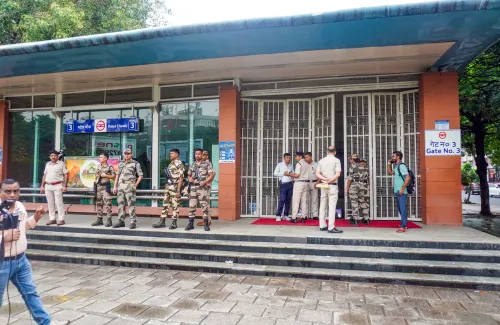
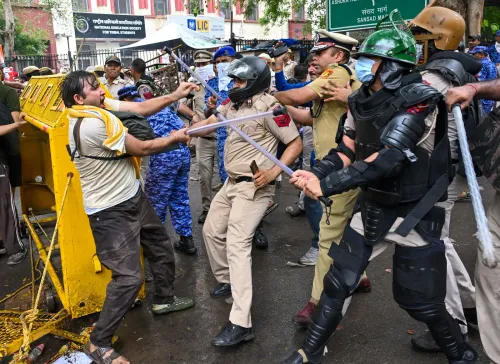
NDMC clears 60 metric tonnes of waste from Jantar Mantar protest site
Synopsis
More than 500 NDMC workers cleared 60 metric tonnes of waste from Jantar Mantar overnight after a protest wrapped up — with Vice Chairman Kuljeet Singh Chahal personally supervising the drive through the night and returning Sunday afternoon to inspect results. The speed and scale of the operation reflects the NDMC's effort to minimise disruption to one of central Delhi's busiest public corridors.
Key Takeaways
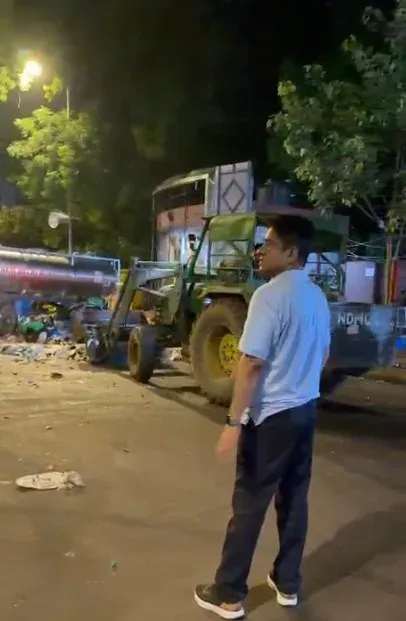
NDMC Vice Chairman Kuljeet Singh Chahal personally supervised an overnight cleaning drive at Jantar Mantar on 26 July .
60 metric tonnes of waste were removed from the protest site and surrounding areas.
More than 500 officers and employees participated across three NDMC departments.
Equipment deployed included eight auto-tippers , two heavy trucks , one JCB , and seven jetting machines .
Areas covered included Jantar Mantar , Tolstoy Road , Sansad Marg , Jai Singh Road , Janpath , and Connaught Place .
New Delhi Municipal Council (NDMC) Vice Chairman Kuljeet Singh Chahal personally supervised an overnight cleaning and restoration drive at Jantar Mantar on 26 July, following the conclusion of a protest at the site. The operation removed 60 metric tonnes of waste and restored public spaces across several adjoining thoroughfares, according to an official statement.
Scale of the Operation
The drive, conducted under the NDMC's Swachh Bharat Mission mandate, mobilised more than 500 officers and employees from Saturday night through Sunday afternoon. Three departments — Health and Sanitation, Civil Engineering, and Horticulture — worked in tandem to cover Jantar Mantar, Tolstoy Road, Sansad Marg, Jai Singh Road, Janpath, and the surrounding areas of Connaught Place.
What the Teams Did
The Civil Engineering Department deployed around 50 workers who carried out intensive road and footpath cleaning using four jetting machines, removed slogans from public walls and repainted them, repaired damaged kerbstones, and restored footpaths. The Health and Sanitation Department deployed 75 sanitation workers through the night, with 35 additional workers joining from the morning. The waste removal effort was supported by eight auto-tippers, two heavy trucks, one JCB, and three high-pressure jetting machines. The Horticulture Department restored green belts, central verges, and landscaped areas to revive the locality's greenery and aesthetic character.
What Chahal Said
'Immediately after the protest concluded, all NDMC teams swung into action. Intensive cleaning, washing and restoration works were undertaken on a war footing at Jantar Mantar, Tolstoy Road, Sansad Marg, Jai Singh Road, Janpath and the surrounding areas of Connaught Place,' Chahal said. He added: 'Our officers and employees worked continuously throughout the night and during the day to ensure that the public faced no inconvenience and that normalcy was restored at the earliest.'
Review and Recognition
Chahal revisited Jantar Mantar on Sunday afternoon to inspect the completed works and confirm the area was clean, safe, and ready for public use. He clarified that NDMC teams had completed the bulk of the cleaning well before any subsequent symbolic activity at the site. Chahal praised the dedication of sanitation workers and field staff, calling them the Council's greatest strength.
The operation underscores the NDMC's stated commitment to rapid post-event restoration of public spaces in the capital's central district.
Point of View
But it also raises a quieter question: who bears the civic cost of repeated large-scale protests at Jantar Mantar, one of Delhi's most congested public corridors? The 60-metric-tonne waste figure is striking, and the clarification that NDMC had finished cleaning before any 'symbolic' activity took place suggests a political undercurrent to what was framed as a routine civic exercise. As protest sites become recurring logistical challenges for urban local bodies, the case for a clearer regulatory framework around post-protest restoration — including cost accountability — grows stronger.
NationPress
25 Oct 2026
Frequently Asked Questions
What happened at Jantar Mantar that required a major cleaning drive?
A protest at Jantar Mantar in New Delhi concluded, after which NDMC launched an overnight cleaning and restoration operation on 26 July. The drive removed 60 metric tonnes of waste and restored roads, footpaths, green belts, and public walls across the site and adjoining areas.
Who led the NDMC cleaning operation at Jantar Mantar?
NDMC Vice Chairman Kuljeet Singh Chahal personally supervised the operation, remaining at the site through Saturday night and returning on Sunday afternoon to review the completed works.
How many workers were deployed in the Jantar Mantar cleaning drive?
More than 500 officers and employees participated, drawn from the Health and Sanitation, Civil Engineering, and Horticulture departments. This included 75 sanitation workers deployed overnight and 35 additional workers who joined from the morning.
Which areas were covered in the NDMC restoration exercise?
The operation covered Jantar Mantar, Tolstoy Road, Sansad Marg, Jai Singh Road, Janpath, and the surrounding areas of Connaught Place in central New Delhi.
What equipment was used to remove 60 metric tonnes of waste?
The operation was supported by eight auto-tippers, two heavy trucks, one JCB, and three high-pressure jetting machines, in addition to four jetting machines deployed by the Civil Engineering Department for road and footpath cleaning.