New Delhi Review of Books launches inaugural issue; Sanjeev Sanyal urges Indian intellectual lens
Synopsis
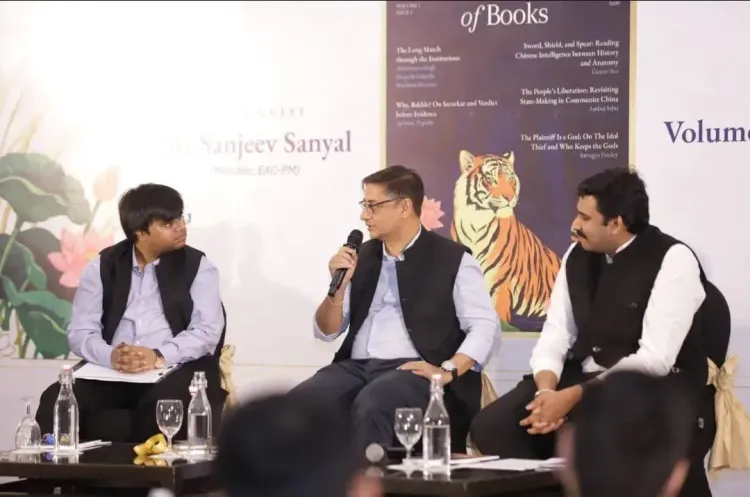
India's intellectual publishing space just got a new entrant. The New Delhi Review of Books launched its inaugural quarterly issue on 25 October 2026, with Economic Advisory Council member Sanjeev Sanyal calling on India to 'reverse the gaze' and assess global ideas through its own lens — a challenge as much to India's academic establishment as to the publication's young team.
Key Takeaways
The New Delhi Review of Books (NDRB) launched its inaugural quarterly issue in New Delhi on 25 October 2026 .
Sanjeev Sanyal , Member of the Economic Advisory Council to the Prime Minister , attended as Chief Guest and called for India to 'reverse the gaze' on global developments.
Sanyal warned against ideological monoculture and urged engagement with diverse thinkers, citing Friedrich Hayek and B.R.
Publisher Ananth Krishna described NDRB as 'an intellectual infrastructure' that will judge books on 'the strength of their arguments, not the fashion of their politics.' Editor-in-Chief Prem Ansh Sinha positioned the journal as 'the meeting point for those who may shape India's institutions and civic life.' NDRB is inviting faculty, think-tank professionals, PhD scholars, and students to contribute through submissions, internships, and collaborations.
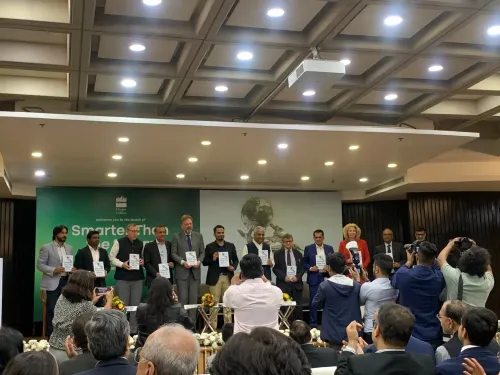
The inaugural issue of the New Delhi Review of Books (NDRB), a quarterly publication dedicated to critical essays and the examination of ideas shaping contemporary India, was launched in New Delhi on Sunday, 25 October 2026. Sanjeev Sanyal, Member of the Economic Advisory Council to the Prime Minister of India, attended the event as Chief Guest, calling for greater intellectual diversity and an independent Indian perspective on global ideas.
Key Developments at the Launch
Prem Ansh Sinha, Editor-in-Chief of NDRB, and Ananth Krishna, Publisher of NDRB and Research Director at the Nation First Policy Research and Change Foundation (NFPRC), were also present at the inaugural ceremony. The launch marks a new entry into India's intellectual publishing landscape, which has traditionally been dominated by Western-origin review journals.
Sanyal congratulated the young team behind the publication, praising its editorial vision, design, production quality, and quality control standards. He cautioned against ideological monoculture and what he described as the tendency to delegitimise individuals rather than engage critically with their ideas — a pointed remark about the state of intellectual debate in India today.
Sanyal's Call to 'Reverse the Gaze'
Central to Sanyal's address was an appeal for India to examine other countries and international developments on its own terms, rather than relying exclusively on foreign assessments. He urged the publication and its readers to 'reverse the gaze' — a phrase encapsulating a broader push for Indian intellectual sovereignty in the interpretation of global events.
Drawing on major global and Indian economic developments, Sanyal referenced thinkers such as Friedrich Hayek and B.R. Shenoy to underscore the significance of engaging with diverse economic ideas. He also advised the publication to prioritise longevity, consistency, and quality over rapid expansion, stressing the value of building a durable institution committed to serious intellectual engagement.
What the Publication Stands For
Ananth Krishna described NDRB as 'an intellectual infrastructure', emphasising the need for genuine intellectual pluralism and rigorous, non-doctrinal thinking in India. He stated that the publication would assess books on 'the strength of their arguments, not the fashion of their politics' — positioning it as a platform that evaluates ideas on their merits, irrespective of prevailing political or ideological preferences.
Prem Ansh Sinha described NDRB as 'more of an acquired taste', underlining the distinctive role of review essays in intellectual discourse. He explained that review essays go beyond summarising books to examine their arguments, references, and supporting evidence in depth. Sinha also characterised the publication as 'the meeting point for those who may shape India's institutions and civic life.'
Participation and the Road Ahead
NDRB has opened its doors to faculty members, think-tank professionals, PhD scholars, students, and other interested participants through submissions, internships, and collaborations. The initiative aims to foster wider engagement among individuals working across academic, research, and policy fields in India.
With its first issue now in circulation, the publication's stated ambition is to carve out a sustained space for critical discourse that is both rigorously argued and distinctly Indian in perspective — a test of whether its founding ideals can outlast the energy of a launch event.
Point of View
With few platforms willing to assess ideas on their arguments alone. Sanyal's 'reverse the gaze' framing is significant — it signals an ambition not merely to publish, but to reframe how India positions itself as a producer, rather than a consumer, of ideas. The harder question is whether a quarterly review journal, however well-intentioned, can build the institutional staying power that India's think-tank ecosystem has often failed to sustain. The founders' own advice — prioritise longevity over expansion — is the right instinct; whether it survives editorial and funding pressures will determine if NDRB becomes infrastructure or just another inaugural issue.
NationPress
25 Oct 2026
Frequently Asked Questions
What is the New Delhi Review of Books (NDRB)?
The New Delhi Review of Books is a new quarterly publication launched in New Delhi on 25 October 2026, dedicated to critical essays and the examination of ideas shaping contemporary India. It is published by Ananth Krishna, Research Director at the Nation First Policy Research and Change Foundation, and edited by Prem Ansh Sinha.
What did Sanjeev Sanyal say at the NDRB launch?
Sanjeev Sanyal called for greater intellectual diversity in India, cautioning against ideological monoculture and urging the country to 'reverse the gaze' — examining global developments through an Indian lens rather than relying on foreign assessments. He also cited economists Friedrich Hayek and B.R. Shenoy to stress the value of engaging with diverse economic ideas.
What is NDRB's editorial approach?
NDRB has stated it will assess books on 'the strength of their arguments, not the fashion of their politics', aiming for rigorous, non-doctrinal intellectual engagement. Publisher Ananth Krishna described it as 'an intellectual infrastructure' for genuine pluralism in Indian public discourse.
Who can contribute to the New Delhi Review of Books?
NDRB has invited faculty members, think-tank professionals, PhD scholars, students, and other interested participants to engage through submissions, internships, and collaborations. The publication seeks to foster participation across academic, research, and policy fields in India.
Why does the NDRB launch matter for Indian intellectual life?
India has historically lacked a dedicated quarterly review journal that critically engages with books and ideas from an explicitly Indian perspective. NDRB's launch, backed by voices from the Prime Minister's Economic Advisory Council, signals a deliberate effort to build that institutional gap — though its long-term impact will depend on editorial consistency and independence.