NFR explores AI track monitoring system to boost railway safety
Synopsis
Northeast Frontier Railway is exploring an AI-powered, sensor-driven track monitoring system developed with IIT Guwahati — one that uses digital twins and predictive analytics to catch faults before they become failures. For a zone operating across some of India's most seismically and ecologically volatile terrain, this could be a genuine infrastructure game-changer.
Key Takeaways
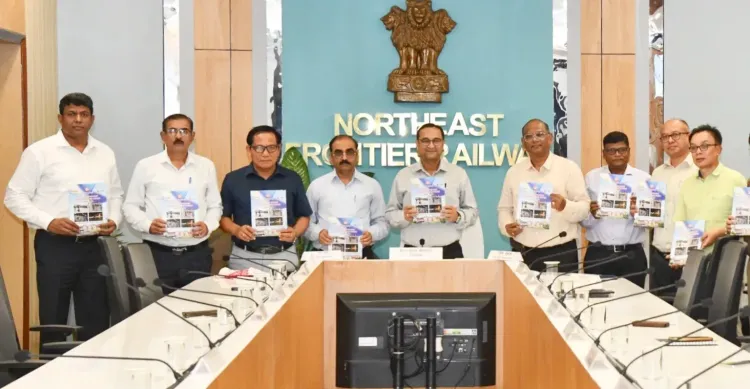
Northeast Frontier Railway (NFR) hosted an interactive session in Guwahati on emerging technologies for railway infrastructure management.
IIT Guwahati Professor Ashwini K.
Nanda presented an AI-powered, multi-sensor track inspection concept using digital twin technology and predictive analytics.
NFR General Manager Chetan Kumar Shrivastava called for integrating innovation with environmental responsibility to meet future transport demands.
The session coincided with World Environment Day 2026 , with NFR showcasing green initiatives including solar energy adoption, electrification, and plantation drives.
NFR covers ecologically and seismically sensitive terrain across seven Northeastern states , making predictive track monitoring particularly critical.
No formal deployment timeline or pilot programme has been announced yet.
Northeast Frontier Railway (NFR) is exploring a cutting-edge AI-powered track monitoring system developed in collaboration with IIT Guwahati, in a push to build a smarter, safer and more sustainable railway network across its zone. The initiative, unveiled at an interactive session hosted by NFR in Guwahati, signals a significant shift toward data-driven infrastructure management for one of India's most geographically challenging railway zones.
The Technology on the Table
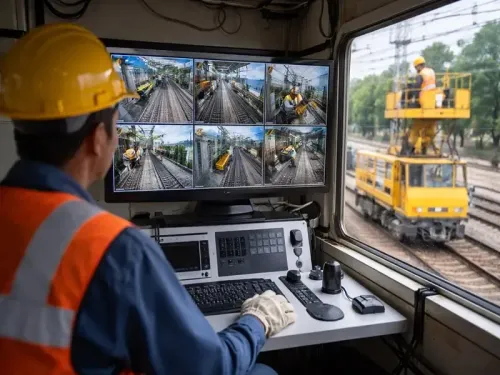
IIT Guwahati Professor Ashwini K. Nanda, joining the session virtually from New Delhi, presented an advanced concept titled 'Autonomous, Unitary System for Inspection and Monitoring of Permanent Way using Multiple Sensors, Artificial Intelligence and Digital Twins.' The system envisions continuous track health assessment through intelligent sensor networks, AI-enabled predictive analytics, and digital twin technologies — enabling proactive maintenance, real-time monitoring, and data-driven decision-making across the network.
According to NFR Chief Public Relations Officer Kapinjal Kishore Sharma, such a system could significantly improve railway asset management, optimise maintenance resources, enhance operational reliability, and strengthen safety standards. The digital twin framework, in particular, creates a virtual replica of physical track infrastructure, allowing engineers to simulate stress, wear, and failure scenarios before they occur in the field.
What the NFR Leadership Said
NFR General Manager Chetan Kumar Shrivastava addressed the gathering and underscored the urgency of embracing emerging technologies to meet future transportation demands. He emphasised that innovation and environmental responsibility must advance together to ensure efficient growth while addressing the evolving needs of both passenger and freight operations.
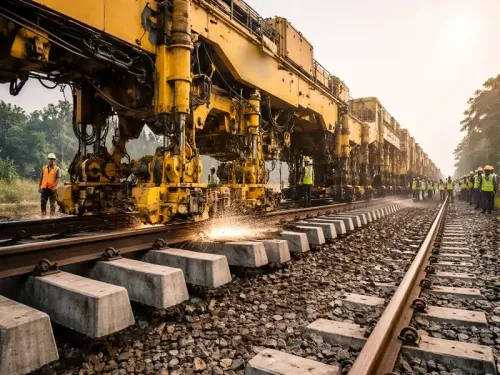
Shrivastava's remarks reflect a broader strategic direction within Indian Railways to move away from reactive maintenance — where faults are fixed after they occur — toward predictive and preventive models driven by real-time sensor data and machine learning.
Green Initiatives Highlighted on World Environment Day
The session also marked World Environment Day 2026, with NFR screening a short film showcasing its environmental record. Highlighted initiatives included railway electrification, promotion of solar energy, energy conservation, water management, waste reduction, plantation drives, and the adoption of eco-friendly practices across divisions, workshops, and offices.
This convergence of technology and sustainability signals NFR's intent to position itself not just as a safer network, but as a greener one — particularly relevant given the ecologically sensitive terrain of the Northeast India corridor.
Why This Matters for Northeast India
NFR operates across some of India's most demanding topography — spanning hilly terrain, flood-prone valleys, and seismically active zones across states including Assam, Meghalaya, Arunachal Pradesh, Nagaland, Manipur, Mizoram, and Tripura. Track degradation in such conditions can occur rapidly and unpredictably, making conventional periodic inspection schedules inadequate.
An AI-driven continuous monitoring system, if deployed at scale, could address a longstanding vulnerability in the region's rail infrastructure. This comes amid broader efforts by the Centre to accelerate railway connectivity in the Northeast as part of its Act East Policy commitments.
The next steps — including any formal adoption, pilot deployment, or funding framework — are yet to be announced by NFR.
Point of View
But the gap between an interactive session and actual deployment is wide — and in Indian Railways, that gap has historically swallowed many promising pilots. The Northeast corridor's seismic and flood exposure makes it an ideal — and urgent — testbed, yet no pilot timeline or funding commitment has been disclosed. The bundling of this announcement with World Environment Day optics risks diluting what is, at its core, a serious safety proposition. The real question is whether NFR will move from presentation to procurement, and whether Indian Railways' centralised procurement architecture will allow a zone-level initiative like this to scale.
NationPress
26 Sept 2026
Frequently Asked Questions
What is the AI track monitoring system NFR is exploring?
It is an autonomous, sensor-driven track inspection concept titled 'Autonomous, Unitary System for Inspection and Monitoring of Permanent Way using Multiple Sensors, Artificial Intelligence and Digital Twins,' presented by IIT Guwahati Professor Ashwini K. Nanda. The system uses AI-enabled predictive analytics and digital twin technology for continuous, real-time track health assessment.
Why is AI-based track monitoring important for Northeast Frontier Railway?
NFR operates across seismically active, flood-prone, and hilly terrain spanning seven Northeastern states, where track degradation can be rapid and unpredictable. Conventional periodic inspections are inadequate for such conditions, making real-time AI monitoring a critical safety upgrade.
What is a digital twin in the context of railway infrastructure?
A digital twin is a virtual replica of physical track infrastructure that allows engineers to simulate stress, wear, and potential failure scenarios in real time. It enables proactive maintenance decisions before faults manifest on the ground.
What environmental initiatives did NFR highlight at the event?
NFR showcased railway electrification, solar energy promotion, energy conservation, water management, waste reduction, plantation drives, and eco-friendly practices across its divisions, workshops, and offices — all presented as part of its World Environment Day 2026 commemoration.
Has NFR announced a deployment timeline for the AI monitoring system?
No formal deployment timeline, pilot programme, or funding framework has been announced. The system remains at the exploration and presentation stage following the interactive session hosted by NFR in Guwahati.