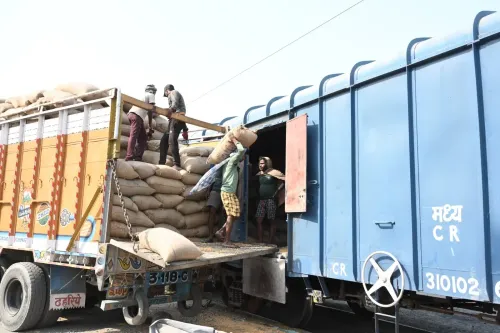
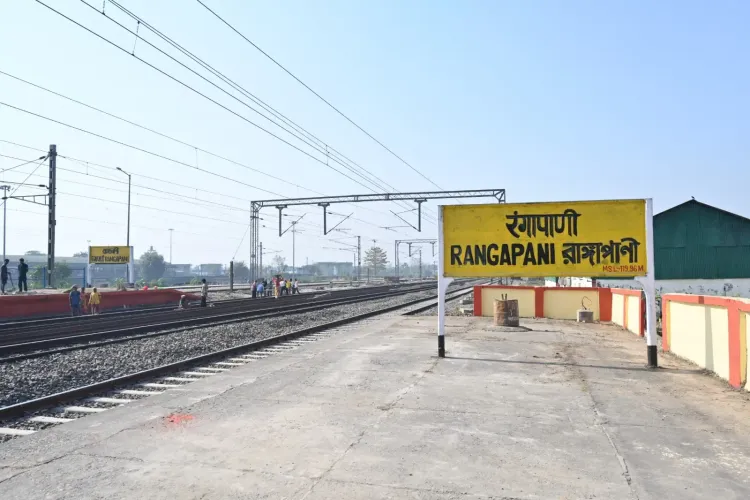
NFR commissions 6.8-km Rangapani-Bagdogra freight line in North Bengal
Synopsis
The Northeast Frontier Railway has revived a long-disused 6.8-km siding in the strategically vital Siliguri Corridor — and the impact is immediate: trains from East Central Railway no longer need to reverse at Siliguri Junction, freeing up capacity for at least 10 additional freight trains daily, all without a major capital outlay.
Key Takeaways
NFR has commissioned the 6.8-km Rangapani-Bagdogra siding line in Darjeeling district, North Bengal for regular freight operations as of 1 November 2026 .
Trains from East Central Railway (ECR) entering NFR at Forbesganj will no longer require reversal at Siliguri Junction , saving energy and reducing crew deployment.
The new arrangement enables NFR to receive at least 10 trains per day from ECR for onward movement beyond Barsoi .
The line was reactivated with minimal expenditure by utilising existing railway infrastructure.
The project was executed under NFR General Manager Chetan Kumar Shrivastava with coordinated efforts by the Katihar Division .
The Northeast Frontier Railway (NFR) has commissioned the 6.8-km Rangapani-Bagdogra siding line under its Katihar Division for regular freight operations, opening a key goods movement corridor in the Siliguri region of Darjeeling district, North Bengal. The move, announced on Sunday, 1 November 2026, is expected to significantly boost freight connectivity across the strategically sensitive Chicken's Neck corridor.
Why This Line Matters
The Rangapani-Bagdogra corridor sits at one of India's most critical railway junctions — the narrow Siliguri Corridor, colloquially known as the Chicken's Neck, which links the northeastern states to the rest of the country. Reactivating this line with minimal expenditure makes productive use of existing infrastructure to meet growing freight transportation demands, according to NFR's Chief Public Relations Officer (CPRO) Kapinjal Kishore Sharma.
Notably, the line had been long disused before this commissioning, making its revival a cost-effective infrastructure win rather than a fresh capital outlay.
Key Operational Benefit: No More Reversals at Siliguri Junction
One of the most significant operational gains from this development is the elimination of mandatory reversals at Siliguri Junction (SGUJ). Previously, trains coming from East Central Railway (ECR) and entering NFR at Forbesganj were required to reverse at Siliguri Junction before proceeding further — a time-consuming and resource-intensive manoeuvre.
With the new arrangement, this reversal is no longer needed. This translates into substantial energy savings, reduced detention of rolling stock, and lower deployment of crew and shunting staff, according to Sharma.
Freight Capacity and Traffic Gains
The operational shift will enable NFR to receive at least 10 trains per day from ECR at Forbesganj for onward movement to destinations beyond Barsoi. This enhancement in throughput is expected to improve freight handling capacity, accelerate goods movement, and allow better utilisation of rolling stock across the division.
The additional route also offers greater operational flexibility, giving railway planners more options during maintenance windows or disruptions on existing corridors.
Impact on Trade and Supply Chains
For traders, businesses and consumers in the region, the development is expected to support more reliable transportation of goods and strengthen local supply chains, Sharma said. The initiative also creates scope for NFR to handle additional freight traffic and generate revenue through better utilisation of an existing asset.
The conversion was carried out under the guidance of NFR General Manager Chetan Kumar Shrivastava, with coordinated efforts from the Katihar Division and concerned departments. The NFR, headquartered at Maligaon near Guwahati, operates across the northeastern states as well as in seven districts of West Bengal and five districts of north Bihar.
With freight demand on the northeastern rail network continuing to rise, the recommissioning of dormant infrastructure like the Rangapani-Bagdogra line signals a broader NFR push to optimise existing assets before committing to fresh capital projects.
Point of View
And any reduction in operational bottlenecks here has implications beyond freight economics. Eliminating the Siliguri Junction reversal alone reduces systemic fragility on a corridor where delays have cascading effects across the northeast. The wider lesson: NFR's ability to unlock 10 additional daily train slots without fresh capital spending makes a quiet case for a national audit of disused railway assets.
NationPress
2 Nov 2026
Frequently Asked Questions
What is the Rangapani-Bagdogra siding line commissioned by NFR?
It is a 6.8-km existing railway siding in the Siliguri region of Darjeeling district, North Bengal, now commissioned by the Northeast Frontier Railway (NFR) under its Katihar Division for regular freight operations. The line had been long disused before being revived with minimal expenditure.
How does this development benefit freight operations in the region?
Trains from East Central Railway entering NFR at Forbesganj no longer need to reverse at Siliguri Junction, saving energy and reducing crew deployment. NFR can now receive at least 10 trains per day from ECR for onward movement beyond Barsoi, boosting freight handling capacity significantly.
What is the strategic significance of the Siliguri Corridor or Chicken's Neck?
The Siliguri Corridor, known as the Chicken's Neck, is a narrow stretch of land in North Bengal that serves as the only land link between India's northeastern states and the rest of the country. Improving railway efficiency here has both logistical and strategic importance for the region.
Who oversaw the commissioning of the Rangapani-Bagdogra line?
The conversion was carried out under the guidance of NFR General Manager Chetan Kumar Shrivastava, with coordinated efforts from the Katihar Division and other concerned departments within NFR.
How will this affect traders and businesses in North Bengal?
According to NFR CPRO Kapinjal Kishore Sharma, the development is expected to support more reliable transportation of goods and strengthen local supply chains. It also creates scope for NFR to generate additional freight revenue through better utilisation of existing assets.