NGT bans sports at 3 cricket stadiums over groundwater non-compliance
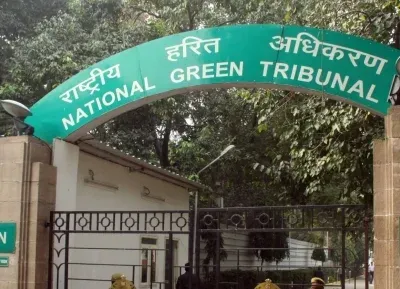
Synopsis
The National Green Tribunal has barred three of India's prominent cricket stadiums — in Jaipur, Raipur, and Mumbai — from hosting any sports events after years of ignored environmental notices. The ban, stemming from a 2021 case, underscores how groundwater misuse at large sporting venues has gone unchecked, with the next decisive hearing set for 17 August 2026.
Key Takeaways
The NGT has imposed an interim ban on sports activities at three cricket stadiums — Sawai Mansingh Stadium (Jaipur) , Shaheed Veer Narayan Singh International Stadium (Raipur) , and Dr D.
Patil Stadium (Mumbai) .
The order was passed by the Principal Bench comprising Justice Prakash Shrivastava and Expert Member Dr Afroz Ahmad on 10 July .
The stadiums failed to respond to multiple notices from the NGT and the Central Ground Water Authority (CGWA) regarding groundwater extraction data.
Key compliance requirements include use of treated STP water instead of groundwater, and installation of rainwater harvesting systems .
The CGWA has been directed to submit a fresh tabulated compliance report before the next hearing on 17 August 2026 .
The case originates from O.A.
94/2021 , meaning compliance has been pending for over four years .
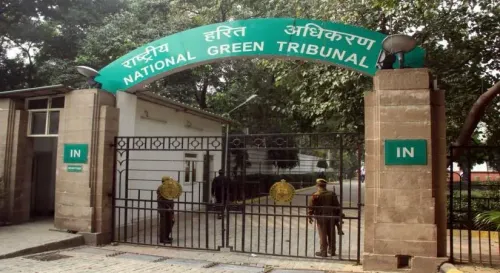
The National Green Tribunal (NGT) has imposed an interim ban on sports activities at three major cricket stadiums — including Sawai Mansingh Stadium, Jaipur — for repeatedly failing to comply with environmental directives on groundwater extraction and water conservation. The order was passed on 10 July by the Principal Bench of the NGT and remains in force until the next scheduled hearing on 17 August 2026.
The Three Stadiums Named
The NGT's interim restraint order covers Shaheed Veer Narayan Singh International Stadium, Raipur; Sawai Mansingh Stadium, Jaipur; and Dr D. Y. Patil Stadium, Mumbai. None of the three may host any sports activity without first obtaining prior permission from the Tribunal. The bench, comprising Justice Prakash Shrivastava, Chairperson, and Expert Member Dr Afroz Ahmad, passed the order while hearing an execution application in O.A. No. 94/2021 and the connected O.A. No. 348/2024.
What the Stadiums Failed to Do
The Tribunal observed that all three venues failed to furnish required information on groundwater extraction despite multiple notices from both the NGT and the Central Ground Water Authority (CGWA). The core environmental obligations in question include switching from groundwater to treated sewage treatment plant (STP) water for ground maintenance, installing rainwater harvesting systems, and adhering to groundwater conservation norms. The NGT has also directed the CGWA to prepare a fresh tabulated compliance report based on responses received from the concerned stadiums.
Why the NGT Acted
The Tribunal explicitly cited increasing water scarcity across several parts of India as the backdrop for its intervention, noting that large sporting venues — which consume significant volumes of water for turf maintenance — are expected to lead by example on conservation. This is not the first time the NGT has flagged stadium-level groundwater misuse; the original application dates to 2021, indicating that compliance has been pending for over four years. Notably, the case connects to a broader national pattern in which high-profile infrastructure projects have repeatedly drawn NGT scrutiny for bypassing environmental safeguards.
Impact on Upcoming Events
The interim ban could disrupt scheduled cricket matches and other sporting events at the three venues, pending Tribunal clearance. Organisers seeking to host events will now need to apply to the NGT for prior permission — a step that adds procedural time to event planning. The Board of Control for Cricket in India (BCCI) and state cricket associations have not yet issued public responses to the order, according to available reports.
What Happens Next
The matter is listed for further hearing on 17 August 2026. The CGWA is expected to submit its consolidated compliance report before that date. Should the stadiums demonstrate adherence to the prescribed environmental norms by then, the NGT may lift the interim ban. Failure to comply risks a continuation — or escalation — of restrictions. The National Green Tribunal Act, 2010, under which the NGT was constituted, empowers it to impose penalties and enforce environmental compliance through binding orders.
Point of View
And the NGT's credibility on environmental enforcement increasingly depends on whether its orders have teeth beyond the courtroom.
NationPress
10 Oct 2026
Frequently Asked Questions
Which cricket stadiums have been banned by the NGT?
The NGT has imposed an interim ban on sports activities at three stadiums: Sawai Mansingh Stadium in Jaipur, Shaheed Veer Narayan Singh International Stadium in Raipur, and Dr D. Y. Patil Stadium in Mumbai. The ban remains in effect until the next hearing on 17 August 2026.
Why did the NGT ban sports activities at these stadiums?
The ban was imposed because all three stadiums failed to provide required information on groundwater extraction and did not comply with environmental directives, despite multiple notices from the NGT and the Central Ground Water Authority. The non-compliance relates to groundwater conservation, use of treated STP water, and rainwater harvesting obligations.
When is the next NGT hearing on this matter?
The next hearing is scheduled for 17 August 2026. The Central Ground Water Authority has been directed to submit a fresh compliance report before that date.
Can the stadiums still host events during the ban?
No. The NGT order restrains all three stadiums from conducting any sports activities without first obtaining prior permission from the Tribunal. Organisers must approach the NGT for clearance before scheduling any event at these venues.
What is the National Green Tribunal and what powers does it have?
The National Green Tribunal is a specialised judicial body established under the National Green Tribunal Act, 2010, to hear cases relating to environmental protection, forest conservation, pollution, and natural resources. It has the authority to issue binding orders, impose penalties, and enforce compliance with environmental norms.