NHAI flags 595 illegal parking hotspots on National Highways in safety drive

Synopsis
NHAI has mapped out 595 illegal parking and encroachment hotspots on National Highways under Supreme Court direction — and backed it with ATMS audits, District Highway Safety Task Forces, and coordinated state enforcement. It is one of the most structured highway safety pushes in recent years, moving beyond ad hoc crackdowns toward a permanent monitoring framework.
Key Takeaways
NHAI has identified 595 critical locations of unauthorised parking and encroachments on National Highways across India.
The drive is being conducted in compliance with directions of the Supreme Court of India .
NHAI is coordinating with state governments, district administrations, and enforcement agencies to clear identified hotspots.
Encroachment removal is being pursued under the Control of National Highways (Land and Traffic) Act, 2002 .
District Highway Safety Task Forces and nodal officers are being established to strengthen inter-agency enforcement.
Field offices have been directed to audit all ATMS components including cameras, variable message signboards, and emergency call boxes.
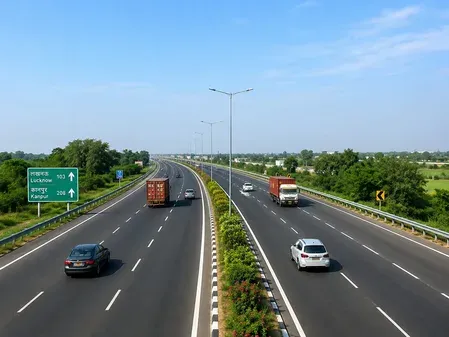
The National Highways Authority of India (NHAI) has identified 595 critical locations of unauthorised parking and encroachments along National Highway corridors across the country, as part of a nationwide road safety initiative, the Ministry of Road Transport and Highways confirmed on Wednesday, 24 June. The drive is being carried out in compliance with directions of the Supreme Court of India, aimed at ensuring obstruction-free and safer movement on the national highway network.
Scale of the Problem
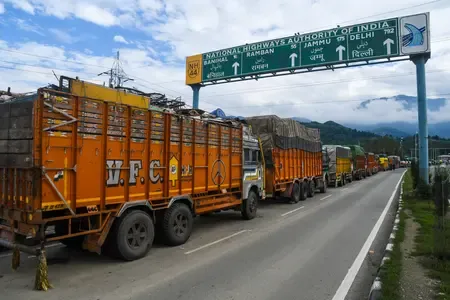
Unauthorised parking, roadside encroachments, and unregulated commercial activities along highway stretches pose significant risks to commuters and freight carriers, according to the ministry. These obstructions impede traffic flow and elevate the likelihood of accidents, particularly at high-speed highway sections. The 595 hotspots span multiple states, reflecting the scale and geographic spread of the challenge.
Coordination with State Governments
To address the issue systematically, NHAI is working in close coordination with state governments, district administrations, and enforcement agencies to clear identified encroachments. The authority is also invoking provisions of the Control of National Highways (Land and Traffic) Act, 2002 to remove illegal structures and vehicles from highway land.
As part of the enforcement push, NHAI is collaborating with states to establish District Highway Safety Task Forces and appoint dedicated nodal officers to improve inter-agency coordination and strengthen on-ground enforcement mechanisms.
Technology and Infrastructure Audit
Beyond physical enforcement, NHAI has directed its field offices to conduct immediate audits of all Advanced Traffic Management System (ATMS) installations. The audit covers key components including traffic monitoring cameras, video incident detection systems, variable message signboards, and emergency call boxes to ensure they remain fully operational.
The authority is also prioritising the deployment of ambulances and recovery vehicles, enhanced highway patrolling, integration of ATMS alerts with enforcement agencies, and proactive maintenance of safety infrastructure across the network.
What Comes Next
NHAI stated that these combined measures — enforcement, inter-agency coordination, and technology upgrades — are designed to enable timely action and facilitate continuous monitoring of safety-related issues. The initiative signals a more structured, compliance-driven approach to highway safety, one that goes beyond periodic crackdowns to build lasting institutional capacity. How effectively state-level task forces are constituted and activated will determine whether the 595 identified hotspots see durable clearance or temporary relief.
Point of View
But India has seen highway encroachment drives before — most of which delivered temporary clearances rather than structural change. The real test is whether the District Highway Safety Task Forces become functional bodies with enforcement teeth or remain paper committees. Notably, the push comes under Supreme Court direction, which adds accountability pressure that purely executive-driven drives have historically lacked. The ATMS audit is overdue: a traffic management system is only as effective as its uptime, and patchy camera coverage has long been a blind spot in highway incident response.
NationPress
22 Sept 2026
Frequently Asked Questions
How many illegal parking hotspots has NHAI identified on National Highways?
NHAI has identified 595 critical locations of unauthorised parking and encroachments across National Highway corridors in India. These span multiple states and were flagged as part of a nationwide road safety initiative announced on 24 June.
Why is NHAI conducting this crackdown on highway encroachments?
The drive is being carried out in compliance with directions of the Supreme Court of India , which has mandated action to ensure safer and obstruction-free movement on National Highways. Unauthorised parking and encroachments have been identified as significant contributors to highway accidents and traffic disruption.
What legal powers is NHAI using to remove encroachments?
NHAI is invoking the Control of National Highways (Land and Traffic) Act, 2002 to remove illegal structures and vehicles from highway land. The authority is working alongside state governments and district administrations to enforce clearances.
What are District Highway Safety Task Forces?
These are inter-agency bodies being set up by NHAI in coordination with state governments to improve enforcement coordination at the district level. Each task force will have a dedicated nodal officer to oversee monitoring and action on safety-related issues along National Highways.
What technology measures are being taken alongside the enforcement drive?
NHAI has directed field offices to audit all Advanced Traffic Management System (ATMS) installations, covering traffic cameras, video incident detection systems, variable message signboards, and emergency call boxes. The authority is also stepping up ambulance and recovery vehicle deployment and integrating ATMS alerts with enforcement agencies.