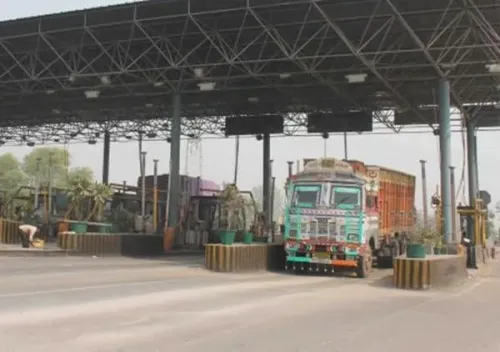
NHAI to raze illegal highway eateries, curb truck parking on SC orders
Synopsis
NHAI has mapped 595 illegal parking hotspots and is moving to demolish roadside dhabas on Supreme Court orders — a crackdown that pairs geo-tagged enforcement data with new District Highway Safety Task Forces. It is one of the most structured pushes yet against a problem that has persisted on Indian highways for decades.
Key Takeaways
NHAI will demolish illegal dhabas and eateries along National Highways to eliminate unauthorised truck parking, acting on Supreme Court strictures.
The authority has identified 595 critical locations of unauthorised parking, mapped with GPS coordinates across multiple states.
Enforcement draws on the Control of National Highways (Land and Traffic) Act, 2002 .
District Highway Safety Task Forces with dedicated nodal officers are being established in states for continuous compliance monitoring.
NHAI has ordered immediate audits of all Advanced Traffic Management System (ATMS) installations, covering cameras, speed detectors, and emergency call boxes.
Enhanced patrolling, ambulance deployment, and ATMS integration with enforcement agencies are being prioritised for faster incident response.
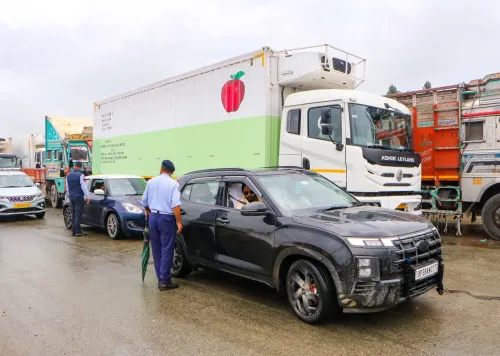
The National Highways Authority of India (NHAI) has launched a sweeping drive to evict illegal dhabas and eateries operating along National Highways across the country, acting on directions from the Supreme Court that bar trucks from parking along highway stretches except at designated lay-bys. The Ministry of Road Transport and Highways confirmed the initiative in an official statement, signalling one of the most coordinated enforcement pushes on highway safety in recent years.
Scale of the Problem
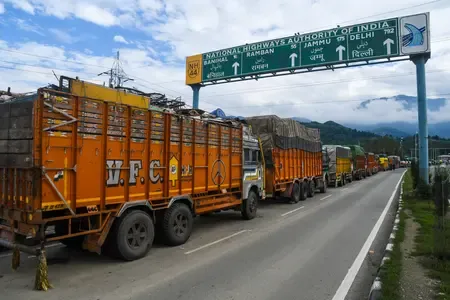
NHAI has identified 595 critical locations of unauthorised parking — mapped with longitude and latitude coordinates — spread across multiple states. Roadside encroachments, unregulated commercial activity, and illegal parking have long been cited as contributors to highway accidents, obstructing traffic flow and creating blind-spot hazards for high-speed vehicles.
The authority is working in close coordination with state governments, district administrations, and enforcement agencies to clear these spots. Evictions of illegal eateries and dhabas are being prioritised because their presence directly generates truck and heavy-vehicle parking outside designated zones.
Legal Framework and Enforcement Mechanism
NHAI is invoking the provisions of the Control of National Highways (Land and Traffic) Act, 2002 to remove encroachments from highway corridors. The Supreme Court's strictures against non-designated parking have given the drive fresh legal backing, pressing state governments to act rather than defer.
To institutionalise compliance, NHAI is pushing for the establishment of District Highway Safety Task Forces in every state, with dedicated nodal officers tasked with monitoring enforcement and enabling inter-agency coordination. According to the ministry's statement, these mechanisms are designed to support 'timely enforcement action and enable continuous monitoring of safety-related issues along the National Highway network.'
Technology and Patrolling Upgrades
Alongside physical evictions, NHAI has directed its field offices to conduct immediate audits of all Advanced Traffic Management System (ATMS) installations. The audit covers traffic monitoring cameras, video incident detection systems, variable speed detection systems, variable message signboards, and emergency call boxes — ensuring all components are fully operational.
Deployment of ambulances and recovery vehicles, enhanced highway patrolling, and integration of ATMS alerts with enforcement agencies are being fast-tracked. The stated goal is faster incident response and improved enforcement across the national highway network.
What This Means for Road Users
For truckers and long-haul drivers, the crackdown signals a firm shift toward designated rest areas and truck lay-bys — a practice standard in highway systems globally but inconsistently enforced in India. For residents and small businesses operating informally along highway margins, the evictions could have livelihood implications that authorities have not yet publicly addressed.
This is not the first time NHAI has announced action against highway encroachments, but the combination of Supreme Court orders, geo-tagged enforcement data, and District Task Forces gives this round a more structured backbone than previous drives. Whether on-ground compliance matches the institutional architecture being built will be the defining test in the months ahead.
Point of View
But without measurable milestones and public reporting, this risks becoming another enforcement cycle that fades after the initial headlines.
NationPress
22 Sept 2026
Frequently Asked Questions
Why is NHAI demolishing illegal eateries along National Highways?
NHAI is demolishing illegal dhabas and eateries because they generate unauthorised truck parking directly outside, creating accident risks on high-speed highway stretches. The Supreme Court has issued strictures barring trucks from parking along National Highways except at designated lay-bys.
How many illegal parking locations has NHAI identified?
NHAI has identified 595 critical locations of unauthorised parking, each mapped with longitude and latitude details, spread across different states. The authority is coordinating with state governments and district administrations for their clearance.
What legal powers does NHAI have to remove encroachments?
NHAI is invoking the Control of National Highways (Land and Traffic) Act, 2002, which empowers it to remove encroachments from National Highway corridors. The Supreme Court's recent strictures on truck parking provide additional legal backing for the current drive.
What are District Highway Safety Task Forces?
District Highway Safety Task Forces are inter-agency bodies being set up in states at NHAI's initiative, with dedicated nodal officers to monitor compliance and coordinate between enforcement agencies. They are designed to ensure continuous monitoring of safety issues along the National Highway network.
What technology upgrades are part of this highway safety push?
NHAI has directed field offices to audit all Advanced Traffic Management System installations, ensuring traffic cameras, video incident detection systems, variable speed detectors, variable message signboards, and emergency call boxes are fully operational. ATMS alerts are also being integrated with enforcement agencies for faster incident response.