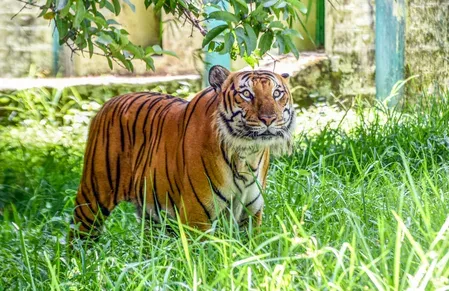
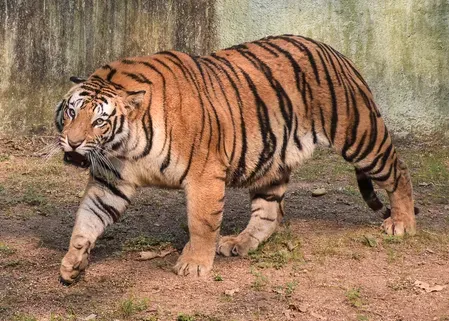
Nilgiris tiger declared man-eater after two fatal attacks near Gudalur
Synopsis
A tiger in the Nilgiris has been formally declared a man-eater after consuming parts of its second victim within two weeks near Gudalur. With four teams, drones, and six live-bait cages deployed, Tamil Nadu's forest department is racing to capture — or if necessary, shoot — an eight-to-ten-year-old male that has turned one of India's premier tiger zones into a danger corridor.
Key Takeaways
The Tamil Nadu Forest Department declared a male tiger a man-eater on 23 August after two fatal attacks at Lauriston , near Gudalur in the Nilgiris .
Victims identified as K.
Ravikumar (found 200 metres from his home) and M.
Balakrishnan , 58 , killed on 9 August .
Matching pugmarks from both sites suggest the same tiger , estimated 8–10 years old , is responsible.
Four specialised teams and drones are tracking the animal; six live-bait cages have been positioned near attack sites.
Personnel are authorised to shoot the tiger if it charges and poses an imminent threat to human life.
Residents have been advised to stay indoors at night and avoid plantations until the operation ends.
The Tamil Nadu Forest Department has declared a male tiger a man-eater following two fatal attacks at Lauriston in O-Valley town panchayat near Gudalur in the Nilgiris, with a large-scale capture operation now underway. The declaration, made on 23 August, came after evidence confirmed the animal had consumed parts of its latest victim — a threshold that triggers formal man-eater classification under wildlife protocols.
The Two Fatal Attacks
The tiger, estimated to be between eight and ten years old, is suspected of killing K. Ravikumar, whose body was recovered around 2 pm on Friday, approximately 200 metres from his residence. The attack followed an earlier incident on 9 August, in which M. Balakrishnan, 58, of Field 4 in Lauriston Estate, was killed — his partially consumed remains discovered the same day. Forest officials believe the same animal is responsible for both deaths, citing matching pugmarks collected from the two sites.
Why the Tiger Was Classified a Man-Eater
Gudalur District Forest Officer P. Devaraj said the nature of the injuries and the consumption of body parts were the key factors in formally classifying the tiger as a man-eater. This classification carries significant operational consequences, including authorisation for lethal force if the animal poses an imminent threat to personnel during the capture attempt.
Capture Operation: Teams, Cages and Drones
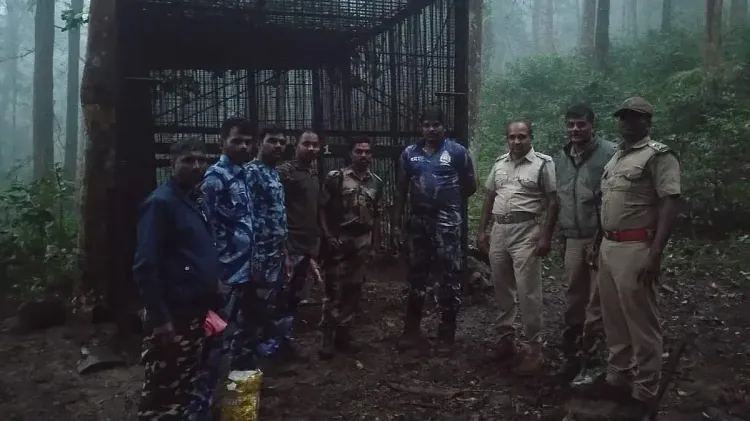
Four specialised teams have been deployed to track and capture the tiger. Two seven-member ground teams are following the animal's trail by analysing pugmarks, scat, and other physical signs, while two additional teams are conducting aerial surveillance using drones. Each ground team has been equipped with a firearm and protective gear. Separately, six cages containing live bait have been placed along routes the tiger is likely to use, including areas close to both attack sites. Forest sources indicated that tranquilisation and capture remain the preferred outcome; however, personnel may resort to shooting the animal if it charges and poses a direct threat to human life.
Health Assessment and Next Steps
Officials have so far been unable to determine the tiger's health condition from camera-trap imagery. Devaraj noted that a reliable assessment can only be conducted after the animal is captured and examined by a veterinarian. A subsequent decision on whether to relocate the tiger to Arignar Anna Zoological Park at Vandalur or send it for treatment to the Wildlife Transit and Treatment Centre at Pethikuttai in Sirumugai will be taken after approval from Chief Wildlife Warden Rakesh Kumar Dogra.
Precautions for Residents and Estate Workers
As a precautionary measure, estate management has been directed to suspend work for several additional days in areas where tiger movement has been recorded. Forest personnel are advising residents to remain indoors at night and to avoid entering plantations or forested areas until the capture operation concludes. This comes amid growing anxiety in the Lauriston community, where two deaths within weeks have deepened fears about human-wildlife conflict in the Nilgiris landscape — one of India's most sensitive tiger habitats.
Point of View
Triggered after just two attacks, reflects lessons from past episodes where delayed action cost more lives. What the incident also surfaces is the persistent tension between conservation imperatives and community safety in buffer zones: Lauriston Estate workers operate at the edge of critical tiger habitat with limited early-warning infrastructure. The reliance on live-bait cages and foot tracking, while standard protocol, raises questions about whether real-time camera-trap networks in high-risk corridors are adequately funded. If the tiger is found to be injured or aged, it may also reopen the debate on proactive health monitoring of older big cats in the Nilgiris landscape.
NationPress
7 Oct 2026
Frequently Asked Questions
Why was the Nilgiris tiger declared a man-eater?
The tiger was declared a man-eater after it killed two people near Gudalur and consumed parts of its latest victim, K. Ravikumar. District Forest Officer P. Devaraj cited the nature of the injuries and consumption of body parts as the basis for the classification.
Who are the victims of the Nilgiris tiger attacks?
The two victims are K. Ravikumar, whose body was found approximately 200 metres from his home, and M. Balakrishnan, 58, of Field 4 in Lauriston Estate, whose partially consumed remains were discovered on 9 August.
What steps is the Tamil Nadu Forest Department taking to capture the tiger?
Four specialised teams have been deployed — two tracking on foot using pugmarks and scat, two conducting drone surveillance. Six cages with live bait have been placed along likely tiger routes. Tranquilisation is the preferred outcome, but personnel may use lethal force if the animal charges.
What will happen to the tiger after it is captured?
A decision will be taken — with approval from Chief Wildlife Warden Rakesh Kumar Dogra — on whether to transfer the tiger to Arignar Anna Zoological Park at Vandalur or send it for treatment to the Wildlife Transit and Treatment Centre at Pethikuttai in Sirumugai.
What precautions have been advised for residents near the attack sites?
Estate management has been asked to suspend work in areas of suspected tiger movement for several more days. Residents are being advised to remain indoors at night and avoid entering plantations or forested areas until the capture operation is completed.