NITI Aayog launches India S&T Scoreboard to benchmark state science policies

Synopsis
NITI Aayog's India S&T Scoreboard is a first-of-its-kind national dashboard that lets states compare their science and technology standing — from patents to deep tech startups — side by side. For a country where S&T data has long sat in silos, putting it all on one interactive platform could genuinely shift how state governments plan for innovation.
Key Takeaways
NITI Aayog launched the India S&T Scoreboard on 3 November 2026 in New Delhi .
The platform aggregates data on higher education institutions , R&D labs , deep tech startups , incubators , research publications , and patents across all states and UTs.
It tracks research quality , impact , collaboration , and open access across three sectors: Academia , Government R&D Labs , and Industry .
NITI Aayog Vice Chairman Ashok Kumar Lahiri called for states to take a more active role in driving India's S&T progress.
Prof Abhay Karandikar noted the platform resolves years of fragmented, siloed S&T data by consolidating it on a single interactive dashboard with multi-year trend tracking.
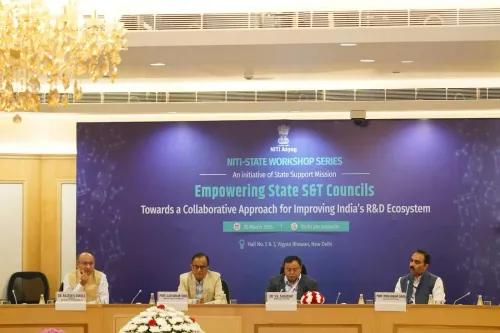
NITI Aayog on Tuesday, 3 November 2026, launched the India S&T Scoreboard, an interactive digital platform offering an integrated view of the science and technology landscape across all states and Union Territories. The platform aggregates data on higher education institutions, R&D labs, deep tech startups, incubators, research publications, and patents — giving policymakers a single dashboard to assess where their state stands in India's innovation ecosystem.
What the Scoreboard Tracks
The India S&T Scoreboard goes beyond tallying raw output volumes. It presents indicators covering research quality, impact, collaboration, and open access across priority research areas, spanning three sectors: Academia, Government R&D Laboratories, and Industry. The platform also enables side-by-side comparison of states and UTs, offers detailed state profiles, and documents state-level S&T policies and best practices — features designed to encourage peer learning among states.
Why NITI Aayog Built It
NITI Aayog Vice Chairman Ashok Kumar Lahiri stressed that India's continued progress in science and technology requires states to play a far more active role. He noted that the Scoreboard would help states identify both their strengths and gaps, draw lessons from one another, and design sharper programmes and policies. Lahiri urged all states and UTs to make full use of the platform.
NITI Aayog Member (S&T) Prof Abhay Karandikar observed that data on research and innovation had so far remained fragmented across multiple sources, making it difficult for states to accurately gauge their own standing. 'The Scoreboard addresses this gap by bringing ecosystem, publication and patent data together on a single interactive dashboard, with trends over years, so that states can track their progress over time,' he said.
Key Officials and Their Emphasis
NITI Aayog Senior Adviser Prof Vivek Kumar Singh said the platform was built to capture quality, impact, and collaboration — not just output volume — so states can identify areas of expertise and focus their action accordingly. Department of Science and Technology Secretary Umesh V. Waghmare highlighted the Scoreboard's role in adding a valuable state-level picture to the national evidence base, and underlined the importance of state S&T Councils and state universities in widening India's research base.
Ministry of Earth Sciences Secretary T. Srinivasa Kumar underscored that earth sciences are closely tied to every state, and that local scientific capacity is essential for states to effectively utilise weather forecasts, early warnings, and opportunities in the ocean sector.
What Happened at the Launch
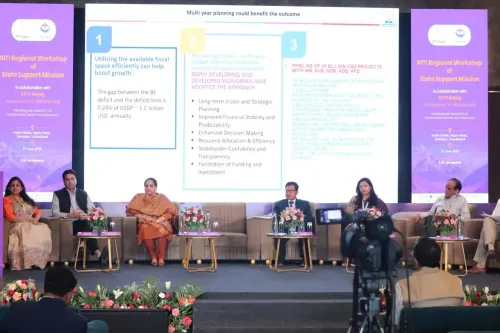
The formal launch was followed by a walkthrough of the Scoreboard and a technical session covering its methodology and data sources. Representatives of states who attended noted that the platform would support their planning processes and help build institutional capacity and skilled human resources in science and technology at the state level. The initiative is positioned as a key tool for evidence-based policymaking and inter-state benchmarking.
The Scoreboard represents a meaningful step toward decentralising India's S&T governance — putting actionable data directly in the hands of state governments at a time when deep tech and innovation are increasingly seen as engines of economic growth.
Point of View
But state-level data has remained scattered — making it nearly impossible for a state government to know whether it is punching above or below its weight on R&D. The S&T Scoreboard's value will depend entirely on how current and complete its underlying data remains over time; dashboards that start strong often go stale without a funded maintenance mandate. The deeper question is whether states with weaker S&T ecosystems — often the ones most in need of this tool — have the institutional bandwidth to act on what the data reveals. A benchmark without a reform incentive attached to it risks becoming another well-designed portal that polishes well on launch day but moves little on the ground.
NationPress
3 Nov 2026
Frequently Asked Questions
What is the India S&T Scoreboard launched by NITI Aayog?
The India S&T Scoreboard is an interactive digital platform launched by NITI Aayog on 3 November 2026 that provides an integrated view of the science and technology landscape across all Indian states and Union Territories. It consolidates data on R&D institutions, higher education, deep tech startups, incubators, patents, and research publications on a single dashboard.
What kind of data does the India S&T Scoreboard include?
The platform covers ecosystem data — including higher education institutions, government R&D labs, deep tech startups, and incubators — as well as S&T output indicators such as research publications and patents. It also tracks research quality, impact, collaboration, and open access across Academia, Government R&D Labs, and Industry sectors.
How can states use the India S&T Scoreboard?
States can use the platform to compare their S&T standing side by side with other states and UTs, identify strengths and gaps, access detailed state profiles, review best practices, and track progress over multiple years. NITI Aayog designed it specifically to support evidence-based policymaking and programme design at the state level.
Who are the key officials behind the India S&T Scoreboard?
The initiative was led by NITI Aayog, with Vice Chairman Ashok Kumar Lahiri, Member (S&T) Prof Abhay Karandikar, and Senior Adviser Prof Vivek Kumar Singh playing prominent roles at the launch. The Department of Science and Technology and the Ministry of Earth Sciences also participated, represented by Secretaries Umesh V. Waghmare and T. Srinivasa Kumar respectively.
Why does NITI Aayog say a state-level S&T platform was needed?
According to NITI Aayog, data on research and innovation had previously been fragmented across multiple sources, making it difficult for states to assess their own standing or benchmark against peers. The Scoreboard centralises this information so states can make more informed decisions about S&T investments and policy priorities.