NNPG opposes tripartite oil pact, demands Naga political settlement first
Synopsis
Days after the Centre, Assam, and Nagaland signed an MoU to unlock oil extraction along their shared border—with potential to grow output tenfold—the NNPG has declared the move illegal under the 2017 Agreed Position and warned it will stop any extraction ‘peacefully or otherwise.’ The standoff lays bare the unresolved fault line between Delhi’s Northeast development push and the still-unsigned Naga political settlement.
Key Takeaways
The NNPG , representing seven Naga organisations , on 12 June 2025 opposed a tripartite oil MoU signed between the Centre , Assam , and Nagaland .
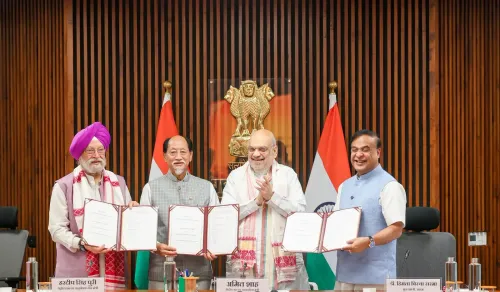
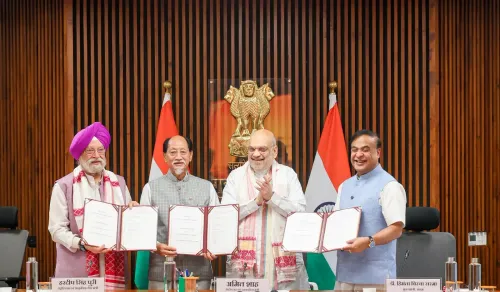
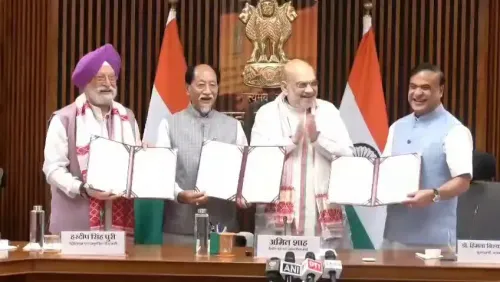
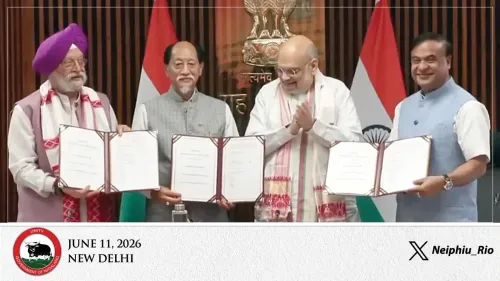
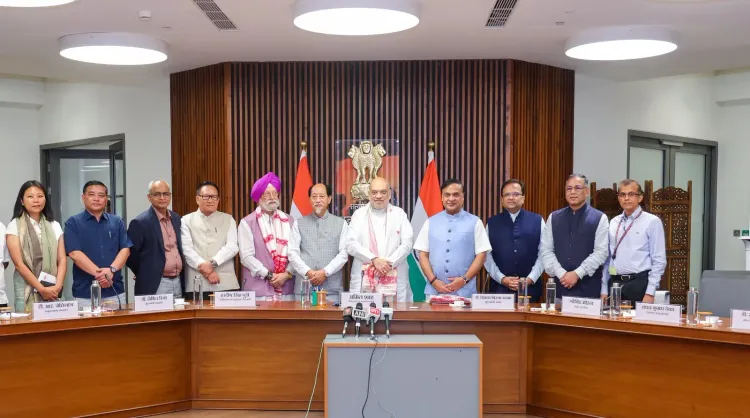
The MoU was signed on 11 June in New Delhi in the presence of Home Minister Amit Shah , targeting oil and mineral exploration along the Assam-Nagaland border .
Current extraction capacity of 1,000–1,500 barrels per day could increase more than tenfold , according to Shah.
The NNPG cited the 2017 Agreed Position to argue that resource extraction before a formal political settlement is “illegal.” The group warned it would stop extraction “peacefully or otherwise” and questioned revenue-sharing arrangements with Assam.
The NNPG said energy firms could be partners after a formal Naga political settlement is signed and declared.
The Naga National Political Groups (NNPG), an umbrella body of seven Naga organisations, on Friday, 12 June formally opposed a tripartite Memorandum of Understanding (MoU) signed between the Centre, Assam, and Nagaland to facilitate mineral oil operations along the Assam-Nagaland inter-state border. The group declared any resource extraction in Naga areas before a formal political settlement to be “illegal and against the agreed principles.”
What the MoU Entails
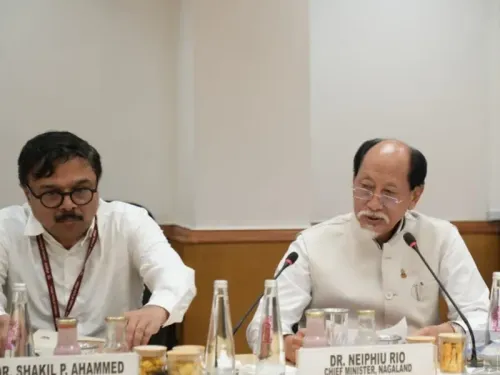
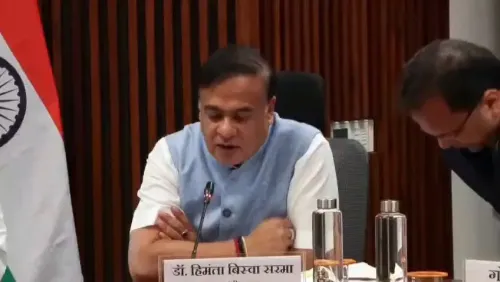
The agreement was signed in New Delhi on Thursday, 11 June, in the presence of Union Home Minister Amit Shah, Union Petroleum and Natural Gas Minister Hardeep Singh Puri, Assam Chief Minister Himanta Biswa Sarma, and Nagaland Chief Minister Neiphiu Rio. Shah stated that the MoU would unlock significant opportunities for oil and natural gas exploration and mineral mining, and described it as a step toward realising Prime Minister Narendra Modi’s vision of a prosperous, economically vibrant Northeast.
The Home Minister noted that current extraction capacity of approximately 1,000 to 1,500 barrels per day in the boundary areas has the potential to increase more than tenfold in the coming years. He added that both states had agreed not to allow any impediment to India’s oil exploration efforts and would advance on the path of mutual cooperation, as these resources constitute part of the nation’s wealth.
NNPG’s Legal and Political Objections
The NNPG grounded its opposition in the ‘Agreed Position’ signed between the Working Committee of the NNPGs and the Centre on 17 November 2017. According to the group, that document explicitly states that “ownership and transfer of land and its resources, both man-made and natural, including mines and minerals, fossil fuels, petroleum and natural gas and any new finds, and Nagaland shall be the apex body to legislate.”
The NNPG argued that the “status paper” agreed upon implies a post-solution Nagaland government and that no extraction can legally proceed before a formal political settlement is signed. The group further warned it would ensure, “peacefully or otherwise,” that no company—national or international—extracts crude petroleum reserves from Naga soil before such a settlement is reached.
Revenue-Sharing Arrangement Questioned
The group also challenged the rationale of any revenue-sharing arrangement involving Nagaland’s natural resources. In its statement, the NNPG said: “Revenue sharing between Nagaland and Assam, or with any other state, is a profit motive of a few and not in the interest of the Nagas.” It questioned why Nagaland should share revenues from its resources with Assam when Assam does not reciprocate with its own oil revenues.
The NNPG also affirmed that opposition voiced by various Naga tribes and civil society organisations against oil exploration under the current circumstances is justified. This comes amid a decades-long peace process between Naga political groups and the Centre that has yet to produce a final, publicly declared settlement.
A Path Forward, Conditionally
Despite its firm opposition, the NNPG signalled openness to future collaboration. The group stated that prospecting firms and energy companies could become “reliable partners of the Naga people in the post-settlement period” once a political solution is formally concluded. The statement closed with a pointed question directed at the Centre: “When will the Government of India officially sign and declare the Naga political settlement after having acknowledged and appreciated Naga history and identity?”
The standoff underscores the unresolved tension between the Centre’s development agenda for the Northeast and the pending Naga political process—a resolution of which remains without a publicly confirmed timeline.
Point of View
They are anti-sequencing. The Centre’s silence on a settlement timeline—years after acknowledging Naga history and identity—is itself a policy choice, and the NNPG’s pointed question deserves a direct answer rather than another MoU.
NationPress
29 Jul 2026
Frequently Asked Questions
What is the tripartite MoU that the NNPG is opposing?
It is a Memorandum of Understanding signed on 11 June 2025 in New Delhi between the Government of India, Assam, and Nagaland to facilitate mineral oil operations along the Assam-Nagaland inter-state border. Home Minister Amit Shah, who presided over the signing, said the deal could increase extraction capacity more than tenfold from the current 1,000–1,500 barrels per day.
Why does the NNPG say the MoU is illegal?
The NNPG argues the MoU violates the ‘Agreed Position’ signed with the Centre on 17 November 2017, which states that Nagaland shall be the apex body to legislate over its natural resources, including petroleum and natural gas. The group contends this framework implies a post-settlement Nagaland government, making any extraction before a formal political settlement illegal under agreed principles.
What is the Naga political settlement and why has it not been signed?
The Naga political settlement refers to a long-running peace process between Naga political groups and the Centre, aimed at resolving the decades-old Naga political issue. While framework agreements have been signed, a final, publicly declared settlement has not been concluded, and no official timeline has been announced by the Government of India.
Has the NNPG threatened to use force to stop oil extraction?
The NNPG stated it would ensure ‘peacefully or otherwise’ that no company, national or international, extracts crude petroleum from Naga soil before a political settlement is reached. The group did not elaborate further but framed its opposition as both a legal and political stand.
Is the NNPG entirely opposed to oil exploration in Naga areas?
No. The NNPG said that prospecting firms and energy companies could become reliable partners of the Naga people in a post-settlement period once a formal political solution is officially concluded. Its opposition is specifically to extraction before that settlement is signed.