IMD heavy rain alert: Northeast India on watch till July 14, 4 dead in Arunachal floods
Synopsis
The Northeast is caught between two extremes: a June that brought a 40-per-cent rainfall deficit and a July that is now triggering deadly floods. With four dead and over 94,200 people affected in Arunachal Pradesh alone — and more heavy rain forecast through 14 July — the region faces a compounding monsoon crisis that a delayed, erratic season has made worse.
Key Takeaways
The IMD has forecast widespread heavy to very heavy rainfall across Northeast India through 14 July 2026 .
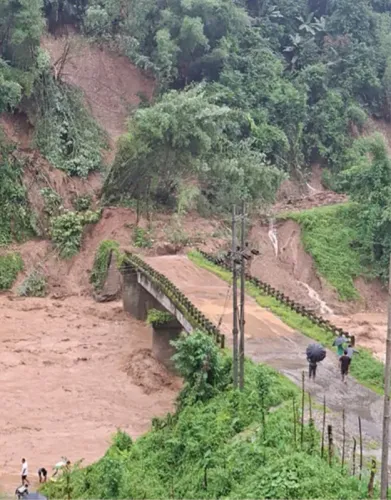
Floods and landslides in Arunachal Pradesh have killed 4 people , injured 21 , and affected more than 94,200 people across 26 districts .
Tripura is under an Orange Warning for West Tripura , Khowai , Dhalai , and Gomati districts on 8 July.
Seven of eight Northeastern states recorded a rainfall deficiency of more than 40 per cent in June due to weak monsoon systems and El Niño influence.
Only Sikkim recorded excess rainfall in June, receiving 515.9 mm against a normal of 438.2 mm .
National rainfall in July 2026 is forecast to remain below normal at less than 94 per cent of the Long Period Average.
The India Meteorological Department (IMD) on Wednesday, 8 July 2026, issued widespread heavy rainfall forecasts for several Northeastern states through 14 July, with Assam, Meghalaya, Arunachal Pradesh, and Tripura placed under active weather alerts. The forecast comes as flash floods and landslides in Arunachal Pradesh have already claimed four lives, injured 21 others, and displaced more than 94,200 people across 26 districts.
IMD Forecast and Alert Levels
According to the IMD, Assam and Meghalaya are likely to receive heavy to very heavy rainfall — with extremely heavy rainfall at isolated places — on Wednesday and again during 10–14 July. Arunachal Pradesh faces isolated heavy rainfall during the same 10–14 July window.
Nagaland, Manipur, Mizoram, and Tripura are forecast to receive heavy rainfall at isolated places through 14 July. In Tripura, the IMD's Meteorological Centre in Agartala issued an Orange Warning for Wednesday covering West Tripura, Khowai, Dhalai, and Gomati districts, while a Yellow Alert was issued for the remaining four districts. Yellow alerts are also in effect for all eight Tripura districts on 9 July and for five districts on 10 July.
Flood and Landslide Damage in Arunachal Pradesh
Fresh rain spells have triggered extensive flooding and landslides across Arunachal Pradesh. According to the State Emergency Operation Centre (SEOC) in Itanagar, Changlang district experienced severe landslides and flooding, while Upper Subansiri and Upper Siang districts were also severely affected. A rockfall incident was additionally reported from East Kameng district.
Official figures confirm four deaths, 21 injuries, and two women still reported missing. The State Disaster Management Authority and district administrations are conducting ongoing rescue, relief, and restoration operations across the affected areas.
Disruption in Tripura
Normal life was disrupted across several parts of Tripura after heavy to very heavy rainfall began on Tuesday evening. Waterlogging was reported from low-lying areas, and traffic movement was affected at multiple locations. The situation is being closely monitored by state authorities.
Context: A Monsoon Season Marked by Deficiency
The Southwest Monsoon had advanced into substantial parts of the Northeastern region on 7 June — two days later than its normal onset date — and covered the entire Northeast by 10 June, according to IMD officials in Guwahati and Agartala.
Notably, despite the current intense spell, the Northeast recorded a rainfall deficiency of more than 40 per cent in June, the opening month of the four-month monsoon season. Seven of the eight Northeastern states — all except Sikkim — logged this deficit, attributed to weak rain-bearing systems over the Bay of Bengal, the absence of active monsoon troughs, and the influence of El Niño conditions. Sikkim alone recorded excess rainfall in June, receiving 515.9 mm against a normal of 438.2 mm.
An IMD official has further indicated that the monthly average rainfall across the country in July 2026 is most likely to remain below normal, at less than 94 per cent of the Long Period Average (LPA). With flood-hit districts still under active rescue operations and more heavy rain on the way, the situation across the Northeast is expected to remain critical through mid-July.
Point of View
Both driven by the same structural factors: weak Bay of Bengal systems, absent monsoon troughs, and El Niño influence. The 40-per-cent June deficiency did not reduce flood risk; it simply delayed it. What is missing from the response is a proactive early-warning-to-evacuation pipeline that acts before deaths occur, not after. With the IMD now flagging a below-normal July nationally, the Northeast cannot expect a smooth remainder of the monsoon season.
NationPress
7 Oct 2026
Frequently Asked Questions
Which states in Northeast India are under heavy rain alert till July 14?
Assam, Meghalaya, Arunachal Pradesh, Nagaland, Manipur, Mizoram, and Tripura are all under IMD weather alerts through 14 July 2026. Assam and Meghalaya face the most intense spells, with extremely heavy rainfall forecast at isolated places.
How many people have been affected by floods in Arunachal Pradesh?
More than 94,200 people across 26 districts of Arunachal Pradesh have been affected by flash floods and landslides as of 8 July 2026. Four people have died, 21 have been injured, and two women remain missing, according to official reports.
What is the Orange Warning issued for Tripura?
The IMD's Meteorological Centre in Agartala issued an Orange Warning for 8 July covering West Tripura, Khowai, Dhalai, and Gomati districts, signalling a high likelihood of heavy to very heavy rainfall at isolated places. A Yellow Alert was issued for the remaining four districts.
Why did Northeast India record such a large rainfall deficiency in June despite the monsoon arriving?
IMD officials attributed the over-40-per-cent June rainfall deficiency to weak rain-bearing systems over the Bay of Bengal, the absence of active monsoon troughs, and the influence of El Niño conditions. The monsoon arrived two days late on 7 June but remained subdued through the month.
Is the overall monsoon for July 2026 expected to be normal?
No. An IMD official has indicated that the monthly average rainfall across India in July 2026 is most likely to remain below normal, at less than 94 per cent of the Long Period Average (LPA).