Northeast India home to global landmarks, says FM Sitharaman
Synopsis
Finance Minister Sitharaman's 'global landmarks' claim for India's northeast is more than a political talking point — the region now holds records including the world's longest bi-lane tunnel and the tallest girder rail bridge. After 12 years of sustained policy focus, Ashtalakshmi is being positioned as the face of Viksit Bharat's inclusive development model.
Key Takeaways
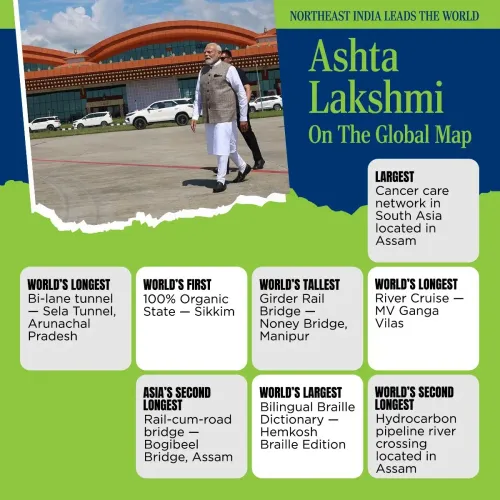
FM Nirmala Sitharaman declared on 20 June that the northeastern region hosts global landmarks, including the world's first 100% organic state , the world's longest bi-lane tunnel , and the tallest girder rail bridge .
Commerce Minister Piyush Goyal called the eight northeastern states India's 'growth engine,' noting a dramatic shift from their earlier development margins.
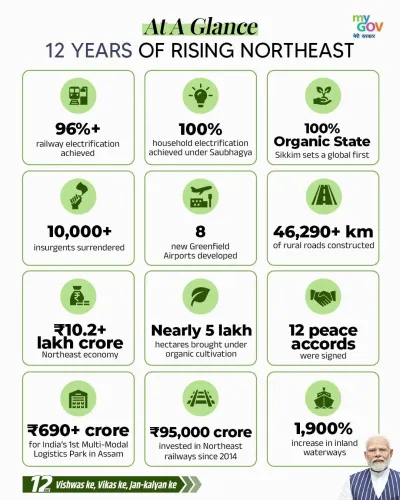
The northeast has seen over 12 years of sustained infrastructure expansion covering road, rail, air, and digital connectivity, according to an official fact-sheet.
The region is a key pillar of India's clean energy transition and Act East policy, backed by hydropower and cross-border connectivity investments.
Officials position Ashtalakshmi as a model of sustainable and inclusive development within the Viksit Bharat framework.
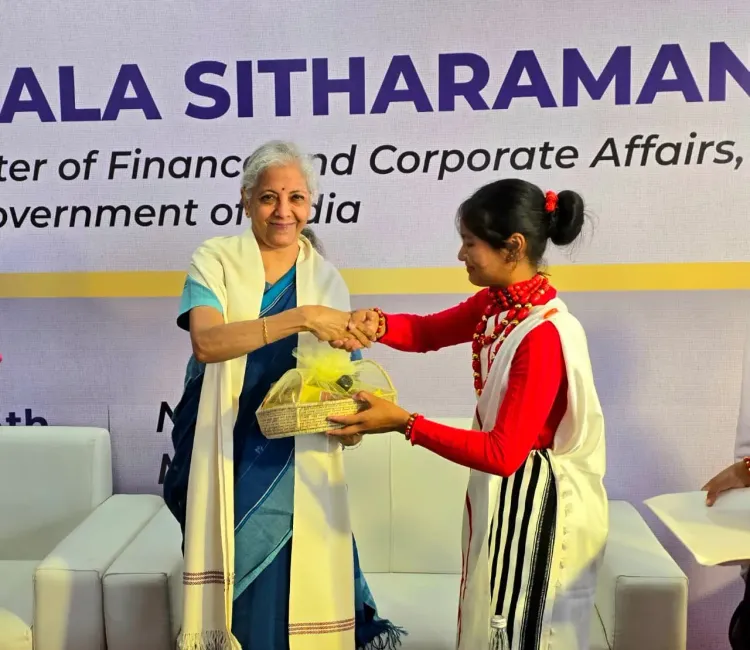
Finance Minister Nirmala Sitharaman on Saturday, 20 June declared that India's northeastern region — collectively referred to as 'Ashta Lakshmi' or Ashtalakshmi — now hosts global landmarks, underscoring the region's transformation into a model of sustainable and inclusive development. Her remarks came as part of a broader government push to highlight infrastructure and quality-of-life gains across the eight northeastern states.
What Sitharaman Said
In a post on X, FM Sitharaman said Ashta Lakshmi is 'firmly on the global map,' citing the world's first 100 per cent organic state, the world's longest bi-lane tunnel, and the tallest girder rail bridge as evidence of the region's rise to global recognition. The remarks position the northeast not merely as a peripheral zone but as a source of national firsts.
Commerce Minister Goyal's Assessment
Commerce and Industry Minister Piyush Goyal also weighed in, noting that the eight northeastern states were once 'far removed from the mainstream of development.' In his own post on X, Goyal said the region is now 'emerging as India's growth engine, brimming with prosperity, strength, and possibilities.' The convergence of messaging from two senior Cabinet ministers signals a coordinated effort to rebrand the northeast ahead of upcoming policy cycles.
Key Development Gains Since 2014
According to an official fact-sheet, the northeast has seen significant improvements over the past 12 years across road, rail, air, and digital connectivity — reducing geographic isolation and strengthening regional integration. Gains in access to water, sanitation, housing, healthcare, and education are reportedly visible across both urban and rural communities.
The region has also emerged as a pillar of India's clean energy transition and Act East policy, supported by investments in hydropower, gas infrastructure, and cross-border connectivity, according to the fact-sheet.
Ashtalakshmi as a Viksit Bharat Model
The government's framing positions Ashtalakshmi as a template for Viksit Bharat — India's vision of a developed nation by 2047. Officials argue that development in the northeast has been guided by ecological sensitivity and resource efficiency, not just infrastructure spend. The region is described as 'more connected, more resilient, and better prepared for the future,' according to official statements.
With infrastructure milestones now attracting global attention, the northeast's trajectory will be closely watched as a test of whether sustained policy support can convert geographic disadvantage into strategic opportunity.
Point of View
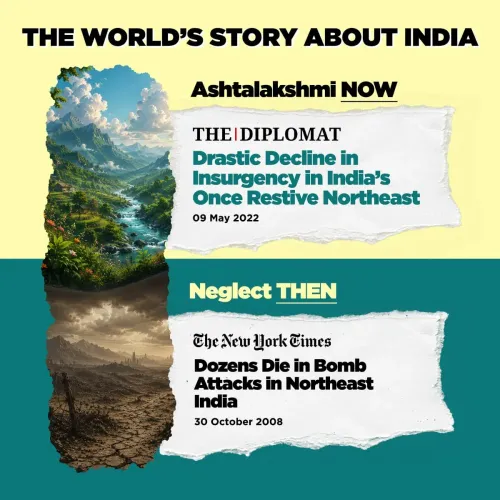
Not routine commentary. The northeast has historically been cited for insurgency, underdevelopment, and neglect — so the pivot to 'global landmarks' is politically significant. However, record-breaking infrastructure projects and broad-based human development indicators are not the same thing; the fact-sheet attributes gains across water, sanitation, and healthcare without citing verifiable data. The Ashtalakshmi framing is evocative, but the real measure of transformation will be per-capita income convergence with the national average — a metric conspicuously absent from the government's narrative.
NationPress
18 Sept 2026
Frequently Asked Questions
What global landmarks does Northeast India now have?
According to Finance Minister Nirmala Sitharaman, the northeastern region is home to the world's first 100 per cent organic state, the world's longest bi-lane tunnel, and the tallest girder rail bridge. She made these claims in a post on X on 20 June.
What is 'Ashta Lakshmi' or Ashtalakshmi?
Ashtalakshmi is a term used by the Indian government to collectively refer to the eight northeastern states — Arunachal Pradesh, Assam, Manipur, Meghalaya, Mizoram, Nagaland, Sikkim, and Tripura. The name draws from Hindu iconography representing eight forms of prosperity, and is used as a branding framework for the region's development push.
What has changed in Northeast India over the past 12 years?
According to an official government fact-sheet, the northeast has seen expanded road, rail, air, and digital connectivity, along with improvements in water, sanitation, housing, healthcare, and education. The region has also become a focus of India's clean energy transition through hydropower and gas infrastructure investments.
What is India's Act East policy and how does the northeast fit in?
Act East is India's foreign policy initiative to strengthen economic and strategic ties with Southeast and East Asian nations. The northeastern region, which shares borders with Bangladesh, Bhutan, China, and Myanmar, is central to this policy as a connectivity and trade corridor. Officials say investments in cross-border infrastructure are positioning the northeast as a gateway for regional engagement.
Why are two Cabinet ministers highlighting Northeast India's development now?
Finance Minister Nirmala Sitharaman and Commerce Minister Piyush Goyal both posted about northeastern development on 20 June, signalling a coordinated government effort to spotlight the region's progress. The messaging aligns with the broader Viksit Bharat narrative ahead of upcoming policy and electoral cycles.