NTA chief proposes BRICS cooperation on AI governance in education
Synopsis
At BRICS Summit 2026, NTA chief Abhishek Singh proposed a common AI governance framework for education across member nations — warning that excessive AI use is already threatening students' cognitive thinking. He also floated India's revamped exam ecosystem as a future digital public good for the Global South, positioning the NTA as a potential standard-setter for AI in high-stakes assessments.
Key Takeaways
NTA Director General Abhishek Singh proposed BRICS cooperation on AI governance in education at the BRICS Summit 2026 in New Delhi .
Singh warned that excessive AI use among students risks undermining cognitive thinking , citing global moves to restrict AI in schools and colleges.
He called for shared assessment and testing frameworks across BRICS nations, modelled as a digital public good .
India's revamped public exam system could eventually be shared with the wider world community, according to Singh.
37 deep-tech startups showcased AI-driven governance solutions at the summit's sideline events.
Singh said follow-up cooperation would be guided by the BRICS Delhi Declaration on technology and knowledge sharing.
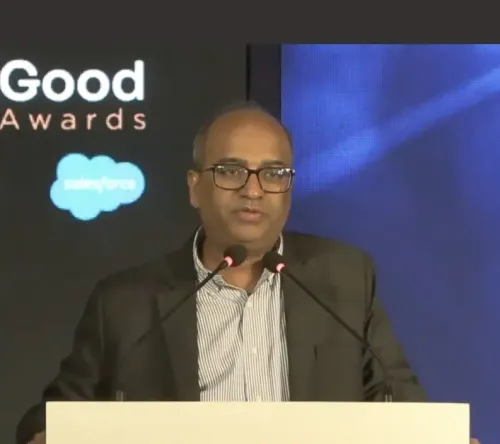
National Testing Agency (NTA) Director General Abhishek Singh on Sunday called on BRICS member nations to forge common frameworks governing the use of artificial intelligence in education, warning that unchecked AI adoption risks eroding students' cognitive thinking. Singh made the proposal at the BRICS Summit 2026 in New Delhi, where 37 deep-tech startups were also presenting AI-driven governance solutions.
The AI Concern in Classrooms
Singh flagged a growing consensus among governments worldwide about the risks of excessive AI use among students. 'Students and those in education are all facing challenges arising from the adoption of AI technology. We have seen how several countries are considering blocking the use of AI, especially among school and college students, and how excessive use of technology can impact cognitive thinking,' he said.
He argued that BRICS nations need to collectively develop 'common frameworks and assessment frameworks that can be shared across' member states — rather than each country responding in isolation to what is now a shared educational challenge.
India's Exam Ecosystem as a Digital Public Good
Singh also outlined India's ongoing efforts to overhaul its public examination infrastructure, hinting that the final model could eventually be exported to other nations as a digital public good. 'We are in the process of consolidating and strengthening our own systems… once we have perfected it for our students in India, then, of course, the next step will naturally be to share it with the larger world community,' he said.
He specifically described the assessment and testing framework as potentially becoming 'another digital public good, a digital public infrastructure' — drawing a parallel with India's broader digital public infrastructure stack.
AI as an Exam Tool, Not Just a Threat
While raising caution about AI's risks, Singh also pointed to its constructive applications within the exam ecosystem. 'The use of AI can be done in multiple ways. Not only for item generation… and especially for translating questions into various languages when time is limited. So, it helps in using technology to generate a larger volume of questions, conduct validations, perform checks, and carry out translations in less time,' he said.
This dual framing — AI as both a risk to manage and a tool to leverage — reflects the broader tension that education ministries across the Global South are navigating.
BRICS Delhi Declaration and What Comes Next
Singh indicated that India would use the Delhi Declaration, adopted at the summit, as the basis for follow-up cooperation. 'We'll explore in what ways we can carry forward the Delhi Declaration… especially with regard to contributing and sharing knowledge and best practices in the field of technology,' he said.
He also stressed that Global South nations have a particular stake in shaping AI governance: 'A lot of expectations are there, especially from this group, from the countries of the Global South, on how we can make the governance of AI more equitable, more balanced, more open.'
With AI regulation in education still nascent globally, Singh's proposals position India — through the NTA — as a potential standard-setter for the developing world's approach to technology in high-stakes assessments.
Point of View
However, complicated by the agency's own well-documented exam integrity controversies in recent years; BRICS partners will weigh India's invitation to share its framework against that track record. More broadly, the Global South's desire for 'equitable' AI governance is legitimate, but translating a Delhi Declaration into enforceable cross-border assessment standards is a far heavier lift than the optimistic summit language suggests. Whether this proposal moves beyond diplomatic goodwill will depend on whether India first delivers a demonstrably robust domestic exam system.
NationPress
13 Sept 2026
Frequently Asked Questions
What did NTA chief Abhishek Singh propose at BRICS Summit 2026?
Singh proposed that BRICS member nations develop common frameworks to govern the use of AI in education, particularly to protect students' cognitive development from excessive AI dependence. He also suggested India's reformed exam system could eventually serve as a digital public good for the wider Global South.
Why is AI considered a risk to students' cognitive thinking?
According to Singh, several countries are already considering restrictions on AI use among school and college students because over-reliance on AI tools can reduce independent thinking and problem-solving ability. The concern is that students may offload cognitive tasks to AI rather than developing those skills themselves.
How does Singh propose using AI positively in the exam system?
Singh said AI can be used to generate large volumes of exam questions, conduct validations, perform integrity checks, and translate questions into multiple languages in less time. He sees these as efficiency gains that complement, rather than replace, human-led assessment design.
What is the BRICS Delhi Declaration mentioned by Singh?
The Delhi Declaration is an agreement adopted at the BRICS Summit 2026 that includes commitments on sharing technology knowledge and best practices among member nations. Singh indicated India would use it as the roadmap for follow-up cooperation on AI in education.
Who is Abhishek Singh and what is his role in Indian education?
Abhishek Singh is the Director General of the National Testing Agency (NTA), the body responsible for conducting major national-level entrance and eligibility examinations in India, including NEET and JEE. He has been leading efforts to reform and digitise India's public exam ecosystem.