NUCFDC headquarters to move to Maharashtra, announces Amit Shah
Synopsis
In a structural shift for India's cooperative banking sector, Amit Shah announced that the NUCFDC — the umbrella body for nearly 1,400 urban co-operative banks holding ₹6 lakh crore in deposits — will relocate its headquarters from Delhi to Maharashtra, home to 449 co-operative banks. The move was accompanied by a cybersecurity push, a new SOC launch, and a university MoU to tackle rising digital fraud.
Key Takeaways
Amit Shah announced the relocation of NUCFDC headquarters from New Delhi to Maharashtra on 8 August .
Maharashtra hosts 449 co-operative banks — the largest concentration in India — making it the preferred base for the umbrella body.
India's 1,400 urban co-operative banks collectively hold deposits of approximately ₹6 lakh crore .
A Security Operations Centre (SOC) for urban co-operative banks was virtually launched; all member banks urged to connect.
An MoU between NUCFDC and the National Forensic Sciences University (NFSU) was signed for cybersecurity and fraud prevention.
The collateral-free loan limit for urban co-operative banks has been raised from ₹2.5 lakh to ₹5 lakh , with a 99.78% repayment rate.
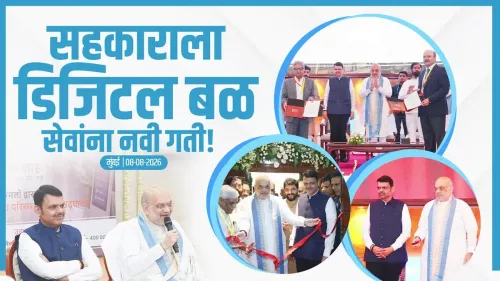
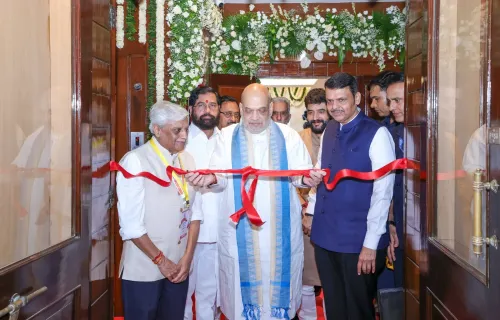
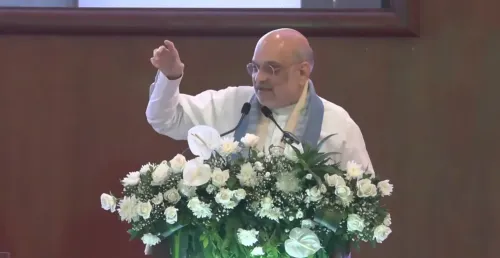
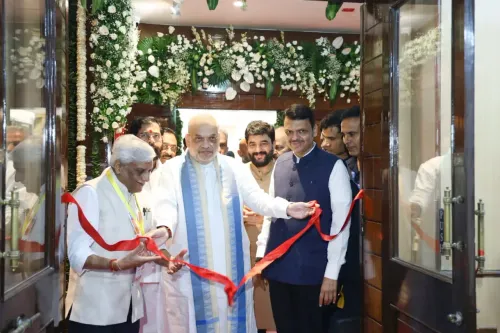
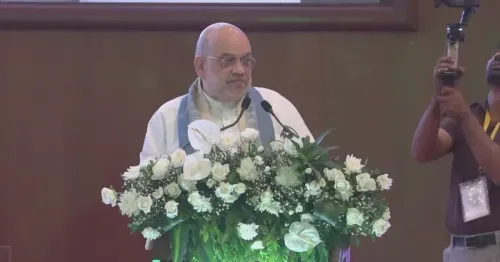
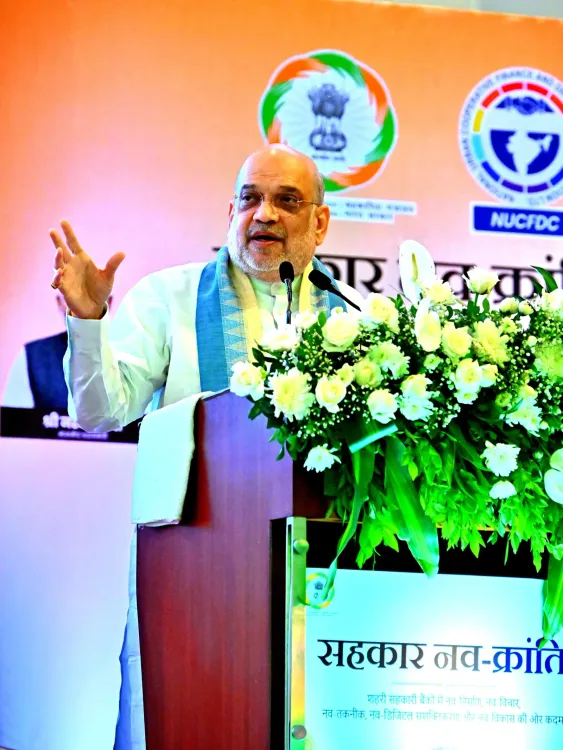
Union Home and Cooperation Minister Amit Shah on Saturday, 8 August announced that the headquarters of the National Urban Co-operative Finance and Development Corporation (NUCFDC) will be relocated from New Delhi to Maharashtra, in a significant policy move for India's urban co-operative banking sector. The announcement was made at the 'Sahakar Nav-Kranti Mela' in Mumbai, where Shah was the chief guest.
Why Maharashtra Was Chosen
Maharashtra alone hosts 449 co-operative banks, making it the single largest concentration of urban co-operative banking in the country. Shah noted that states including Maharashtra, Gujarat, Goa, and Karnataka together account for a substantial share of India's urban co-operative banking network. 'Locating the umbrella organisation's headquarters in Maharashtra is both practical and advantageous. The ultimate objective is to bring all urban co-operative banks under a single umbrella,' Shah said.
The NUCFDC's Role as Umbrella Organisation
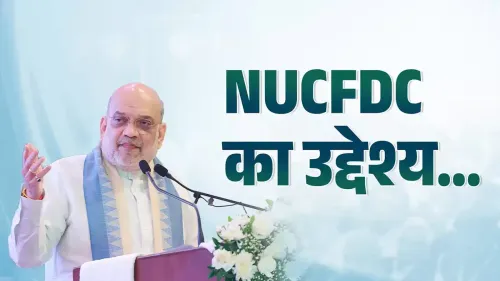
Shah described the NUCFDC — functioning as the sector's 'Umbrella Organisation' — as central to making urban co-operative banking modern, transparent, trustworthy, and technology-driven. He urged every urban co-operative bank in the country, including single-branch institutions, to join the body as a member. Nearly 1,400 urban co-operative banks across India collectively hold deposits worth approximately ₹6 lakh crore, serving small shopkeepers, traders, cottage industries, MSMEs, local entrepreneurs, self-help groups, and middle-income families.
Cybersecurity and Digital Initiatives Launched
Addressing the growing threat of cyber fraud in digital banking, Shah virtually launched a Security Operations Centre (SOC) for urban co-operative banks during the event. He called on all member banks to connect to the SOC to bolster depositor trust and security. The Reserve Bank of India (RBI) has already introduced the 'Mule Hunter' software — a forensic tool to detect fraudulent accounts — which the umbrella body will extend to member banks. A formal Memorandum of Understanding (MoU) between NUCFDC and the National Forensic Sciences University (NFSU) was also signed at the event, covering cybersecurity infrastructure, fraud prevention, digital forensics, and workforce training.
Key Announcements and Milestones at the Event
Several landmark developments were unveiled at the 'Sahakar Nav-Kranti Mela'. Core banking services and a national service bundle under the 'Sahakar CBS' system were formally launched; representatives of the first six urban co-operative banks successfully integrated with the platform were felicitated. A practical handbook titled 'Operational Risk Management — A Practical Guide to Urban Co-operative Banks', authored by former RBI Deputy General Manager G.P. Mistry, was also released. Notably, the collateral-free loan limit for urban co-operative banks has recently been raised from ₹2.5 lakh to ₹5 lakh, with a repayment rate — including interest — of 99.78%.
Political and Official Presence
The event was attended by Maharashtra Chief Minister Devendra Fadnavis, Deputy Chief Minister Eknath Shinde, Minister of State for Cooperation Krishan Pal Gurjar, Minister of State Murlidhar Mohol, State Marketing Minister Jaykumar Rawal, Cooperation Minister Babasaheb Patil, NUCFDC Chairman Jyotindra Mehta, and Union Cooperation Secretary Ashish Kumar Bhutani, alongside representatives from urban co-operative banks across the country. Shah framed the initiative within Prime Minister Narendra Modi's vision of a 'Viksit Bharat' by 2047, invoking the principle of 'Sahkar Se Samriddhi' — prosperity through cooperation — as the driving philosophy. The sector's expansion to every tehsil across India remains the stated long-term goal.
Point of View
And the SOC launch combined with the NFSU tie-up suggests the Centre is finally treating this as an infrastructure problem, not just a regulatory one. The sector's ₹6 lakh crore deposit base and its role in serving MSMEs and low-income borrowers make its stability a macro concern, not merely a niche banking issue. The real test will be whether single-branch banks — the most vulnerable — actually integrate with the SOC, or whether the umbrella body remains a metro-centric institution in a new city.
NationPress
23 Sept 2026
Frequently Asked Questions
Why is NUCFDC headquarters being shifted to Maharashtra?
Maharashtra hosts 449 urban co-operative banks — the largest concentration in any single state — making it the most logical base for the national umbrella body. Amit Shah cited the significant presence of urban co-operative banks in Maharashtra, Gujarat, Goa, and Karnataka as the rationale for the relocation.
What is NUCFDC and what does it do?
The National Urban Co-operative Finance and Development Corporation (NUCFDC) is the umbrella organisation for India's urban co-operative banking sector. It provides shared digital infrastructure, banking reform guidance, cybersecurity tools, and training to the country's nearly 1,400 urban co-operative banks, which collectively hold around ₹6 lakh crore in deposits.
What is the Security Operations Centre launched for urban co-operative banks?
The Security Operations Centre (SOC) is a centralised cybersecurity facility virtually launched by Amit Shah to protect urban co-operative banks from digital fraud and cyber threats. Member banks are being urged to connect to the SOC, which will also deploy tools like the RBI's 'Mule Hunter' software to detect fraudulent accounts.
What was the MoU signed between NUCFDC and NFSU about?
The MoU between NUCFDC and the National Forensic Sciences University (NFSU) covers cybersecurity infrastructure, fraud prevention, digital forensics, banking security, and workforce training for urban co-operative bank employees. It was formally exchanged at the 'Sahakar Nav-Kranti Mela' in Mumbai on 8 August.
How does the collateral-free loan limit change affect urban co-operative bank customers?
The limit for collateral-free loans extended by urban co-operative banks has been raised from ₹2.5 lakh to ₹5 lakh, making credit more accessible to small borrowers, MSMEs, and self-help groups. The sector currently reports a repayment rate of 99.78% — including interest — on such loans.