Odisha CM Majhi Cabinet Clears Textile Revival, Cadre Expansion
Synopsis
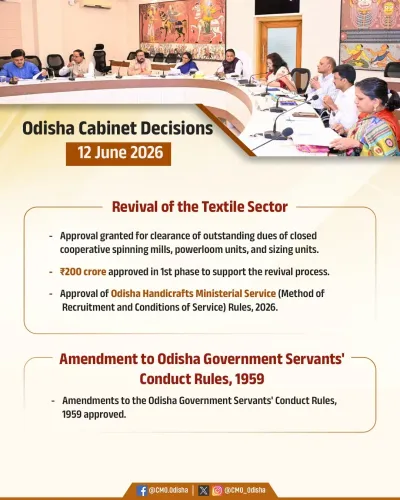
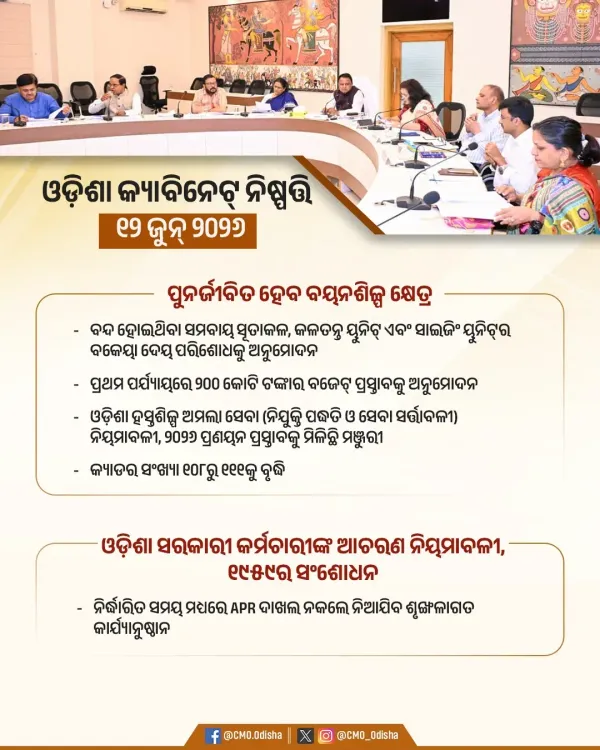
The Odisha State Cabinet, chaired by CM Mohan Majhi, on 13 June 2026 approved budget provisions to clear dues of closed cooperative spinning mills and power-loom units, framed the Odisha Handicrafts Amla Service Rules 2026 expanding the cadre from 108 to 111, and amended the Odisha Government Servants' Conduct Rules, 1959.
Key Takeaways
The Odisha State Cabinet met on 13 June 2026 under CM Mohan Charan Majhi and approved three major decisions.
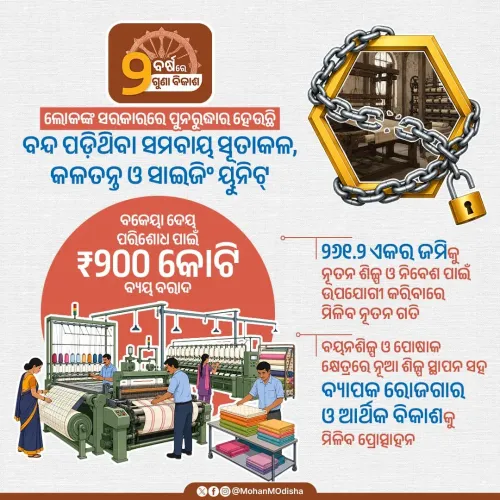
Budget provisions were cleared to pay pending dues of closed cooperative spinning mills, power-loom units, and sizing units in Odisha.
The Odisha Handicrafts Amla Service (Recruitment and Service Conditions) Rules, 2026 were formally framed and approved.
The handicrafts department cadre was expanded from 108 to 111 posts .
The Odisha Government Servants' Conduct Rules, 1959 were amended, with specific changes not yet disclosed publicly.
The decisions are positioned as part of the Majhi government's broader push for textile sector revival and employment generation .
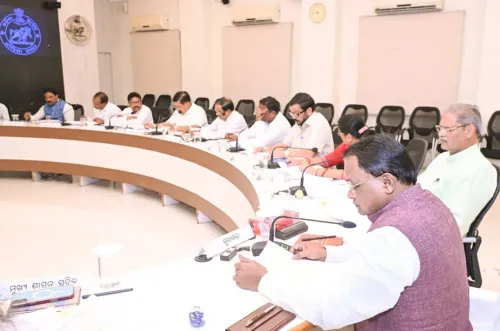
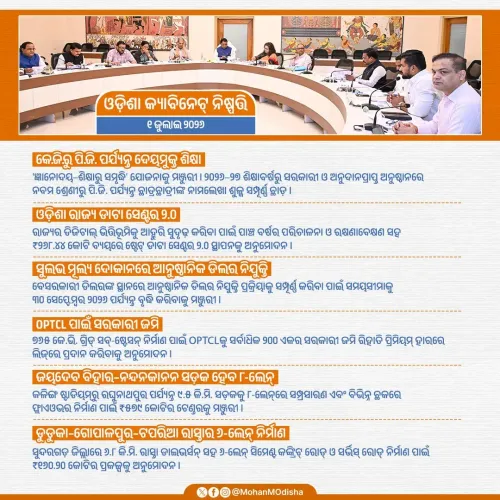
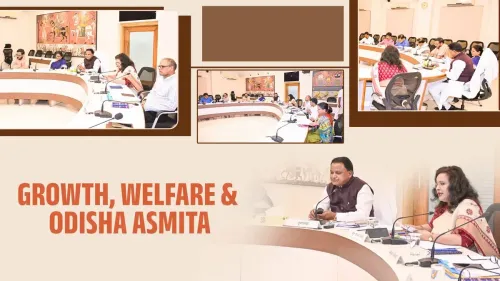
The Chief Minister's Office of Odisha announced on Saturday, 13 June 2026 that the Odisha State Cabinet, chaired by Chief Minister Mohan Charan Majhi, approved a set of decisions aimed at reviving the textile sector, expanding the handicrafts cadre, and amending state employee conduct rules.
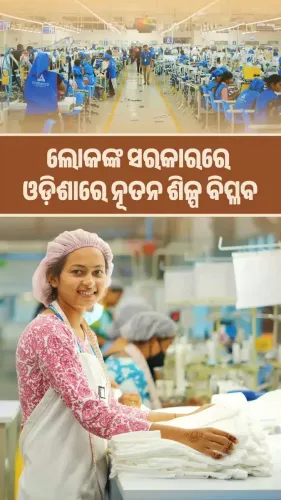
The cabinet meeting, held under CM Majhi's chairmanship, approved budget provisions to clear pending dues of closed cooperative spinning mills, power-loom units, and sizing units — a move the government described as essential to 'reviving the textile sector and strengthening industrial infrastructure, investment, and employment creation.'
Context
Odisha's cooperative spinning mills and associated textile units have remained largely non-operational for years, leaving workers with unpaid dues and the sector in decline. The state government's decision to approve budgetary allocations specifically for clearing these arrears marks a direct fiscal intervention to address long-pending liabilities. While the exact quantum of dues has not been disclosed by the government, the cabinet's formal approval signals a structured approach to settling these obligations.Policy Backdrop
Odisha governments have periodically announced measures to arrest the decline of cooperative textile units since the early 2010s, but sustained revival has remained elusive. The BJP-led government that took office in June 2024 under CM Majhi has emphasised industrial revival and employment generation as central policy priorities. Saturday's decisions align with that stated agenda, combining fiscal support for closed units with parallel administrative reforms. The cabinet also approved the Odisha Handicrafts Amla Service (Method of Recruitment and Conditions of Service) Rules, 2026, and expanded the cadre strength from 108 to 111 posts. Additionally, the Odisha Government Servants' Conduct Rules, 1959 were amended, though the specific nature of those amendments has not been made public.Stakeholders and Impact
The primary beneficiaries of the dues-clearance decision are workers and creditors of the closed cooperative spinning mills, power-loom units, and sizing units across the state. Handloom weavers and artisans dependent on these supply chains stand to gain from any operational revival that follows. The cadre expansion under the new 2026 Handicrafts Service Rules — adding three posts to the existing 108-strong cadre — will affect recruitment and service conditions for officials managing handicraft promotion in the state. The amendment to the 1959 Conduct Rules applies broadly to all Odisha state government employees, though the government has not specified which provisions were changed.What's Next
The cabinet approvals now move to the implementation stage. The critical test will be the actual disbursement of budgetary funds to settle the pending dues of the closed textile units — a process that will be tracked in the next state budget cycle. Recruitment notifications under the newly framed Odisha Handicrafts Amla Service Rules, 2026 are expected to follow, which will determine how quickly the cadre expansion translates into on-ground staffing. Whether the dues clearance triggers any operational revival of the closed units, or remains a welfare measure for affected workers, will define the longer-term impact of Saturday's decisions.Point of View
These decisions carry political symbolism for constituencies tied to handloom and textile livelihoods. The real measure of success, however, will be disbursement speed and whether any closed units return to production.
NationPress
27 Oct 2026
Frequently Asked Questions
What did the Odisha Cabinet decide on 13 June 2026?
The Odisha Cabinet approved budget provisions to clear pending dues of closed cooperative spinning mills, power-loom units, and sizing units, framed the Odisha Handicrafts Amla Service Rules 2026, expanded the handicrafts cadre from 108 to 111 posts, and amended the Odisha Government Servants' Conduct Rules, 1959.
Who chaired the Odisha Cabinet meeting on 13 June 2026?
Chief Minister Mohan Charan Majhi chaired the cabinet meeting, as announced by the Chief Minister's Office of Odisha on 13 June 2026.
What are the Odisha Handicrafts Amla Service Rules 2026?
These are newly framed rules governing the method of recruitment and conditions of service for officials in the Odisha Handicrafts department, approved by the cabinet on 13 June 2026, which also expanded the cadre strength from 108 to 111 posts.
Why were the dues of cooperative spinning mills approved for payment?
The Odisha government approved the budget provision to clear pending dues of closed cooperative spinning mills and related units as part of efforts to revive the textile sector, strengthen industrial infrastructure, and support employment creation.
What changes were made to the Odisha Government Servants' Conduct Rules 1959?
The cabinet approved amendments to the Odisha Government Servants' Conduct Rules, 1959, though the specific provisions that were changed have not been publicly disclosed by the government.