Odisha Cabinet Approves ₹200 Cr for Textile Mill Revival
Synopsis
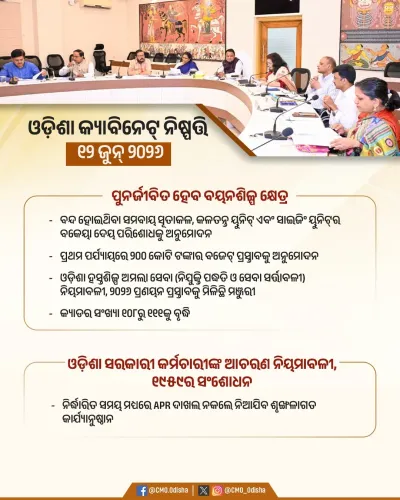
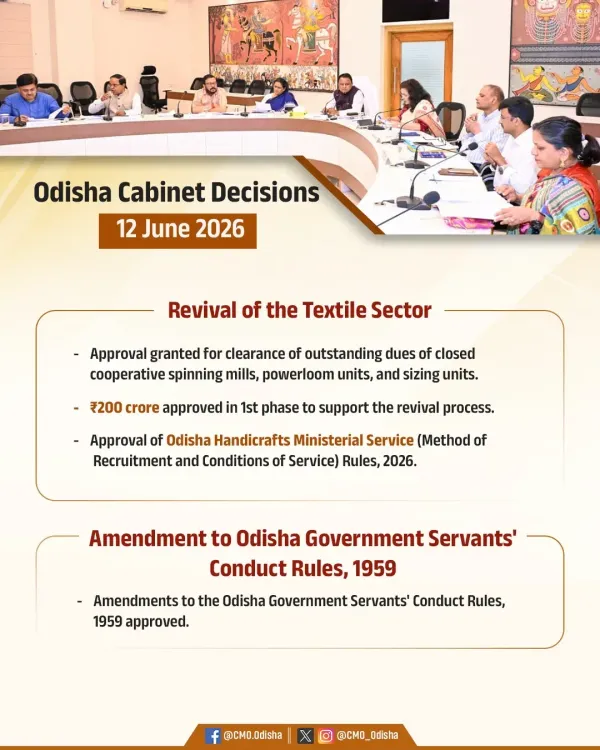
The Odisha Cabinet on 14 June 2026 approved ₹200 crore in the first phase to revive closed cooperative spinning mills and powerloom units, while also amending the Odisha Government Servants' Conduct Rules, 1959 and notifying new Odisha Handicrafts Ministerial Service Rules, 2026 to strengthen governance and employment.
Key Takeaways
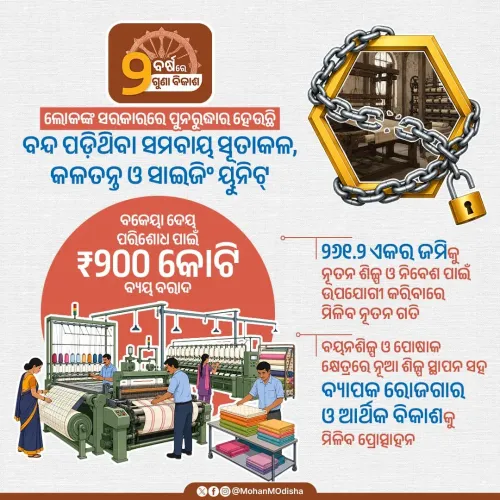
₹200 crore approved in the first phase for revival of closed cooperative spinning mills, powerloom units, and sizing units in Odisha.
The allocation is described as a first-phase fund, indicating further tranches are planned as part of a multi-stage revival programme.
The Odisha Government Servants' Conduct Rules, 1959 have been amended to modernise the conduct framework for state employees.
New Odisha Handicrafts Ministerial Service Rules, 2026 approved to govern recruitment and service conditions in the handicrafts department.
The decisions fall under the Viksit Odisha framework, targeting manufacturing growth and formal-sector employment generation.
Key beneficiaries include textile workers, cooperative society members, powerloom operators, and handicraft artisans across the state.
The Chief Minister's Office of Odisha announced on Sunday, 14 June 2026 that the Odisha Cabinet has approved a package of decisions targeting the revival of the state's textile sector, administrative governance reforms, and employment generation.
Context
At the heart of the cabinet decisions is an allocation of ₹200 crore approved in the first phase for the revival of closed cooperative spinning mills, as well as powerloom and sizing units across the state. The move signals a direct state intervention to restart manufacturing infrastructure that had become dormant, threatening livelihoods in traditional textile clusters. The cabinet framed this as part of the broader Viksit Odisha vision, aligning with the state government's stated objective of scaling manufacturing and formal-sector employment.
Policy Backdrop
Odisha has maintained state textile and handloom policies offering modernisation incentives and cluster development support since the early 2010s. However, several cooperative spinning mills fell into closure over the intervening years due to a combination of financial stress, ageing machinery, and market competition. The fresh capital infusion of ₹200 crore — described as a first-phase allocation — suggests the government anticipates a multi-tranche revival programme, with phased disbursement and tendering processes expected to follow. This approach mirrors similar revival packages pursued by eastern and southern Indian states to protect employment in traditional manufacturing clusters.
Alongside the textile funding, the cabinet approved amendments to the Odisha Government Servants' Conduct Rules, 1959 — the principal conduct code governing state employees — to align it with contemporary administrative and governance standards. Separately, the Odisha Handicrafts Ministerial Service Rules, 2026 were also approved, establishing fresh recruitment and service conditions for ministerial staff within the state's handicrafts department. The dual thrust of industrial investment and service-rule modernisation reflects a pattern seen across several Indian states combining capital spending with incremental administrative reform.
Stakeholders and Impact
The decisions are expected to directly benefit textile workers, cooperative society members, powerloom operators, and handicraft artisans who depend on the state's textile and handloom ecosystem for their incomes. Revival of cooperative spinning mills would restore formal employment in clusters where closures had pushed workers into informal or seasonal work. State government employees stand to be affected by the amended conduct rules, which are designed to tighten governance standards and update the regulatory framework that has been in place since 1959.
The new Odisha Handicrafts Ministerial Service Rules, 2026 are particularly significant for administrative staff in the handicrafts sector, a segment that supports a large number of artisan communities across the state. By formalising service conditions, the government aims to bring greater institutional stability to a department that interfaces directly with artisan welfare schemes.
What's Next
Attention will now turn to the phased disbursement of the ₹200 crore allocation and the tendering process for mill revival and powerloom cluster upgrades. The government's reference to a 'first phase' implies further budgetary rounds are anticipated, and any announcement of public-private partnership models for powerloom clusters will be closely watched by industry stakeholders. The implementation of the amended conduct rules and the new handicrafts service rules will also require notification and operationalisation, making the months ahead a critical period for translating cabinet approvals into ground-level change.
Point of View
The government is attempting to demonstrate both economic activism and administrative housekeeping in a single cabinet session. The simultaneous framing of the Odisha Handicrafts Ministerial Service Rules, 2026 alongside textile funding suggests a deliberate effort to present a holistic industrial and governance narrative. Whether the revival translates into sustained employment will depend heavily on the pace of disbursement and the quality of the tendering process for mill upgrades.
NationPress
15 Sept 2026
Frequently Asked Questions
What did the Odisha Cabinet approve on 14 June 2026?
The Odisha Cabinet approved ₹200 crore in the first phase for reviving closed cooperative spinning mills, powerloom units, and sizing units, and also amended the Odisha Government Servants' Conduct Rules, 1959 and approved the Odisha Handicrafts Ministerial Service Rules, 2026.
How much money has Odisha allocated for textile mill revival?
The Odisha Cabinet has approved ₹200 crore as a first-phase fund specifically for the revival of closed cooperative spinning mills and associated powerloom and sizing units.
What are the Odisha Handicrafts Ministerial Service Rules, 2026?
These are newly approved service rules that govern the recruitment and service conditions of ministerial staff within Odisha's handicrafts department, aimed at bringing greater institutional stability to the sector.
What changes were made to the Odisha Government Servants' Conduct Rules, 1959?
The cabinet approved amendments to the Odisha Government Servants' Conduct Rules, 1959, though the precise provisions of the amendments have not been detailed in the official announcement. The changes are intended to align the rules with contemporary governance standards.
Who benefits from the Odisha Cabinet's textile revival decisions?
The primary beneficiaries are textile workers, cooperative society members, powerloom operators, handicraft artisans, and state government employees whose service conditions are governed by the updated conduct rules.