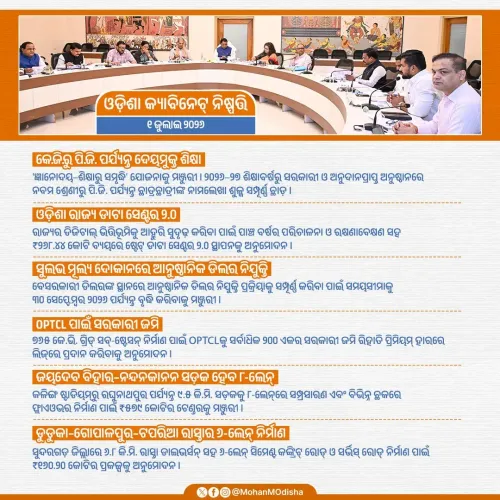
CM Majhi Cabinet Clears ₹176.83 Cr Data Centre in Kendujhar
Synopsis
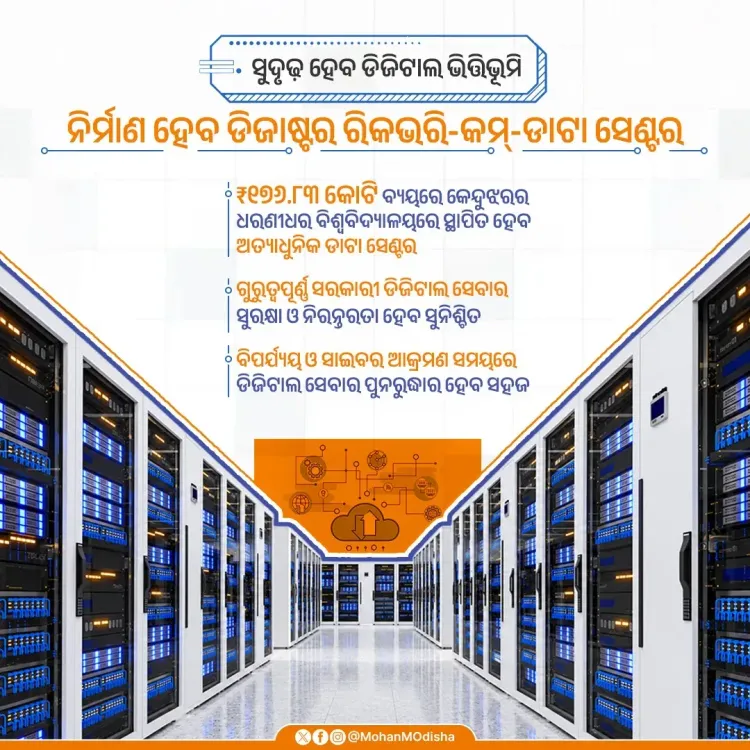
Odisha CM Mohan Charan Majhi's Cabinet has cleared a ₹176.83 crore Disaster Recovery-cum-Data Centre at Dharanidhar University in Kendujhar to safeguard government digital services and strengthen cybersecurity against natural disasters and cyber threats.
Key Takeaways
The Odisha State Cabinet approved a ₹176.83 crore Disaster Recovery-cum-Data Centre on October 15, 2026 .
The facility will be built on the campus of Dharanidhar University in Kendujhar (Keonjhar) district , an inland location chosen for resilience against coastal cyclones.
The centre's goals are to protect government digital data, enhance cybersecurity, and ensure rapid service restoration after disasters.
The project complements the existing Odisha State Data Centre in Bhubaneswar , serving as its secondary backup and recovery hub.
The move aligns with the national Digital India programme and a broader trend of Indian states decentralising critical IT infrastructure.
Tender issuance and construction milestones are the key next steps to watch.
When cyclones batter Odisha's coast, government digital services go dark at the worst possible moment. Odisha Chief Minister Mohan Charan Majhi announced on Thursday, October 15 that his State Cabinet has approved a ₹176.83 crore Disaster Recovery-cum-Data Centre in Kendujhar — a facility designed to keep those services running no matter what hits.
A Campus in Kendujhar Becomes the State's Digital Lifeline
The facility will be built on the campus of Dharanidhar University in Keonjhar district — an inland location that is by design. Odisha's coastline regularly absorbs cyclone landfalls; placing critical digital backup infrastructure well away from the sea is the first line of resilience. The centre's mandate is threefold: protect existing e-government data, harden cybersecurity defences, and ensure swift service restoration after any disaster — natural or cyber.
CM Majhi's post, published in Odia alongside English, described the centre as 'ଅତ୍ୟାଧୁନିକ' ('state-of-the-art'), signalling that the government intends this to be more than a backup vault — it is a fully equipped secondary operations hub.
Why Kendujhar, Why Now
Indian states have been steadily building secondary data centres outside their capitals since the mid-2010s, a trend accelerated by the national Digital India programme launched in 2015. Odisha's primary facility, the Odisha State Data Centre, sits in Bhubaneswar — a coastal-proximate capital that itself has been in the path of major cyclones. The Kendujhar centre is meant to mirror and recover that infrastructure if Bhubaneswar goes offline.
Kendujhar, a northern Odisha district historically known for iron-ore mining, has been gaining institutional weight with the presence of Dharanidhar University. Anchoring a high-value government tech facility there adds a layer of digital-economy significance to a region long defined by extraction industries.
What the ₹176.83 Crore Must Deliver
The Cabinet approval marks the policy green light; the harder work — tender issuance, construction milestones, and live integration with the Bhubaneswar data centre — lies ahead. The investment will be watched for how quickly it moves from approval to operational status, and whether it achieves the cybersecurity standards increasingly mandated for state government IT systems by the central government's frameworks.
For citizens of Odisha, the stakes are tangible: health records, land registries, welfare transfers, and emergency-response coordination all run on digital rails that this centre is meant to protect. Get this right, and the next major cyclone finds government services still standing.
Point of View
And relocating backup infrastructure inland is a structural fix, not just a symbolic gesture. For CM Majhi, the approval also carries political economy weight: it channels high-visibility government investment into a non-coastal, mineral-belt district that rarely sees tech-sector attention. The project's success, however, will hinge on execution speed and whether it achieves genuine interoperability with the Bhubaneswar primary centre — approvals that take years to become operational data centres offer little protection when the next cyclone season arrives.
NationPress
15 Oct 2026
Frequently Asked Questions
What is the Odisha Disaster Recovery-cum-Data Centre in Kendujhar?
It is a state government-approved facility costing ₹176.83 crore to be built at Dharanidhar University in Kendujhar , designed to back up Odisha's digital government services, strengthen cybersecurity, and enable rapid recovery after natural disasters or cyberattacks.
Why is the Odisha data centre being built in Kendujhar and not Bhubaneswar?
Bhubaneswar, the state capital, sits near the coast and is vulnerable to cyclones. Kendujhar is an inland district, making it a safer location for disaster recovery infrastructure that must remain operational when coastal areas are hit by storms.
Who announced the approval of the Kendujhar data centre?
Odisha Chief Minister Mohan Charan Majhi announced the State Cabinet's approval on October 15, 2026 via a post on X, stating the facility will cost ₹176.83 crore and be located at Dharanidhar University.
What will the Odisha Disaster Recovery Data Centre do?
The centre will protect government digital data, strengthen cybersecurity for state e-services, and ensure uninterrupted or rapidly restored access to government digital services during disasters — from cyclones to cyberattacks.
What is Dharanidhar University in Kendujhar?
Dharanidhar University is a state university located in Keonjhar district of northern Odisha. Its campus has been selected as the site for the new Disaster Recovery-cum-Data Centre approved by the Odisha Cabinet.