Odisha Cabinet Clears ₹450 Cr Youth Skill Drive
Synopsis
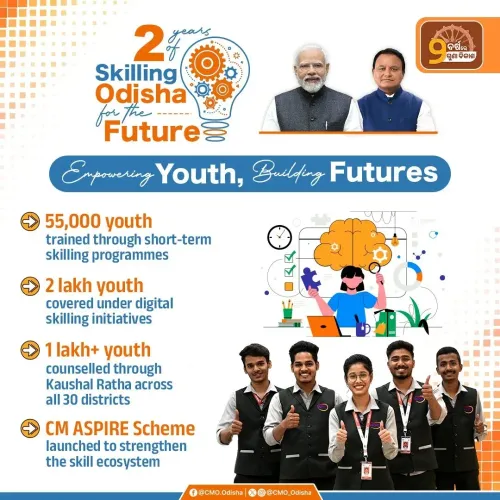
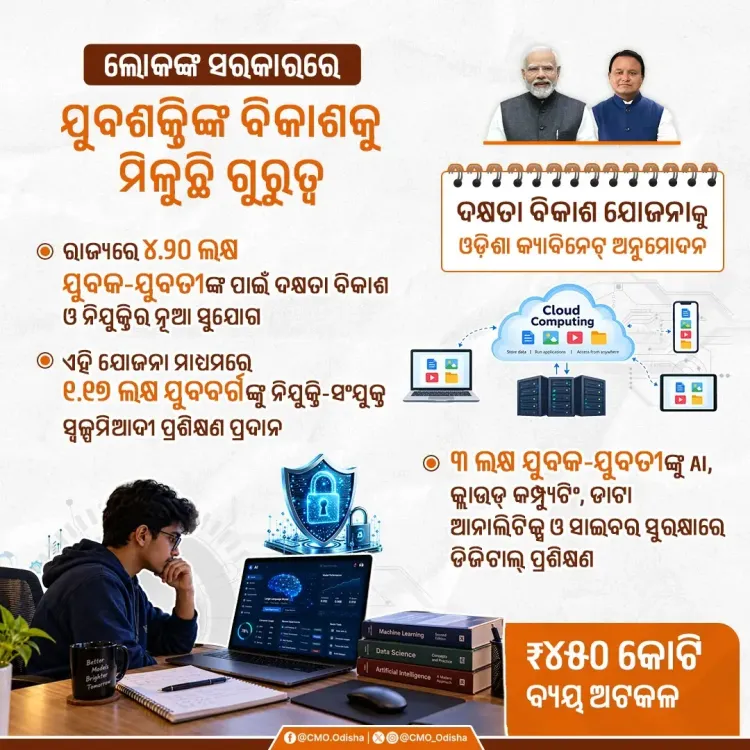
The Odisha Cabinet has approved ₹450 crore for skill development, digital training, and employment creation targeting 4.20 lakh youth. Announced by the Chief Minister's Office on October 15, 2026, the initiative aims to build a self-reliant, prosperous Odisha by boosting youth employability across sectors.
Key Takeaways
₹450 crore approved by the Odisha Cabinet for a comprehensive youth empowerment initiative.
4.20 lakh young men and women across Odisha are the targeted beneficiaries.
The programme covers three pillars: skill development , digital training , and employment creation .
Per-beneficiary outlay works out to approximately ₹10,700 , suggesting structured, multi-component programming.
The announcement was made by the Chief Minister's Office of Odisha on October 15, 2026 .
Rollout timelines and training-partner selection are yet to be officially disclosed and will be key indicators of programme success.
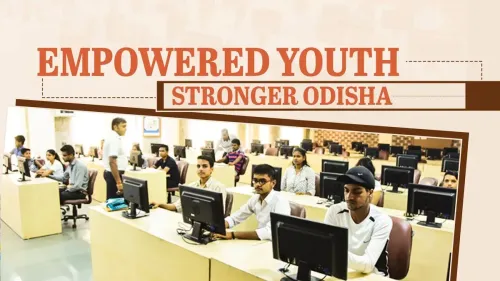
In a direct bet on Odisha's next generation, the Odisha Cabinet has approved a ₹450 crore initiative to deliver skill development, digital training, and employment opportunities to 4.20 lakh young men and women across the state — one of the largest single-budget youth empowerment decisions the state administration has announced in recent memory.
What the ₹450 crore cabinet decision covers
The Chief Minister's Office of Odisha confirmed on Thursday, October 15, 2026 that the cabinet's approval earmarks the funds specifically for three pillars: skill development, digital training, and the creation of new employment avenues. The Odia-language announcement framed it as 'ଯୁବଶକ୍ତିଙ୍କ ସଶକ୍ତୀକରଣ' — 'empowerment of youth power' — with the explicit goal of making the beneficiaries self-reliant and contributing to a 'prosperous Odisha'.
At ₹450 crore for 4.20 lakh beneficiaries, the per-person outlay works out to roughly ₹10,700 — a figure that signals structured, multi-component programming rather than a token stipend. Details on implementing agencies and training partners have not yet been officially released.
Why digital training sits at the centre of this push
Odisha's economy has historically leaned on agriculture, mining, and heavy industry — sectors that have not absorbed the state's rapidly growing educated youth cohort fast enough. By embedding digital training alongside conventional skill-building, the state is signalling a deliberate pivot toward service-sector and gig-economy readiness. This mirrors the thrust of the national Skill India mission but is tailored to Odisha's specific industrial and services landscape.
State governments across India have found that generic skill certificates without placement linkages produce poor outcomes. Rollout timelines, the selection of credible training partners, and actual placement numbers will be the real test of whether this ₹450 crore translates into jobs — or just certificates.
4.20 lakh youth: who stands to benefit
The beneficiary count of 4.20 lakh represents a significant slice of Odisha's young job-seekers. The cabinet's framing around 'a people's government' (ଲୋକଙ୍କ ସରକାର) positions this not merely as a welfare spend but as a political and economic compact with the state's demographic dividend. If implementation follows through, the cohort trained under this scheme could meaningfully shift employment numbers in sectors from IT-enabled services to healthcare and manufacturing.
Watchpoints in the months ahead include the first assembly session disclosure of training-partner contracts, third-party monitoring reports, and whether supplementary budget allocations follow as the programme scales.
Four-point-two lakh futures. One cabinet decision. The clock on delivery has now started.
Point of View
700, the scheme is ambitious enough to signal serious programming, yet its credibility will hinge entirely on placement outcomes rather than training enrolments. Framing the spend as a 'people's government' commitment suggests the ruling establishment is positioning youth welfare as a core political differentiator ahead of future electoral cycles. The real test arrives when the state legislature demands accountability on actual job placements — not just certificates issued.
NationPress
15 Oct 2026
Frequently Asked Questions
What did the Odisha Cabinet approve for youth in October 2026?
The Odisha Cabinet approved a ₹450 crore initiative to provide skill development, digital training, and new employment opportunities for 4.20 lakh youth across the state.
How many youth will benefit from the Odisha skill development scheme?
4.20 lakh young men and women in Odisha are the targeted beneficiaries of the cabinet-approved scheme.
What is the per-person budget under Odisha's youth skill programme?
With ₹450 crore allocated for 4.20 lakh beneficiaries, the per-person outlay is approximately ₹10,700 , indicating structured multi-component training.
What does the Odisha youth empowerment scheme focus on?
The scheme focuses on three pillars: skill development , digital training , and the creation of new employment opportunities , with the goal of making youth self-reliant.
When was the Odisha Cabinet decision on the youth skill scheme announced?
The Chief Minister's Office of Odisha announced the cabinet approval on Thursday, October 15, 2026 .