Odisha ranks 3rd in India for forest cover, adds 558 sq km in 2 years
Synopsis
Odisha has quietly climbed to third place in India for forest and tree cover expansion, adding 558 square kilometres in just two years. With river greenbelts, mangrove restoration, coastal projects, and a new rural employment-plantation mission all running simultaneously, the state is building one of India’s more integrated green infrastructure programmes — and tying it directly to livelihoods for over 43 lakh beneficiaries.
Key Takeaways
Odisha has secured the third position in India for forest and tree cover, adding 558 square kilometres over the past two years.
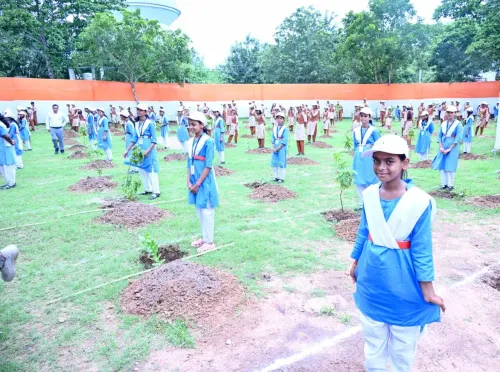
Plantation targets for 2026-27 are set at nearly 9 lakh saplings across 2,702 hectares , up from 5.65 lakh saplings over 774 hectares in 2025-26.
The Sabuja Mahanadi Mission is developing a 1.5-km-wide green belt along seven rivers including the Mahanadi and Brahmani .
Under Ama Jangal Yojana , 19,975 hectares of degraded forests have been restored, benefiting 43.18 lakh people through programmes worth ₹1,488.52 crore .
17.90 lakh palm saplings were planted last year to reduce lightning strike fatalities.
The Union government has set a target of planting 3.76 crore saplings in Odisha in the current year.
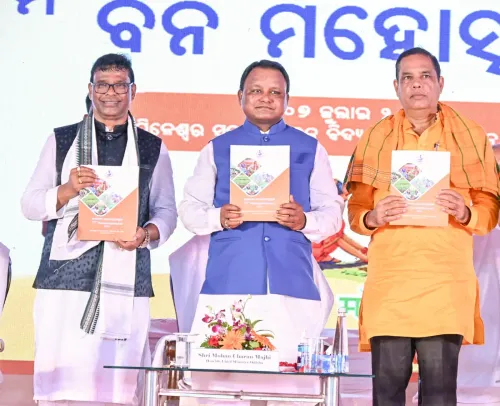
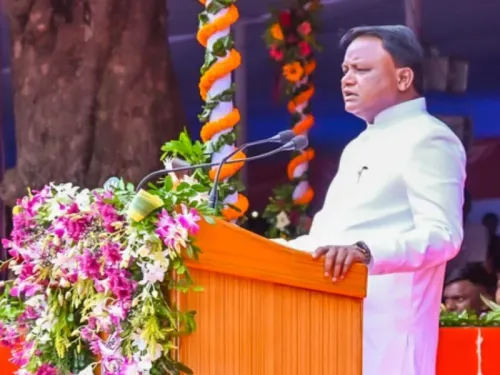
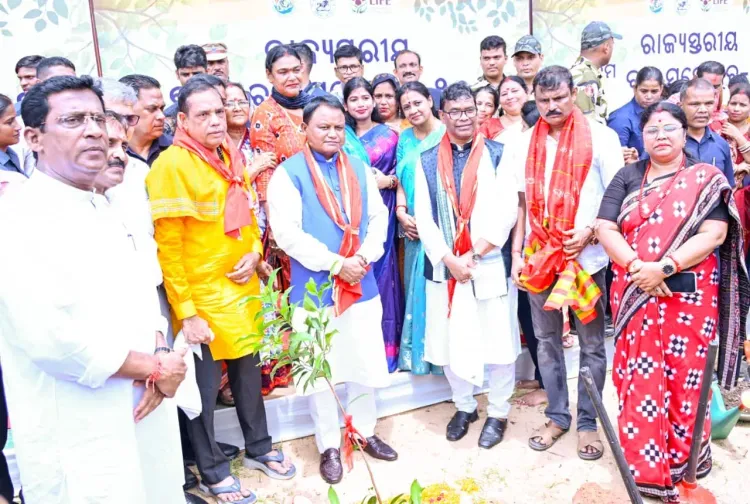
Odisha Chief Minister Mohan Charan Majhi on Tuesday, 7 July 2025, declared that the state has secured the third position in India for forest and tree cover expansion, recording a net addition of 558 square kilometres over the past two years. Speaking at the State-Level Van Mahotsav event in Bhubaneswar, Majhi framed the achievement as proof that development and environmental conservation are mutually reinforcing goals.
Key Developments at Van Mahotsav
Addressing the gathering, Chief Minister Majhi said, “Extensive plantation is the only long-term solution to tackling global climate change and increasingly severe heatwaves. Development and environmental conservation are not contradictory; rather, they complement each other.” He credited this philosophy for Odisha’s rise as one of the country’s leading states in green cover creation.
During 2025-26, the state planted 5.65 lakh saplings across 774 hectares. For 2026-27, the target has been scaled up sharply to nearly 9 lakh saplings over 2,702 hectares. Under the Expanded Green Belt Scheme, an additional 15.93 lakh saplings are to be planted over 358 hectares in the current year, while nearly 6.95 lakh saplings are earmarked specifically for urban pollution reduction.
Sabuja Mahanadi Mission and River Conservation
A centrepiece of Odisha’s green strategy is the Sabuja Mahanadi Mission, under which a 1.5-kilometre-wide green belt is being developed along the banks of seven rivers — the Mahanadi, Tel, Ib, Brahmani, Rushikulya, Baitarani, and Vansadhara — to safeguard their perennial flow. This river-corridor approach represents one of the more ambitious ecological interventions in the state’s recent history.
Livelihood and Forest Restoration Programmes
Under the Ama Jangal Yojana, 19,975 hectares of degraded forests have been restored, and 43.18 lakh local beneficiaries have been covered through livelihood-based programmes worth ₹1,488.52 crore. The scheme ties ecological restoration directly to rural income generation — a model that analysts note is gaining traction in forest-dependent states.
Under the CAMPA (Compensatory Afforestation Fund Management and Planning Authority) scheme, plantation is targeted across more than 20,562 hectares of forest land in the coming year. Additionally, 1,210 Forest Protection Committees are participating in the Odisha Forestry Sector Development Project-II (OFSDP-II), implemented with support from the Japan International Cooperation Agency (JICA).
For coastal resilience, mangrove plantations are being developed over 89 hectares under the Central Government’s MISHTI scheme, while 2,405 hectares of saline forests are being restored under the ECRICC project.
Lightning Safety and New Employment Mission
In a distinctive initiative, 17.90 lakh palm saplings were planted during the last financial year as a measure to reduce the impact of lightning strikes — a recurring hazard in Odisha. From 1 July 2025, the jointly launched Viksit Bharat – Rozgar Guarantee and Livelihood Mission (Rural) is linking plantation activities with employment generation, combining ecological and economic objectives under a single framework.
Chief Minister Majhi also acknowledged Prime Minister Narendra Modi’s ‘Ek Ped Maa Ke Naam’ campaign, noting that the people of Odisha have turned it into a mass movement. The Union government has set a target of planting 3.76 crore saplings in the state during the current year. Majhi urged voluntary organisations, environmentalists, and citizens to plant more trees and uphold environmental regulations strictly.
Point of View
But the more consequential question is whether canopy quality and biodiversity are keeping pace with sapling counts. Mass plantation drives across India have historically inflated green cover statistics while delivering monocultures that offer limited ecological value. The ₹1,488.52 crore livelihood linkage under Ama Jangal Yojana is the scheme’s most structurally sound element — communities with a financial stake in forests protect them. Whether the CAMPA and MISHTI targets translate into durable ecosystems or merely headline hectares will be the real measure of this push.
NationPress
7 Jul 2026
Frequently Asked Questions
How much has Odisha’s forest cover increased in recent years?
Odisha has recorded an increase of 558 square kilometres in forest and tree cover over the past two years, earning the state the third position in India for forest cover expansion. The achievement was highlighted by Chief Minister Mohan Charan Majhi at the State-Level Van Mahotsav on 7 July 2025.
What is the Sabuja Mahanadi Mission?
The Sabuja Mahanadi Mission is an Odisha government initiative to develop a 1.5-kilometre-wide green belt along the banks of seven rivers — Mahanadi, Tel, Ib, Brahmani, Rushikulya, Baitarani, and Vansadhara — to protect their perennial flow and restore riparian ecosystems.
What is the Ama Jangal Yojana and who benefits from it?
Ama Jangal Yojana is Odisha’s degraded forest restoration scheme under which 19,975 hectares have been rehabilitated. Over 43.18 lakh local beneficiaries have been covered through livelihood-based programmes under the scheme, with a total outlay of ₹1,488.52 crore.
What are Odisha’s plantation targets for 2026-27?
The state has set a target to plant nearly 9 lakh saplings across 2,702 hectares in 2026-27, a significant scale-up from 5.65 lakh saplings over 774 hectares planted in 2025-26. An additional 15.93 lakh saplings are planned under the Expanded Green Belt Scheme this year.
Why were palm saplings planted in Odisha?
Odisha planted 17.90 lakh palm saplings during the last financial year specifically to reduce the impact of lightning strikes, which are a recurring and deadly hazard in the state. Palm trees are considered natural lightning conductors and are used as a protective measure in vulnerable areas.