Odisha CM Majhi Launches Free Education Scheme KG to PG
Synopsis
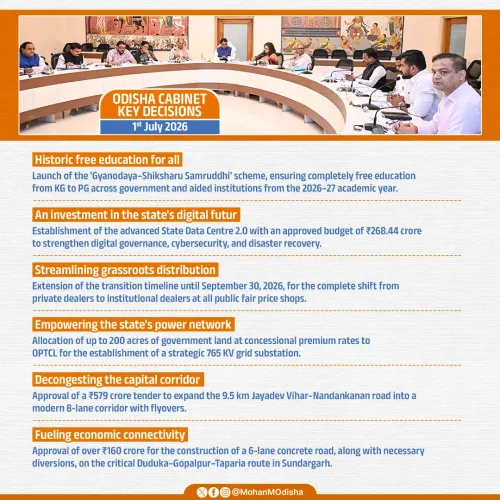
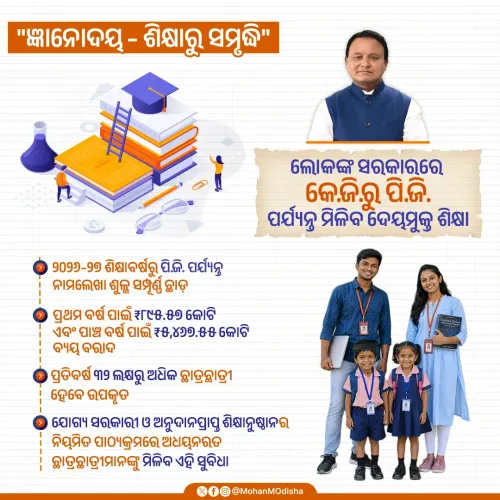
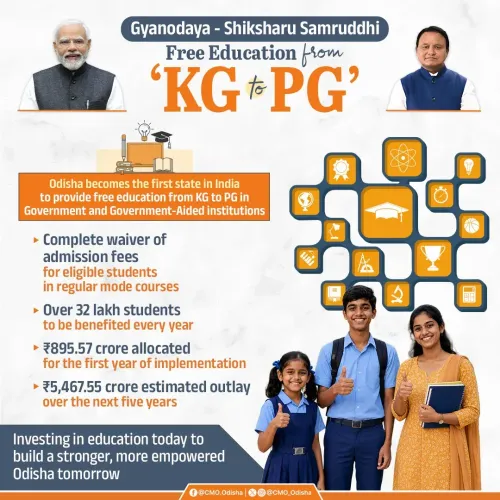
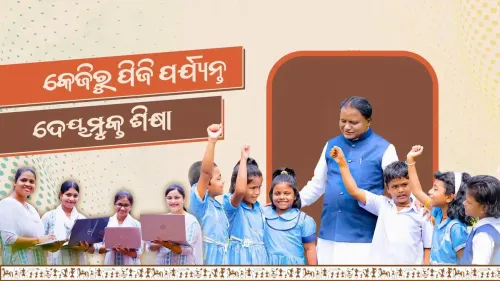
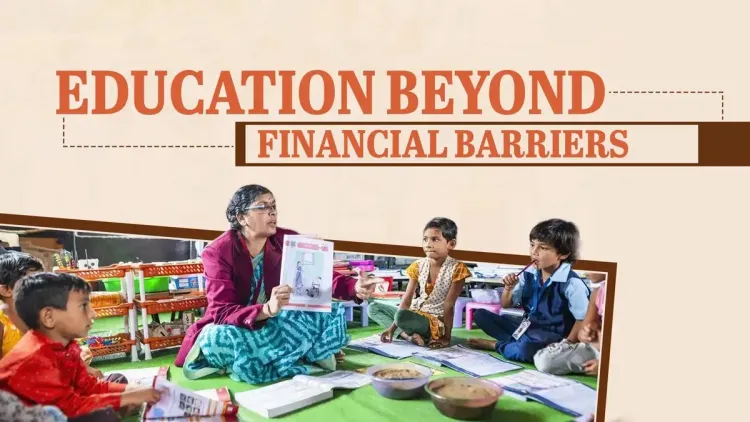
The Odisha Cabinet, led by Chief Minister Mohan Majhi, has approved Gyanodaya – Shiksharu Samruddhi, a scheme offering free education from KG to PG in government and government-aided institutions. The initiative aims to benefit over 3.2 million students annually, removing financial barriers across the full academic spectrum.
Key Takeaways
The Odisha Cabinet approved Gyanodaya – Shiksharu Samruddhi on 3 July 2026 under CM Mohan Majhi .
The scheme provides free education from KG to PG in Government and Government-aided institutions.
Over 3.2 million students are projected to benefit every year.
The initiative is designed to ensure no student is denied education due to financial constraints .
Implementation guidelines, eligibility criteria, and budget allocations are yet to be formally notified.
This is among the broadest state-level education access measures announced in Odisha in recent years.
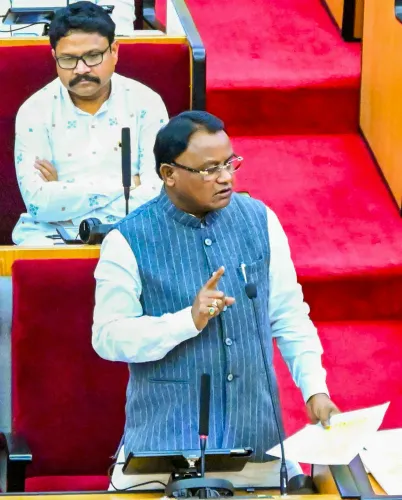
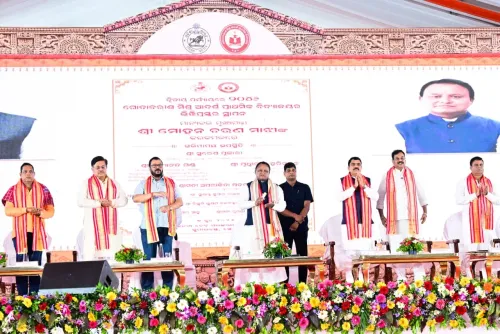
The Chief Minister's Office of Odisha announced on Friday, 3 July 2026 that the Odisha Cabinet, under the leadership of Chief Minister Mohan Charan Majhi, has approved a landmark education initiative titled Gyanodaya – Shiksharu Samruddhi, aimed at eliminating financial barriers to education from kindergarten through postgraduate level across the state.
What the Scheme Covers
Under Gyanodaya – Shiksharu Samruddhi, eligible students enrolled in Government and Government-aided institutions will receive free education spanning the entire academic ladder — from KG to PG. The Cabinet announcement states the scheme is designed so that 'no deserving student is deprived of education due to financial constraints.' The government projects that more than 3.2 million students will benefit every year once the programme is operationalised.
The initiative covers tuition and related fee waivers for qualifying students, positioning it as one of the broadest state-level education access measures Odisha has announced in recent years. Specific eligibility criteria and income thresholds are expected to be detailed in implementation guidelines.
Context
The approval comes roughly two years into Mohan Majhi's tenure as Odisha's Chief Minister — the state's first Chief Minister from the Bharatiya Janata Party (BJP), who took office in June 2024 after the party won the state assembly elections. Education access has been a recurring electoral commitment of the BJP's Odisha campaign.
India's foundational framework for free schooling, the Right to Education Act, 2009, mandates free and compulsory education for children aged 6 to 14. State governments have progressively sought to extend that guarantee upward — through secondary, higher secondary, and now, in Odisha's case, up to postgraduate level.
During the long tenure of former Chief Minister Naveen Patnaik (2000–2024), Odisha ran targeted scholarship programmes under the School and Mass Education Department for students from SC, ST, and meritorious categories. The new scheme appears to broaden the eligibility base significantly beyond those targeted groups.
Policy Backdrop
Several Indian states have moved toward fee-waiver or free-education policies at the higher secondary and collegiate levels in recent years, framing them as human-capital investments intended to reduce dropout rates and improve workforce skill levels. Odisha's move follows this broader national pattern, particularly visible in states where new administrations seek to differentiate their welfare agenda from predecessors.
The Odisha Cabinet is the state's apex executive body for policy approvals. A Cabinet-level green light typically precedes the issuance of a Government Order (GO) that formally notifies a scheme, sets eligibility rules, and triggers budget allocations. The financial outlay for Gyanodaya – Shiksharu Samruddhi has not yet been publicly disclosed.
Stakeholders and Impact
The primary beneficiaries are low-income and economically vulnerable students enrolled in Government and Government-aided schools, colleges, and universities across Odisha. With the state's network of government-aided institutions spanning urban and rural districts, the scheme could have particular significance for first-generation learners in tribal and agrarian belts.
Educational institutions will need to align their fee-collection and admission processes with the new norms, and the School and Mass Education Department alongside the Higher Education Department are expected to be the nodal implementing bodies. Capacity constraints — in terms of infrastructure, faculty, and administrative bandwidth — will be closely watched as enrolment potentially rises.
What's Next
Formal implementation guidelines, budget line items, and eligibility criteria are anticipated ahead of or during the next Odisha assembly session. Observers will track enrollment data and infrastructure capacity reports to assess whether the scheme's projected reach of 3.2 million students annually is met in practice. The move is likely to set a benchmark that other states — and opposition parties within Odisha — will scrutinise closely as the state approaches its next electoral cycle.
Point of View
Marking a clear departure from the more targeted scholarship model that defined the Patnaik era. By extending the free-education guarantee all the way to postgraduate level, the BJP administration is staking a claim on a welfare space traditionally associated with its predecessor, while also aligning with a national trend of states competing on education-access promises. The scheme's credibility will ultimately rest on the budget allocation and implementation architecture that follow — both of which remain to be disclosed. If delivered at scale, it could meaningfully shift Odisha's human-development trajectory and recalibrate the political conversation ahead of the next state election.
NationPress
3 Jul 2026
Frequently Asked Questions
What is Gyanodaya Shiksharu Samruddhi scheme in Odisha?
Gyanodaya – Shiksharu Samruddhi is a scheme approved by the Odisha Cabinet on 3 July 2026 that provides free education from kindergarten to postgraduate level for eligible students in Government and Government-aided institutions across the state.
How many students will benefit from Odisha's free education scheme?
The Odisha government projects that more than 3.2 million students will benefit from the Gyanodaya – Shiksharu Samruddhi scheme every year.
Who is eligible for free education under the Odisha scheme?
Eligible students enrolled in Government and Government-aided educational institutions in Odisha qualify for the scheme. Detailed income and eligibility criteria are expected to be notified through formal implementation guidelines.
What did Odisha CM Mohan Majhi announce for students?
Chief Minister Mohan Majhi's Cabinet approved the Gyanodaya – Shiksharu Samruddhi initiative, which offers free education from KG to PG in government institutions, aiming to remove financial barriers for over 3.2 million students annually.
Is Odisha's free education scheme different from the Right to Education Act?
Yes. The Right to Education Act 2009 mandates free schooling only for children aged 6 to 14. Odisha's new scheme extends the free-education guarantee significantly further, covering higher secondary and postgraduate levels in government and government-aided institutions.