Odisha CM Office: Puri Officials Inspect Cyclone Shelters Ahead of 'Akban'

Synopsis
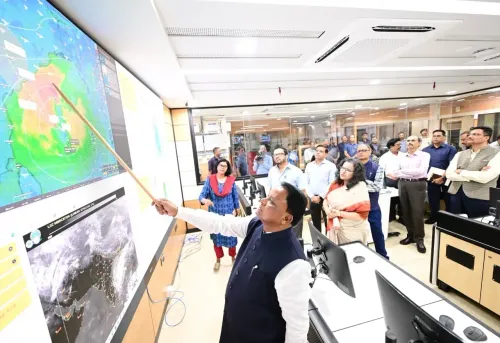
With Cyclone Akban approaching, Odisha's District Collector and senior officers in Puri personally inspected cyclone shelters on 20 November 2026, assessing evacuee amenities, security, and needs. The Chief Minister's Office confirmed that protecting public life remains the government's highest priority.
Key Takeaways
The Chief Minister's Office of Odisha confirmed on 20 November 2026 that Puri's District Collector and senior officers personally inspected cyclone shelters ahead of Cyclone Akban .
Officials held direct discussions with evacuees, assessing their amenities ( subidha ), security ( suraksha ), and requirements ( aabashyakata ).
Puri district sits on the Bay of Bengal coast and has historically been among the most cyclone-exposed areas in India.
Odisha built its cyclone shelter network following the 1999 Super Cyclone , which killed more than 10,000 people .
The model proved itself during Cyclone Fani in 2019 , when nearly 1.2 million people were evacuated with minimal casualties.
Pre-landfall shelter inspections by district officials form a mandated part of Odisha's disaster-management standard operating procedure .
With Cyclone 'Akban' bearing down on the Odisha coast, district administration in Puri has swung into full preparedness mode — the District Collector and senior officers personally inspecting cyclone shelters on Friday, 20 November 2026, speaking directly with evacuees and assessing their comfort, safety, and needs. The Chief Minister's Office of Odisha confirmed the ground-level review, stating that in the people's government, the protection and preservation of human life is the highest priority.
The CMO's post, originally in Odia, reads: 'Batyaa Akbanku drustirey rakhi Purire jillapal o baristha adhikarimanney batyaa ashraysthali paridarsyan kari ashritanku saha aalochana kariba saha semananka subidha, suraksha o aabashyakata samparkare anuddhyana karichhanti. Lokanka sarkarare janasadharananku suraksha o jiban rakshaku sarbaadhik gurutba diaajauchhi.' — in essence: officials visited shelters, consulted residents, and reviewed their facilities, safety, and requirements, with people's safety and life-saving declared the government's topmost priority.
Puri's front-line position in Odisha's cyclone corridor
Puri district sits directly on the Bay of Bengal, placing it squarely in the path of storms that form in the northern Bay — the same track that brought Cyclone Fani ashore in May 2019 and the catastrophic Super Cyclone of 1999. The 1999 storm killed more than 10,000 people and became the defining trauma that reshaped how Odisha prepares for every cyclone since. The state responded by building a dense network of multi-purpose cyclone shelters across its coastal districts — reinforced structures designed to hold hundreds of evacuees above storm-surge levels.
That infrastructure investment paid its most dramatic dividend during Fani in 2019, when nearly 1.2 million people were evacuated in under 48 hours, with minimal loss of life — a benchmark that drew international attention and is now studied as a model for pre-emptive cyclone governance in developing coastal nations.
Officials on the ground, not behind desks
The significance of Friday's inspection lies in its timing and method. Rather than issuing directives from district headquarters, the District Collector and senior officers walked shelter floors, holding direct conversations with people who had already been moved. The assessment covered the three pillars the CMO explicitly named: subidha (amenities), suraksha (security), and aabashyakata (needs) — a structured audit of whether the shelter system is actually delivering what it promises under live-threat conditions.
This ground-level accountability reflects Odisha's standard operating procedure for cyclone events: pre-landfall inspections are not optional reviews but mandated steps in the state's disaster-management protocol, refined over two decades of experience with Bay of Bengal storms.
The shift from relief to readiness
What makes Odisha's model distinctive — and what Friday's action embodies — is the deliberate move from post-disaster relief toward pre-disaster risk reduction. The state's long institutional memory of the 1999 catastrophe means cyclone preparedness is treated as a core governance function year-round, not an emergency improvisation. The CMO's framing — that the people's government places 'utmost importance on public safety and protection of life' — is not rhetorical; it describes the institutional culture that has made Odisha a rare success story in a country historically vulnerable to mass-casualty storm events.
As Cyclone Akban's track and intensity data continue to evolve, further shelter activations, additional evacuation orders, and coordination with the National Disaster Response Force (NDRF) are the next milestones to watch. The ground has been prepared. The question now is what the Bay delivers.
Point of View
Painfully, from the ruins of the 1999 Super Cyclone. The CMO's public confirmation of on-the-ground official presence signals that accountability is being performed at the shelter floor, not just the control room, which matters enormously for public trust in evacuation compliance. For the broader national conversation on climate adaptation and coastal governance, Odisha continues to offer a replicable template: invest in infrastructure before the storm, audit it under live-threat conditions, and frame it explicitly as the state's core obligation to its people.
NationPress
20 Nov 2026
Frequently Asked Questions
What is Cyclone Akban and where is it expected to make landfall?
Cyclone Akban is a storm system being tracked in the Bay of Bengal as of November 2026. The Odisha government has activated preparedness measures in coastal districts including Puri, though the exact track and landfall point continue to be monitored by meteorological agencies.
What did Puri officials do ahead of Cyclone Akban?
The District Collector and senior administrative officers in Puri personally visited cyclone shelters, spoke directly with evacuees, and assessed their amenities, security, and needs, as confirmed by the Chief Minister's Office of Odisha on 20 November 2026.
How many cyclone shelters does Odisha have?
Odisha built a large network of multi-purpose cyclone shelters across its coastal districts following the catastrophic 1999 Super Cyclone. Exact current numbers were not specified in the official post, but the infrastructure is recognised as one of the most extensive in coastal India.
How did Odisha handle Cyclone Fani in 2019?
During Cyclone Fani in May 2019, Odisha evacuated nearly 1.2 million people in under 48 hours into cyclone shelters, resulting in very few casualties and earning international recognition as a model for pre-emptive disaster response.
What is Odisha's approach to cyclone preparedness?
Odisha has shifted from post-disaster relief to pre-disaster risk reduction since the 1999 Super Cyclone. This includes maintaining a large shelter network, conducting mandatory pre-landfall inspections by district officials, and deploying disaster response teams ahead of storms.