Uttarakhand CM Outlines Winter Tourism, Trade Push to PM Modi
Synopsis
Uttarakhand's Chief Minister briefed PM Modi on a year-round development drive: 73,000-plus winter pilgrims, a ₹6.9 crore House of Himalayas brand, top Export Preparedness Index ranking, and cluster-school approvals for mountain districts.
Key Takeaways
More than 73,000 pilgrims completed winter yatras at Char Dham sites up to 19 April 2026 , with 73,041 devotees visiting Adi Kailash specifically.
GMVN and KMVN tourist rest houses are offering a 50 percent discount to boost off-season travel.
The House of Himalayas brand has reached a turnover of ₹6.9 crore , with 22 trademarks registered and products on Amazon, ONDC, JioMart, BigBasket, and Blinkit.
An ITBP MoU facilitated supply of 2.18 lakh kg of meat and 30 tonnes of fish from border areas.
Uttarakhand ranked first among small states in the NITI Aayog Export Preparedness Index .
93 cluster schools in mountain districts have received approvals out of 559 identified, and 379 students toured national institutions under the Bharat Darshan programme.
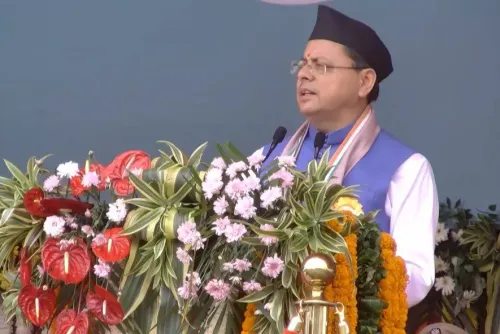
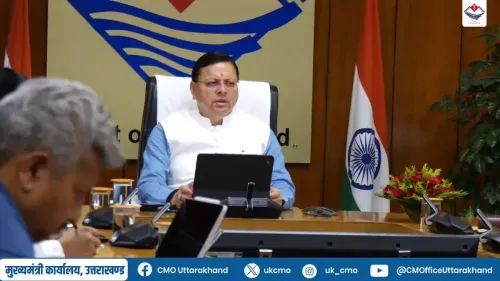
Uttarakhand is no longer content to be a summer-only destination. The Chief Minister's Office of Uttarakhand posted on Friday, 20 November 2026, detailing a sweeping briefing delivered by the Chief Minister to Prime Minister Narendra Modi — covering winter pilgrimages, adventure sports, local branding, border-village livelihoods, and student exposure programmes, all woven into a single state-development pitch.
Winter Yatra numbers that change the narrative
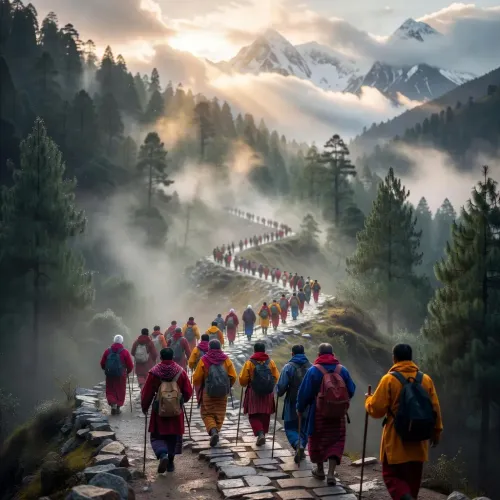
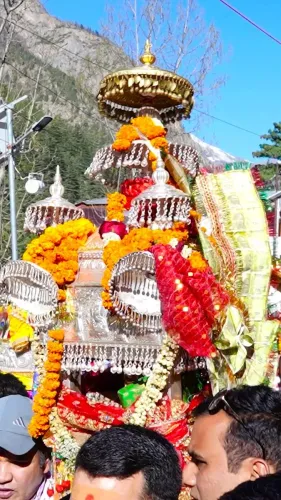
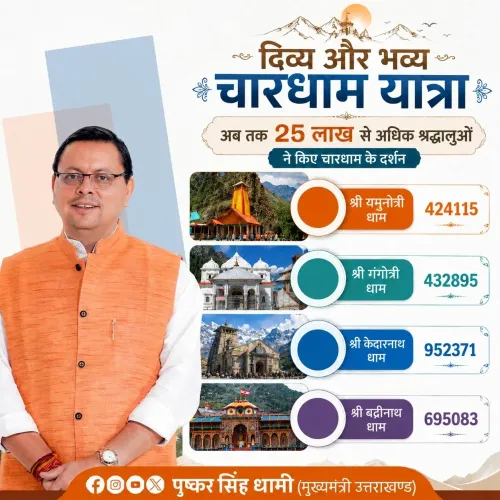
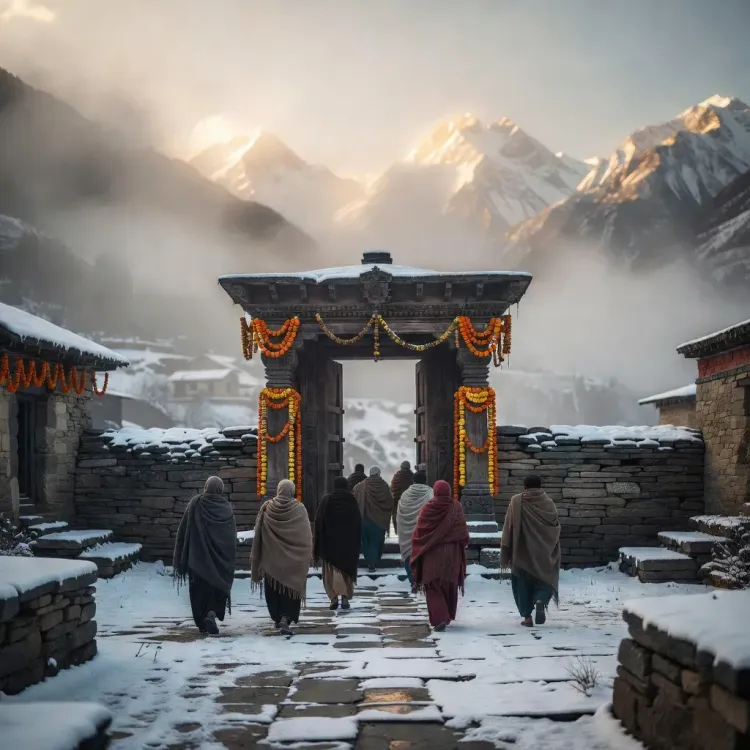
The centrepiece of the briefing was Uttarakhand's push to extend the Char Dham pilgrimage season into winter. Yatras have been launched from the gaddi sthals — the winter seats of the four shrines — and accommodation at GMVN (Garhwal Mandal Vikas Nigam) and KMVN tourist rest houses is being offered at a 50 percent discount to pull in off-season visitors.
The numbers are striking: more than 73,000 pilgrims undertook the winter yatra up to 19 April 2026, while 73,041 devotees visited Adi Kailash during the same period. That is not a trickle — it is a replicable model for year-round religious tourism in the high Himalayas.
Rafting, skiing, and a high-altitude marathon at Adi Kailash
Adventure tourism is running alongside the pilgrim push. River rafting, paragliding, mountain cycling, and kayaking are all being actively promoted. The Adi Kailash Parikrama Run has already hosted a high-altitude ultra marathon, and a marathon in Mana Valley has been proposed. At Tehri Lake, the SAM-ACRO Festival was held, while Auli hosted the National Skiing Championship. The state is, in effect, stacking events across altitudes and seasons to keep the tourism calendar busy.
House of Himalayas: from GI tags to Blinkit
The most commercially ambitious piece of the briefing was the House of Himalayas brand. The state label — built on a 'Vocal for Local, Local to Global' mandate — has reached a turnover of ₹6.9 crore. It carries 22 registered trademarks, of which 11 are linked to Geographical Indication (GI) tags and intellectual property rights. Local products are now listed on Amazon, ONDC, JioMart, BigBasket, and Blinkit.
Separately, an MoU with the ITBP (Indo-Tibetan Border Police) has channelled 2.18 lakh kg of meat from 7,255 goats and 30 tonnes of fish into supply chains — a concrete example of linking border-area produce to institutional buyers. The Vibrant Village Programme, a central scheme for border villages announced in Union Budget 2022-23, is providing employment alongside this supply-chain work.
Uttarakhand also topped the NITI Aayog Export Preparedness Index in the small-states category — a ranking that measures export infrastructure, ecosystem, and performance, and one the state now treats as a calling card in investment conversations.
Cluster schools and students who will see India whole
Education was the quieter but structurally important section of the briefing. In mountain districts, 559 cluster schools have been identified to consolidate dispersed hill schools. Of these, 331 have been assessed and approvals issued for 93 schools. The model aims to deliver better facilities without forcing longer commutes in difficult terrain.
Under the Bharat Darshan educational programme, 379 students who excelled in their High School examinations were taken on tours of prestigious national educational, industrial, scientific, and cultural institutions. A parallel Uttarakhand Darshan programme is now proposed, taking students to major state-level institutions — giving young people a scaffold for state pride and career awareness.
The Chief Minister closed by expressing gratitude for directions issued at the Chief Secretaries' Conference and committed to their regular implementation review — signalling that this briefing was not a list of aspirations, but a progress report on work already under way. The goal, the CM said, is to place Uttarakhand among India's leading states under the vision of Viksit Uttarakhand.
Uttarakhand is not waiting for the summer rush to prove its relevance. It is building a 12-month economy — one marathon, one GI tag, one cluster school at a time.
Point of View
GI-linked branding, digital retail, and border-village employment signals a deliberate rebranding from seasonal pilgrimage hub to a diversified mountain economy. Topping the Export Preparedness Index in the small-states category gives the state a defensible metric ahead of election cycles. The cluster-school model and student exposure programmes, meanwhile, plant a longer-horizon investment in human capital that rarely gets headline space but shapes voter sentiment over years.
NationPress
20 Nov 2026
Frequently Asked Questions
What is the House of Himalayas brand in Uttarakhand?
House of Himalayas is the Uttarakhand government's official brand for promoting local products nationally and internationally. It has reached a turnover of ₹6.9 crore, holds 22 registered trademarks — 11 linked to GI tags and IPR — and sells on platforms such as Amazon, ONDC, JioMart, BigBasket, and Blinkit.
How many pilgrims visited Adi Kailash during the 2026 winter yatra?
According to the Chief Minister's briefing to PM Modi, 73,041 devotees visited Adi Kailash and more than 73,000 pilgrims completed the broader winter yatra across Char Dham sites up to 19 April 2026.
What discount is offered at GMVN and KMVN rest houses for winter tourists?
The Uttarakhand government is offering a 50 percent discount on accommodation at Garhwal Mandal Vikas Nigam (GMVN) and Kumaon Mandal Vikas Nigam (KMVN) tourist rest houses to encourage winter pilgrim travel.
What is the Vibrant Village Programme and how is it linked to Uttarakhand?
The Vibrant Village Programme is a central government scheme announced in Union Budget 2022-23 to develop border villages in states including Uttarakhand. In the state, it is being used to generate employment for local communities living in high-altitude frontier areas.
What is Uttarakhand's Export Preparedness Index ranking?
Uttarakhand has ranked first among small states in the NITI Aayog Export Preparedness Index, which measures states on export infrastructure, policy ecosystem, and performance. The index was first launched in 2020.